At FMOL Health, delivering high-quality care means constantly looking for ways to improve.
Behind the doctors and nurses who care for patients every day, there is also a team dedicated to studying how care is delivered and finding ways to make it even better.
FMOL Health | Our Lady of the Lake’s Performance Improvement team focuses on strengthening the systems that support caregivers across the health system. Their work includes analyzing workflows, collaborating with clinical teams and identifying opportunities to improve safety, efficiency and patient outcomes. One of the most visible examples of that work has been the implementation of the IntelliSep test for sepsis throughout the health system.
Challenging the Status Quo
The team’s mission centers on helping the organization continuously raise its standards of care.
“What our team does for the organization is help ensure we can push limits and make sure best practice is happening,” says Lindsey Booty, RN, BS, CNOR, director of performance improvement at Our Lady of the Lake. “We challenge the status quo.”
The department often steps in when a team identifies a challenge. Other times, the work begins with a broader goal to improve how care is delivered.
“Sometimes we’re brought in because an area notices a definite challenge,” Booty says. “Other times we’re brought in because organizationally we recognize we want to be better. Our team supports that endeavor.”
Bringing IntelliSep Into Practice
That work became especially important when FMOL Health prepared to introduce the IntelliSep test for sepsis to Our Lady of the Lake in 2024. The test helps clinicians quickly identify whether a patient’s immune response suggests a higher risk of sepsis, allowing care teams to move faster in diagnosis and treatment.
The Performance Improvement team joined the project as the test neared FDA approval, helping build the clinical processes needed to use the tool effectively.
“They knew the test would help patients,” Booty says. “But we had to figure out the right way to use it, what guardrails to put around it and how clinicians could use it as part of their diagnostic process to make decisions faster.”
Once the test was introduced, the team continued refining how it fits into clinical workflows.
“We’ve made dozens of intentional changes,” Booty says. “Then we took adult learning and asked how we could help pediatric patients, as well.”
Their work has been a key ingredient that has turned FMOL Health into a national sepsis innovation leader. Mortality of patients at high risk for sepsis has reduced by 21%; this translates to a life saved every three days from sepsis. Just as important, they have helped patients return home to their families sooner for important events, like baseball games. In two years since launch, FMOL Health has reduced days spent in the hospital due to sepsis by 30,000 days, the equivalent of an 85-bed hospital being full every day for a full year.
Engineering Better Workflows
For Alyse Grantham, a performance improvement engineer who joined FMOL Health in 2022, the sepsis project was her first major assignment. Trained as an industrial engineer at LSU, she focuses on analyzing workflows and improving quality and efficiency throughout the hospital system.
“My first project when I joined was sepsis,” Grantham says. “I refined the patient care around recognizing and treating sepsis, and then about a year into the project we implemented IntelliSep and built the workflows around that as well.”
Launching the test brought both excitement and uncertainty. Even with extensive planning, the team could not predict every scenario until the system was fully operational.
“One of the biggest challenges is the unknown,” Grantham says. “You can plan as much as possible, but once it’s turned on you have to keep pivoting and adjusting.”
A Team Effort Across the Hospital
Projects like IntelliSep rely on collaboration across many parts of the hospital. Physicians, nurses, pharmacists, laboratory staff and leadership all contribute to the process, along with the analysts and engineers who help evaluate data and refine workflows.
“The ED is always a busy place, and they can’t close their doors,” Grantham says. “But leadership committed to weekly meetings where we pulled the data, looked at the impact and talked about what needed to change.”
Booty says that collaborative approach has been central to the Performance Improvement team’s work since it was created about a decade ago.
“We work with people who are experts in their fields,” she says. “Working in silos was never going to be the way to do it.”
For patients, the work of the Performance Improvement team happens behind the scenes, but it plays an important role in strengthening the systems that support care.
“We set ourselves at a very high standard and then challenge that,” Booty says. “We have a strong safety culture and a very open environment for reporting concerns. That allows us to see trends early and fix issues proactively.”
Grantham says the experience has also shown how people outside of clinical roles can contribute meaningfully to patient care.
“Being part of this project showed me that even someone without a clinical background can have an impact on patients.”
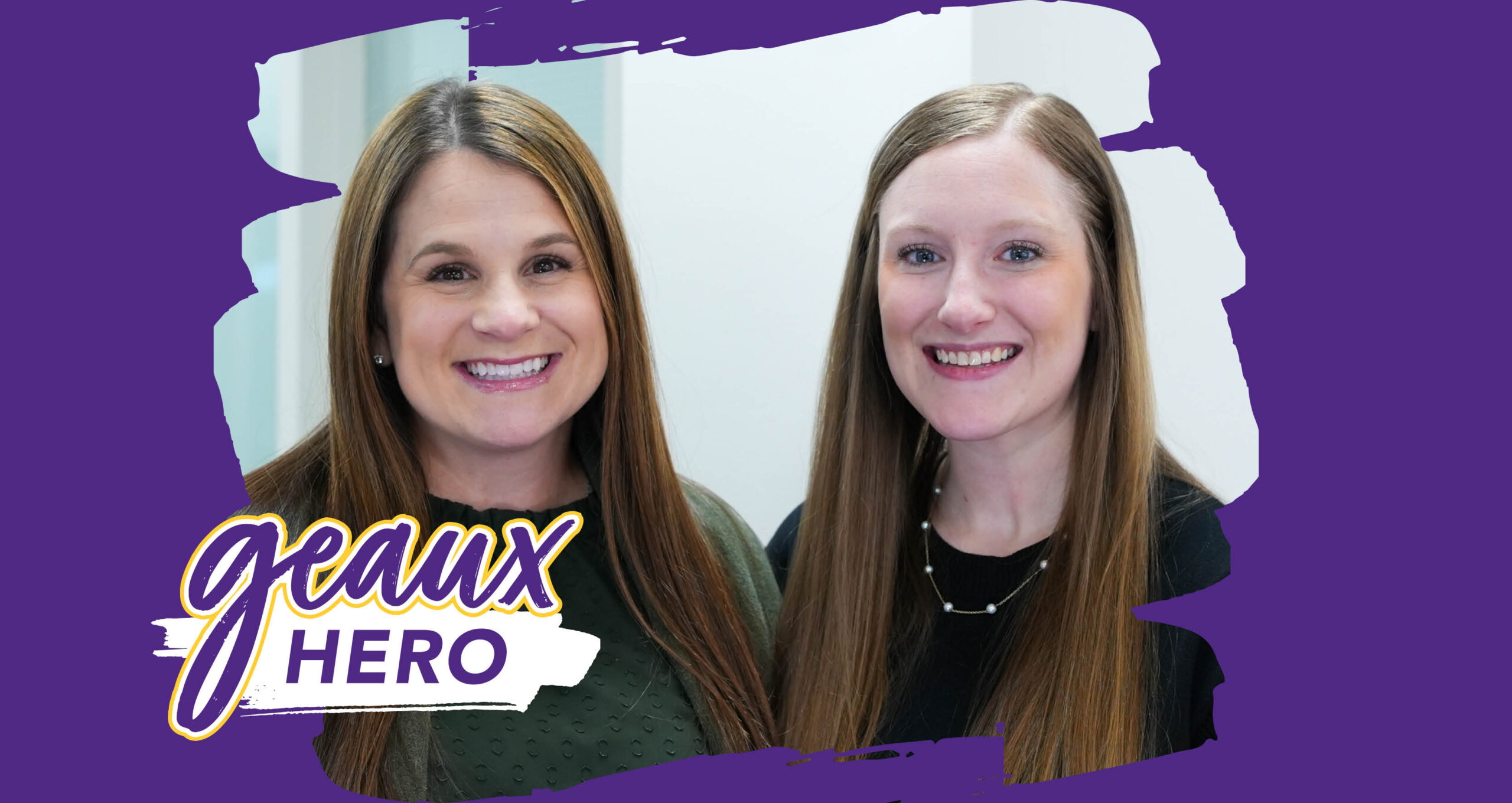
On March 20, Booty and Grantham will represent the Performance Improvement team as it will be recognized as an FMOL Health | Our Lady of the Lake Geaux Hero during the LSU Baseball game against Oklahoma, an opportunity to celebrate the behind-the-scenes work that strengthens patient care across the health system and the many teams whose collaboration helps make better outcomes possible.