
Sometimes, how we healthcare is a gift of time and the quiet gratitude that comes when you realize you were never guaranteed any more of it.
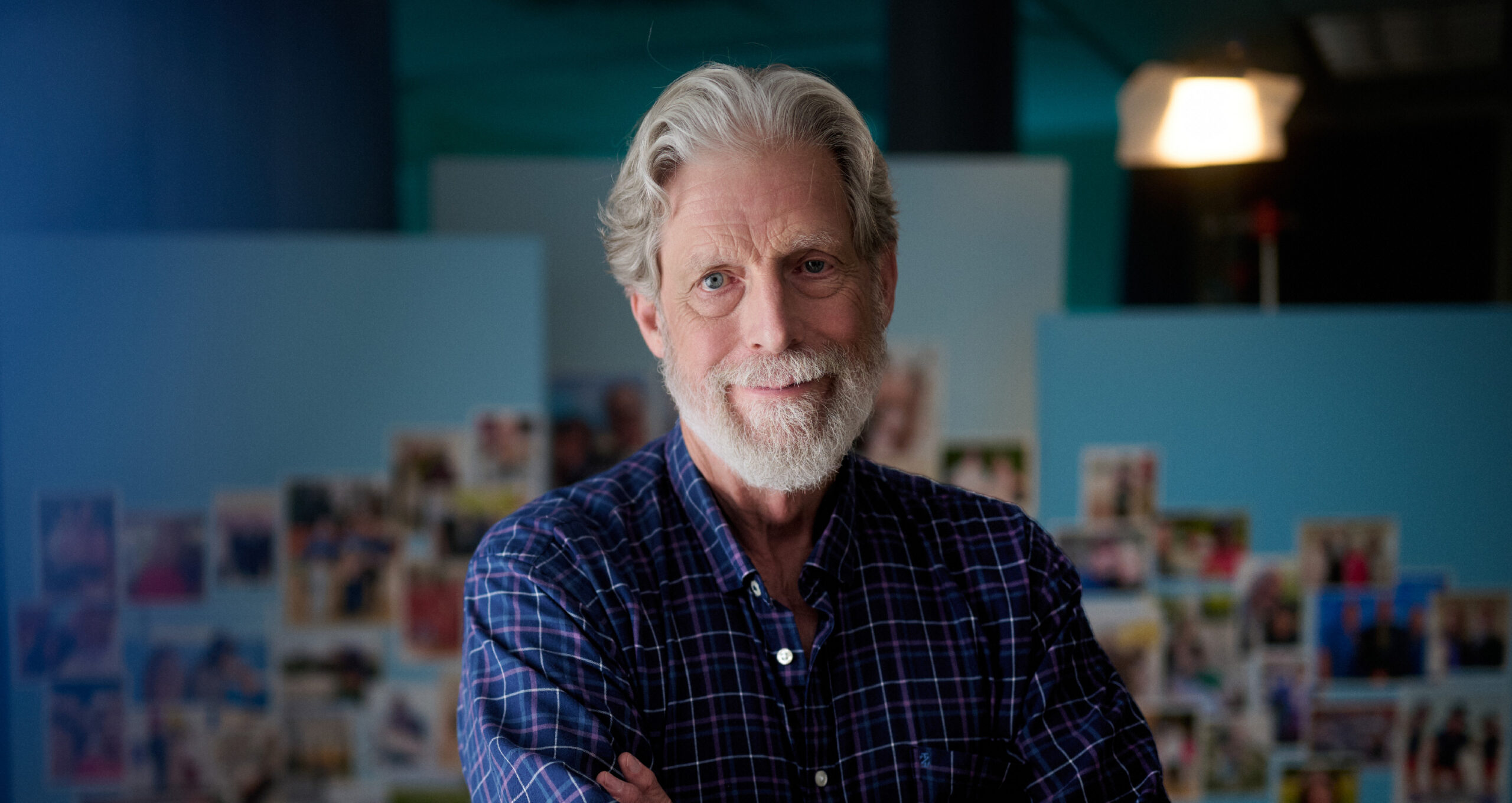
Philip Gould spent 50 years learning to see. As a documentary photographer, he traveled every corner of Louisiana, framing its culture, its landscapes, its music and its people.
“Louisiana is an incredibly generous subject,” he says. “Every time I turn around, there’s something new to photograph.”
Then one day, Philip had to stop documenting life and start fighting for it.
A Family History Written in the Heart
Some stories are inherited. Philip’s began with his brother, who developed an aortic aneurysm, a dangerous expansion of the aorta, the vessel that carries blood from the heart throughout the body. When his brother had surgery to repair it, Philip did the wise thing: he told his cardiologist.
Dr. Jon Leleux followed Philip’s heart for nearly two decades. He didn’t wait. A scan showed Philip’s aorta at 5 centimeters, just above normal. His doctor watched it. A year later, it crept to 5.5.
That half-centimeter changed everything.
“We really have to do the surgery,” Dr. Leleux told Philip. He knew exactly who should do it: Chance DeWitt, MD, cardiovascular and thoracic surgeon at FMOL Health | Our Lady of Lourdes Heart Hospital.
Philip was soon scheduled for open-heart surgery, where Dr. DeWitt would repair both the aneurysm and a leaking aortic valve.
As it turned out, the condition ran through the whole family. Philip’s sister had it, too. All three siblings had surgery.
Waking Up to Good News
Philip’s clearest memory of surgery is the moment it ended.
“Congratulations, Mr. Philip. The surgery was a success.”
But recovery came on its own schedule. His intestines wouldn’t wake up. For nearly a week, he survived on ice, water and IV nutrition. His energy was gone.
Nurses had him walk three times a day anyway, around the corner and back, through a hallway that looked a quarter-mile long. He would make it 60 feet, sit, catch his breath, then rise and go a little farther.
And then came the moment – small, funny and deeply human – that told him his body was back.
“I got up and I farted,” Philip says. “And it was the happiest fart I ever had in my life.” He asked the nurse to put it in his record. Soon after, he was eating again, and he was on his way.
When Healing Takes a Detour
Two weeks after being discharged, something felt wrong. His home health physical therapist checked him. His heart was racing at 120 beats per minute. She broke the news: he had to go back to the hospital.
It was a Friday. Nothing could be done until Monday. His care team kept him in-house rather than risk sending him home. That Monday, doctors performed an ablation to settle the rhythm. With that, Philip was finally and truly on his way.
A Hospital with a Bedside Manner
 Ask Philip about his care and he doesn’t reach for medical terms. He reaches for gratitude.
Dr. Leleux appeared in his room like clockwork every morning. Dr. DeWitt, the surgeon he credits with his life, gave him back the years he almost lost. And the staff, “to the person,” he says, were professional, patient and genuinely kind, even the ones who made him walk when he didn’t want to.
“If a hospital could have a bedside manner, Lourdes was it,” Philip says.
For a man who spent his career noticing what others overlook, healing revealed itself in small symbols.
The day he was finally cleared for a strawberry smoothie, after weeks of wanting one, meant more than fruit. “It was an indication that things were turning up,” he says. Progress, in a paper cup.
And through it all, there was Margot, his wife. She showed up with a calm, steadying presence, never flustered, never far. She sat with him through the hard stretches, encouraged him when progress felt slow and made sure he never felt alone. Philip searches for the right word and settles on this: she “almost achieved sainthood.”
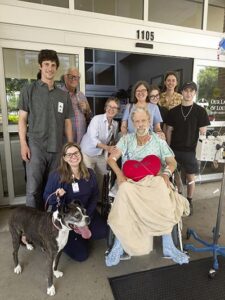
One of his most treasured moments came at the front door. Margot and his son brought his dog to the hospital. His care team rolled him outside to meet them: family, friends and a very good boy. Philip has a photograph of it, of course. He wouldn’t have it any other way.
Living in Lagniappe
Philip walks nearly every day now, moving through something close to Tai Chi to stay steady. His blood pressure runs around 120 over 80. His cardiologist is happy. And Louisiana is still his muse.
But something has shifted.
“Everything I have since then, I consider lagniappe,” he says, using the Louisiana word for that little something extra, the unexpected gift.
The truth is plain: he has known people scheduled for the same surgery whose aneurysms burst before they ever made it to the table. “If I had not had the surgery, I would not be here right now,” he says.
So, he lives differently. More gracious. More grateful. More awake to the beauty he has spent a lifetime chasing through a lens. A photographer who has spent 50 years framing the world, given fresh eyes to see just how precious it truly is.
“I live in complete gratitude,” Philip says. “For my doctors. The nurses. My wife. My family. For every day I’m still here.”


