Sometimes, how we healthcare is a whisper, the faint sound a good doctor hears when he leans in and truly listens.
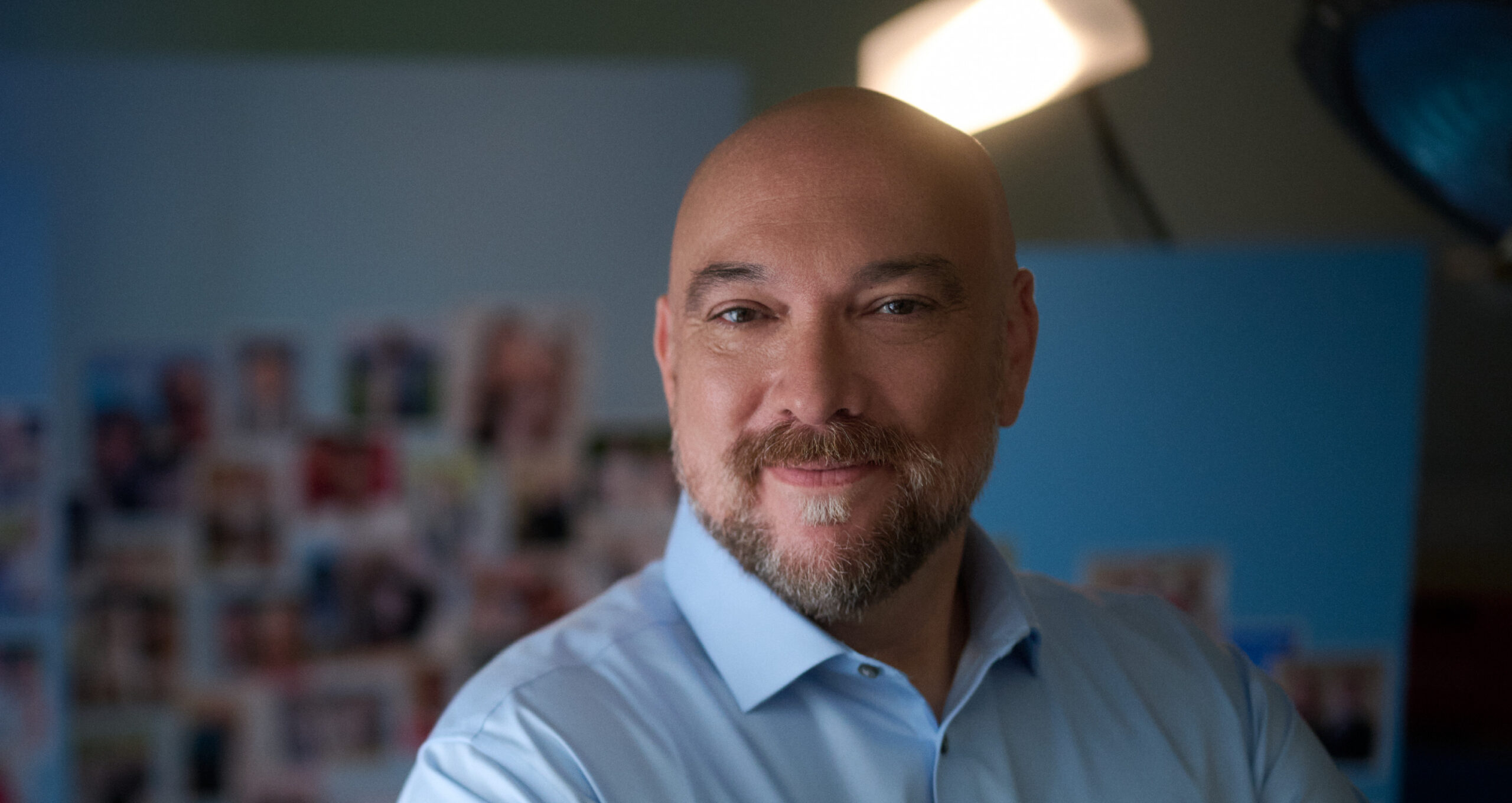
Marty Moss, RN, spends his days telling people to take care of themselves. As a registered nurse at an urgent care and primary care clinic, he knows the script by heart: Don’t wait. Get your checkup. Stay ahead of it.
And for years, he did what a lot of us do. He told everyone else.
At 53, Marty felt fine. He was active. He mowed his own lawn. Sure, he was tired sometimes, but he chalked that up to being a big guy getting a little older. No chest pain. No shortness of breath. No warning signs at all.
But heart disease runs in his family, and the thought kept tugging at him. His daughter was finishing medical school. His twin sons were about to graduate high school. He wanted to be there for every bit of it.
“Being a nurse, it’s hypocritical to tell people to get these things checked and not do it yourself,” he says.
So he finally listened to his own advice.
A $99 Investment
The screening came to him almost by chance.
A representative visited his clinic to talk about a healthy heart checkup: a CT scan and bloodwork for $99, offered through the Mississippi Heart and Vascular Institute at FMOL Health | St. Dominic.
Marty kept the card. He held onto the phone number. And something told him to follow through.
On Feb. 11, he got his scan. His calcium score came back at 14, not great, but not alarming. The plan was simple: keep an eye on things. Marty was told he’d only hear back if the scan turned up something he needed to know about.
Then the phone rang.
That callback sent him to a cardiologist, Dr. Jimmy Ma, a man Marty had never needed before. His cholesterol was normal. His annual checkups were fine. If he hadn’t been curious about that calcium score, he never would have walked through the door at all.
The Team Who Listened
What happened next is the part Marty can’t stop talking about.
Dr. Ma listened to his heart the old-fashioned way, with a stethoscope and real attention. And mid-listen, something shifted. His head lifted. He grew quiet. Then he walked out of the room.
“When your cardiologist listens to you and his head goes up like he’s really, really listening, and then he just leaves the room,” Marty says, “My wife, Rajita, and I were like, OK.”
He came right back. He’d heard a leak in a valve, and a leak like that can point to a larger aneurysm hiding beneath the surface. He wanted more testing to be sure.
That single moment of careful listening changed everything.
A full workup followed: another CT scan, more imaging, a scan that traveled down behind the heart. The initial suspicion had been an aneurysm somewhere in the 4.5 to 5 centimeter range, big enough to monitor. But the truth was far more serious. Marty’s aneurysm measured 6.4 to 6.5 centimeters.
There would be no more monitoring. This went straight to surgery.
Five Weeks that Changed Everything
The pace of it still stuns Marty and Rajita.
He met with Dr. Ma on March 1. Follow-up imaging came days later. Then his case moved to cardiovascular surgeon David Theodoro, MD, and the calendar tightened around a single date: March 17. St. Patrick’s Day.
In just five weeks, Marty went from a routine screening to open-heart surgery.
“I was thinking 65 for surgery,” he says. “Not in my 50s.”
Through the whole whirlwind, the team at St. Dominic understood something beyond the medical urgency. They understood the emotional weight of it, too.
“They were good at hand-holding, since it was so unexpected for all of us,” Rajita says. People explained things gently. Even the billing conversation felt like grace. We’ve got you. Pay what you can, as you go.
Before they wheeled Marty back, a chaplain gathered the whole family, Rajita and the children, and led them in the Lord’s Prayer.
“It’s almost like a dream,” Rajita says. “Not just praying with you, but recognizing you in the hallway. A calming, spiritual presence.”
In Dr. Theodoro’s Hands
The surgery was bigger than anyone expected.
Once Dr. Theodoro was inside, he found a congenital heart condition no one had ever known about. Marty’s coronary arteries sat in the wrong position, something he was born with. Over decades, that quiet flaw had likely stressed the aorta into the aneurysm now threatening his life.
For eight hours, the surgical team worked. They replaced the ascending aortic arch. They repositioned those arteries with painstaking care. And the leaking valve Dr. Ma had heard couldn’t be saved, so they replaced it with a mechanical valve built to last around 30 years.
Every hour, someone updated the family. Every hour, they held onto hope.
Dr. Theodoro, it turns out, has a surgeon’s sense of humor. He told Marty the valve area looked “like a bomb had gone off in there.”
And for a man Marty’s size, 6-foot-3 and 290 pounds, the surgery took some muscle. “I finally got to use the 21-centimeter screws,” the doctor joked about the retractor that held Marty’s broad chest open.
Marty now carries a mechanical valve that ticks softly, steady as a clock. Proof, in a sound, that he’s still here.
Walking Back to Himself
Marty doesn’t remember the first hours in the ICU. Rajita does.
Eight monitors. A line in his neck. A breathing tube. It was almost too much to take in.
“If not for my daughter holding my hand and saying, ‘This is temporary, he’ll be up and walking in a couple of hours,’ I’d have lost it,” Rajita says.
Her daughter was right. Within hours, Marty was awake. And soon a team of four or five people had him on his feet, walking the ICU with a row of monitors trailing behind him.
Walking became the highlight of his days.
“It was weird to say it was the highlight of my day, but I could actually prove to myself that I was normal and I could do things,” Marty says. Every day, he pushed a few steps past the goal. To the elevator, then to the plant three steps beyond it, then to the end of the hall and back.
A Match Made in a Hospital Room
On March 20, Marty moved from the ICU to a regular room. It happened to be Rajita’s birthday. And it happened to be the same day medical students across the country learned where they’d matched for residency.
Their daughter chose her family over the ceremony. She skipped Match Day to be at her father’s side.
So, when Marty finally reached that regular room, she waited. Then, she opened her laptop. She had matched with the Cleveland Clinic for neurology.
They learned her future together, inside the very hospital that had just given Marty back to them.
Maybe a Year
At a follow-up visit, Marty asked the question that had been weighing on him. How long would he have had, if he’d never gotten that screening?
Dr. Theodoro’s answer still gives him chills.
Maybe a year.
Aneurysms like Marty’s are often discovered too late, on an operating table during another procedure, or in an autopsy. His was found by choice, by a $99 scan he almost talked himself out of.
That answer put everything into a new light. His daughter’s white coat. His sons’ high school diplomas. Three graduations in May that he lived to see. One son is off to Ole Miss for law, following his mother’s footsteps. The other is headed to Mississippi State for computer science.
Marty and Rajita’s story stretches back decades. They’ll celebrate 27 years of marriage this year.
Now they measure life a little differently.
Two Birthdays
Marty turned 54 on July 10, 2026. But he counts a second birthday now, too: March 17, the day his heart stopped and started again. A rebirth.
The change goes deeper than dates. It’s in how he moves through ordinary days.
“The gratitude that I have for life, just to be able to walk outside and feel the wind on your skin, to hear the birds, to feel the sun, see the rain,” he says. “That type of thing, it changes you as a person. It puts things into perspective.”
He doesn’t want to make a big deal of the birthday. He just wants to enjoy that he gets to have it, surrounded by the family he fought to stay here for. And for one thing, he no longer worries at all.
“It won’t be my heart,” he says. “That’s something I don’t have to worry about.”
These days, Marty is back to being the nurse who tells everyone to get checked. Only now, he means it with his whole, ticking heart. He asks nearly everyone he meets the same question, and several coworkers have already made the drive down the road because of him.
“Don’t assume you’re fine because you feel fine,” he says. “Get your heart checked. Take the assessment. It could save your life. It saved mine.”