There are moments that divide your life into before and after.
For Miller’s mom, Fran Hitt, it was his third seizure.
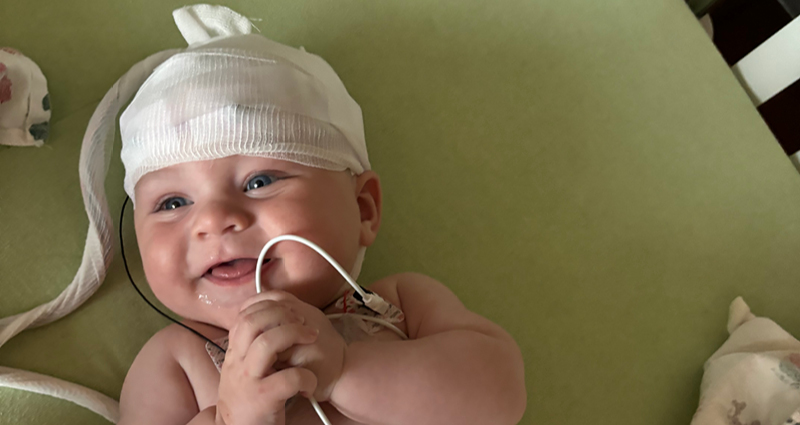
Her four-month-old baby was on a hospital bed in a small Colorado ski town when his tiny body began convulsing again. This time, it was different.
“He stopped breathing,” she says.
For minutes that felt like hours, medical teams worked over him. Oxygen. Urgency. Chaos. And the dawning realization that this wasn’t a fluke.
By the end of that day in August, Miller had experienced four seizures, one requiring extended respiratory support. The first happened in the backseat of Miller’s grandma’s Suburban on the way to the airport.
He would be airlifted to Denver. Fran and her husband, Tucker, would endure a silent, service-less drive through the mountains, praying their baby survived the flight.
Nothing about that week felt stable.
Nothing felt certain.
A Week of Questions but No Clear Direction
At the children’s hospital in Denver, teams moved quickly. Tests were ordered. An MRI was scheduled. A spinal tap was performed. Specialists rotated in and out.
In the most critical moments, the family was grateful for urgent intervention and life-saving stabilization. But as the days passed, something else crept in: confusion.
“For four days, we never even heard the word epilepsy,” Fran says.
After normal imaging results, they were told it was likely a one-time event. They cried with relief. Booked flights home.
Then, just after midnight, a fifth seizure began. The next morning, they were discharged with a new diagnosis: epilepsy. Medication in hand. Instructions to follow up at home.
“I remember thinking, how was this never discussed before?” she says.
They left with more fear than clarity.
Coming Home
Two days later, at 7 a.m., Miller and his mom stepped into FMOL Health | Our Lady of the Lake Children’s Hospital for an appointment with Yash Shah, MD, pediatric neurologist.
The medical office building wasn’t even technically open.
“The elevator didn’t work,” Fran says. “And I remember Dr. Shah saying, ‘It’s badge access only before we open.’ And I realized he came in early for us.”
Fran hadn’t slept. She was holding days’ worth of fear in her chest. She began recounting everything, the car ride, the seizures, the airlift, the ICU, the diagnosis.
“He grabbed my hand and said, ‘Let’s walk through this. I’m so sorry this was your experience.’”
And then finally clarity.
Dr. Shah explained that epilepsy is a neurological condition diagnosed when someone experiences two or more unprovoked seizures not caused by a temporary issue like fever, injury or low blood sugar.
Fran remembers wishing someone could have explained that much earlier in Miller’s experience.
A Diagnosis and a Plan
What changed that morning wasn’t just information. It was partnership.
Dr. Shah reviewed every test from Colorado. He explained what had happened during each seizure, even describing how the brain “resets” afterward, which is why Miller appeared so deeply asleep.
He outlined exactly:
- When to go to the hospital
- When to monitor at home
- How medication adjustments would work
- What patterns to watch for
“He answered every question,” Fran says. And for the first time since the first seizure in the backseat of that Suburban, she felt steady.
Looking Deeper for Genetic Answers
Dr. Shah recommended genetic testing, a step that would prove pivotal.
Results revealed a specific gene mutation commonly associated with infantile epilepsy that, in Miller’s case, carried a hopeful prognosis.
Dr. Shah also tested Miller’s two older brothers. They did not carry the mutation. “Miller was one of those rare cases where it’s completely random,” Fran says.
Dr. Shah had already prepared for every scenario, including collaboration with specialists at Texas Children’s Hospital if needed. But when the results confirmed this mutation, he told Miller’s family confidently: “We can do this here.”
Close to home.
When It Happened Again
In September, Miller had another seizure, this time at home.
But everything was different.
The family knew what it was. They knew what to do. They had a medication plan. They had direct access to their neurologist.
“It was still scary,” Fran says. “But Miller’s body did exactly what it was supposed to do.”
They adjusted medication. They monitored him. They followed the roadmap.
That roadmap made all the difference.
 The Hard Season and the Turn
Seizure medications brought difficult side effects. There were months of emotional strain. Tears. Frustration. Exhaustion.
Again, Dr. Shah listened.
He carefully transitioned Miller to a new medication over two months. He coordinated a weeklong in-home EEG through his team, allowing monitoring without disrupting family life.
One year seizure-free, they began weaning medication.
Thanksgiving marked his final dose.
The Peace They Prayed For
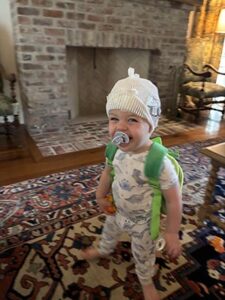
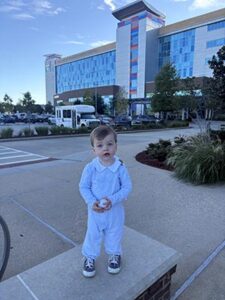 Miller turns two on March 17. Today, he is thriving.
The family will continue routine follow-ups. They’ll stay vigilant. But the fear no longer runs the house.
“It wasn’t until Dr. Shah that I had any ounce of peace,” Fran says. “He is so intelligent but so comforting. Baton Rouge is incredibly blessed to have him.”
Emergency care stabilized Miller when his life was on the line. But long-term answers require more than emergency response.
At Our Lady of the Lake Children’s Hospital, his family found something just as life-changing: clarity, partnership and confidence.
And the ability to finally exhale.