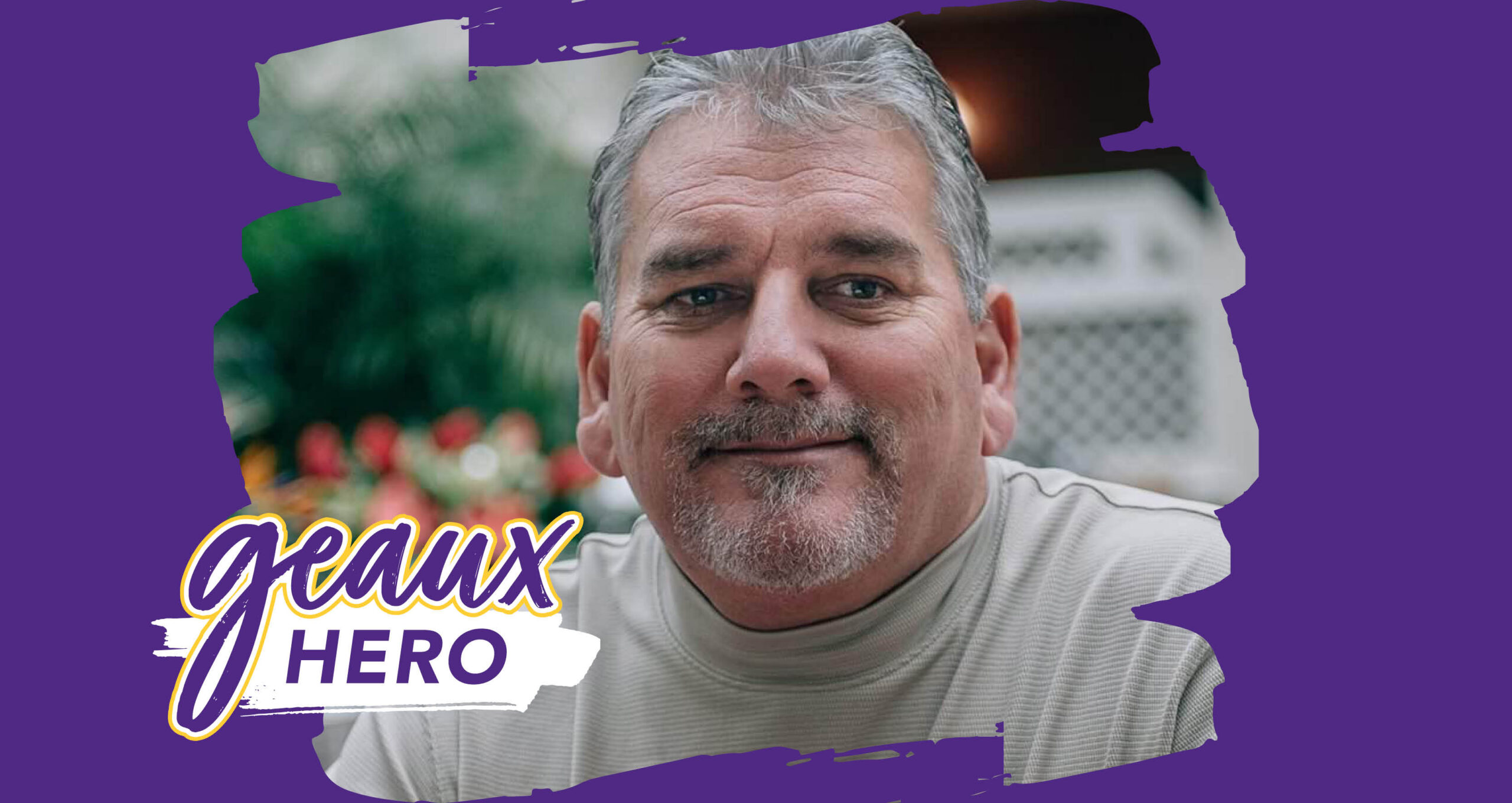
On most days, you can find Henry Childress in his workshop, hands busy with a piece of wood or under the hood of a classic car, bringing something old back to life.
It’s the kind of work that requires patience, precision and a steady hand. It’s also the kind of life he’s built over decades with his wife, children, seven grandchildren and a great-grandchild on the way, rooted in south Louisiana and shaped by the things that matter most.
That steady, familiar rhythm of life shifted after a New Year’s Eve celebration in 2007 when he woke up hoarse the next morning. At first, it did not seem like much, but the hoarseness lingered. Nearly eight months passed before the cause became clear.
Doctors eventually found a nodule on his vocal cords. It was cancer.
Treatment began with chemotherapy, but his body reacted poorly. By the third round, complications forced doctors to stop the treatment immediately. Around the same time, the tumor began to grow again, making it difficult for him to breathe.
What followed was a moment that would define everything that came next. He met with Andrew McWhorter, MD, otolaryngologist at FMOL Health | Our Lady of the Lake Cancer Institute, and was presented with two options.
“He gave me a choice,” Henry says. “I could do nothing and would have about six months to live, or I had to get a total laryngectomy.”
At 46 years old, the decision was stark.
“They weren’t too good,” Henry says of his thoughts in that moment. “Naturally, nobody wants to die that young.”
The next day, he went into surgery.
Facing Surgery and Its Aftermath
A total laryngectomy is a life-altering procedure. It removes the voice box entirely, changing not only how a person speaks but how they breathe and interact with the world. For Henry, the physical recovery was only part of the challenge.
“The hardest part was not having a voice box and coming out of surgery not being able to talk,” he says. “I had to use a chalkboard.”
There were emotional moments, too, especially when he saw the physical changes for the first time.
“When I finally got up out of bed and I looked in the mirror,” Henry says, “and saw the way my throat looked — that was hard.”
Despite the difficulty, the surgery achieved its goal. Surgeons removed the cancer, along with surrounding lymph nodes, and tests showed no further spread. July 3 will mark 18 years since Henry has been cancer-free.
What began as an urgent, life-saving measure became the turning point that gave him years he might not have had otherwise.
Care That Became Family
Throughout his journey, Henry found more than treatment. He found a team that stood beside him at every step. At Our Lady of the Lake, that connection went beyond clinical care.
“I wouldn’t trade my doctor for anything,” Henry says. “Me and Dr. McWhorter, we’re like best friends.”
That relationship was evident from the very beginning. When Henry’s condition became critical, his physician moved quickly, even shutting down his practice to prioritize Henry’s surgery.
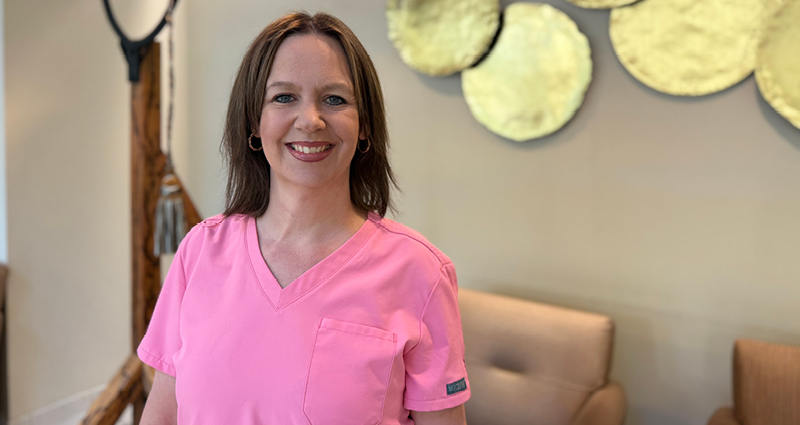
Henry also credits his speech-language pathologist, Mell Schexnaildre MA, CCC-SLP, as an essential part of his recovery and long-term success.
“They treated me like gold,” he says. “And they still treat me like gold.”
Finding His Voice Again
Losing a voice box often means losing the ability to speak in a traditional way. Many patients face ongoing challenges communicating, and some never regain a strong, natural-sounding voice. Henry’s experience has been different.
Today, he speaks hands-free, something that is not common among laryngectomy patients. Many people who go through this procedure have to use a finger to help direct air through a voice prosthesis to speak. Henry’s ability has opened the door to something more meaningful than his own recovery.
For the past 15 years, Henry has traveled across the country, visiting hospitals, meeting with doctors and speech-language pathologists, and connecting directly with patients preparing for or recovering from similar surgeries.
“I travel all over the United States,” he says. “I go to different hospitals and meet with patients. I work with them to try to get them to be able to talk hands-free.”
He meets people before surgery, when fear and uncertainty are often at their highest. He meets others afterward, when they are learning to navigate a new reality. In each case, he offers something simple but powerful: proof that life can continue.
“I feel like I’ve got to give back,” Henry says. “I’ve been able to live a normal life and I’m able to talk.”
Patients respond to that example.
“They love it,” he says. “But I always explain to them, everybody’s not the same.”
Even so, the message he shares remains consistent and deeply personal.
“Don’t let it get you down,” Henry says. “You’ve got to get up out of bed and live your life. If you lie there and feel sorry for yourself, you’ll never get better.”
His voice, once at risk of being lost forever, has become a source of encouragement for others facing the same uncertainty he once did.
A Moment on the Field, A Message Beyond It
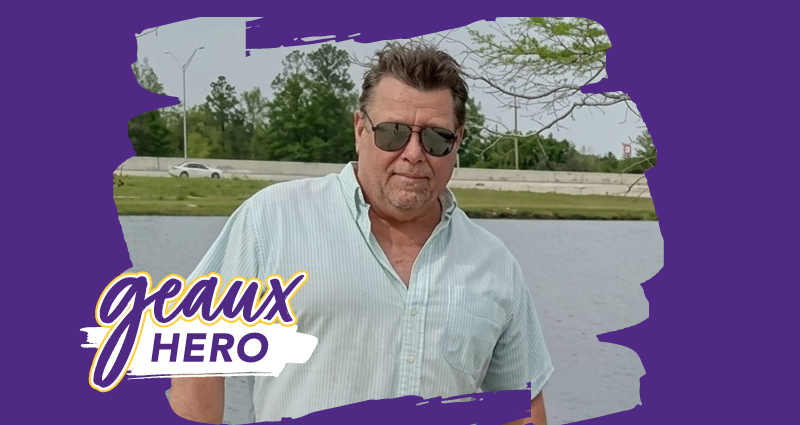
On April 18, Henry will be recognized as an FMOL Health | Our Lady of the Lake Geaux Hero during the LSU Baseball game against Texas A&M, honoring his strength, resilience and the impact he has made on others.
For someone who has spent years helping patients behind the scenes, the recognition is both unexpected and meaningful.
“It’s an honor,” Henry says.
His family will also be there to see it. His wife, children and grandchildren have already been working to secure tickets, eager to witness the moment together.
For Henry, the recognition is not just about looking back. It is about continuing to move forward and sharing a message with anyone who might need it.
“Just live your life,” he says. “Don’t let cancer define you. Just keep getting up every day and living.”
It is a message shaped by experience, grounded in resilience and carried forward by a voice that, against the odds, is still being heard.