Halloween has always meant something special to Josepha Boudreaux and her family.
It is a night of creativity, laughter and tradition, especially now that their family includes grandchildren who look forward to dressing up together.
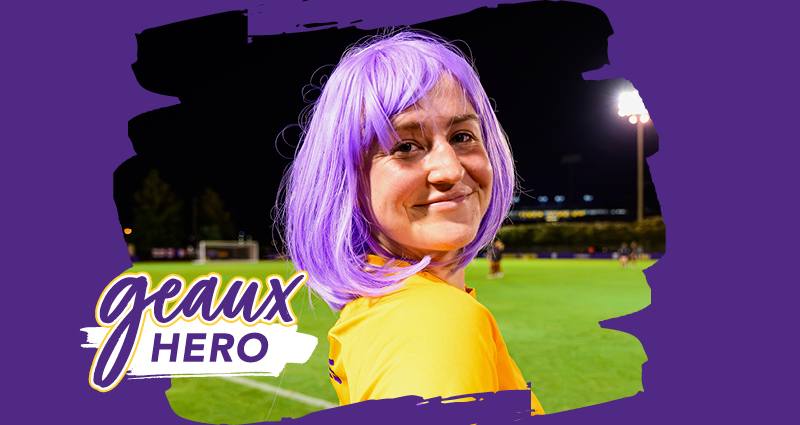
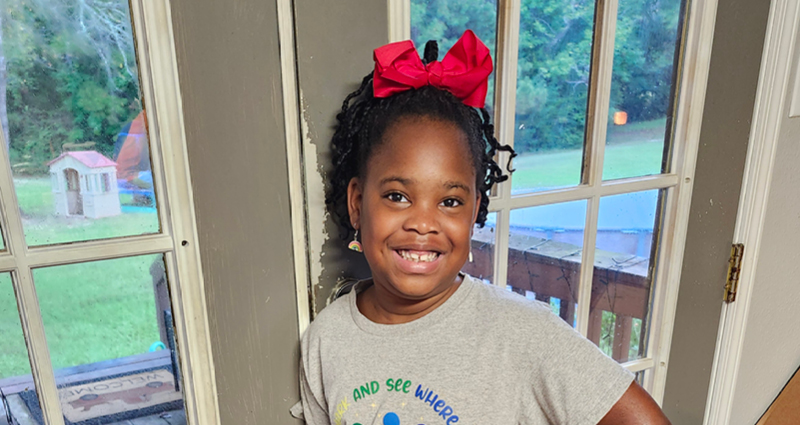
For Halloween 2025, the plan was to bring The Addams Family to life. Their granddaughter wanted to be the character Wednesday, and Josepha took on the challenge of creating a Cousin Itt costume for herself by hand.
The family gathered on the porch, eager to take a quick photo before heading out. It was a familiar scene filled with anticipation. Then, in an instant, everything changed.
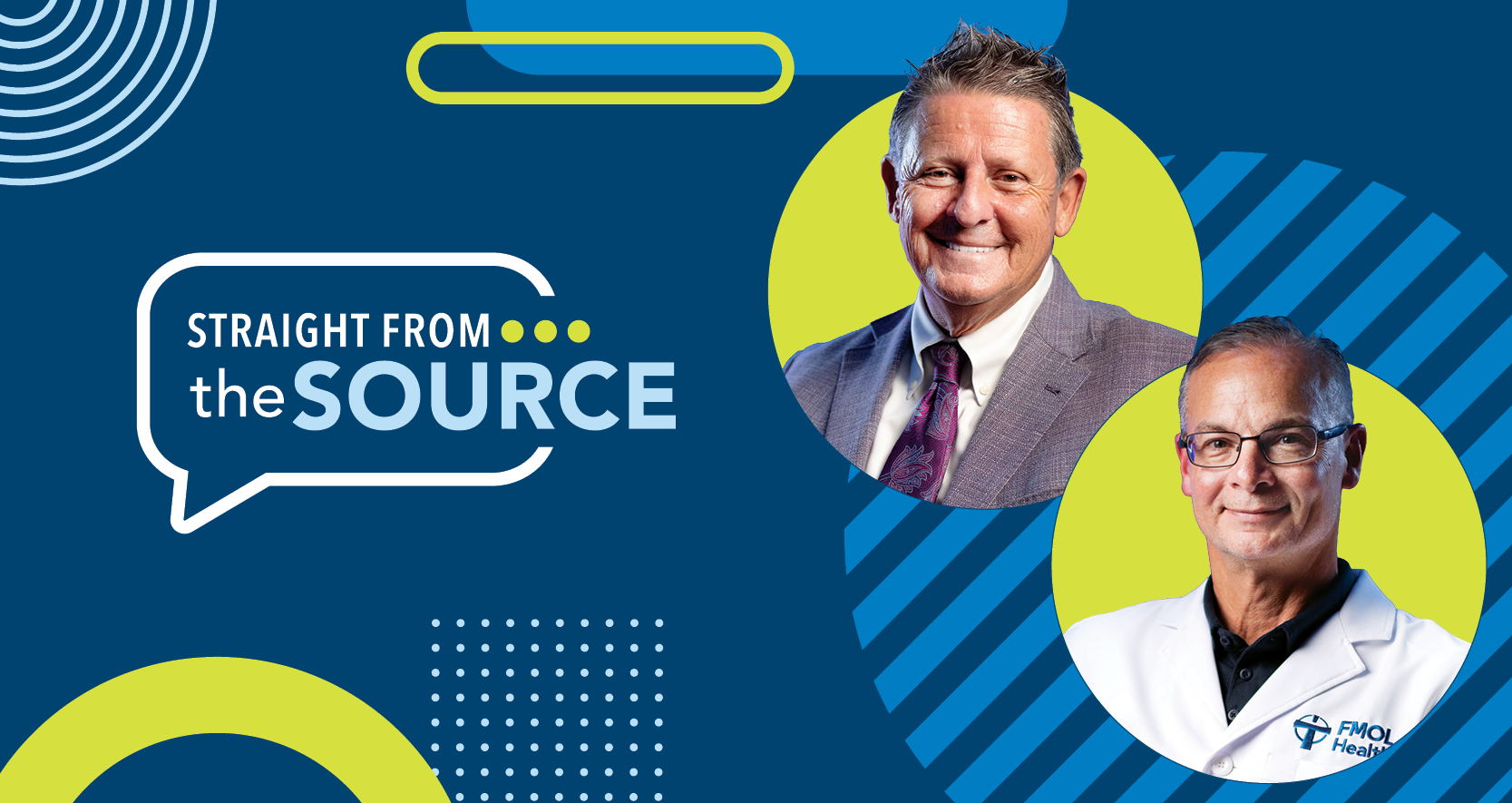
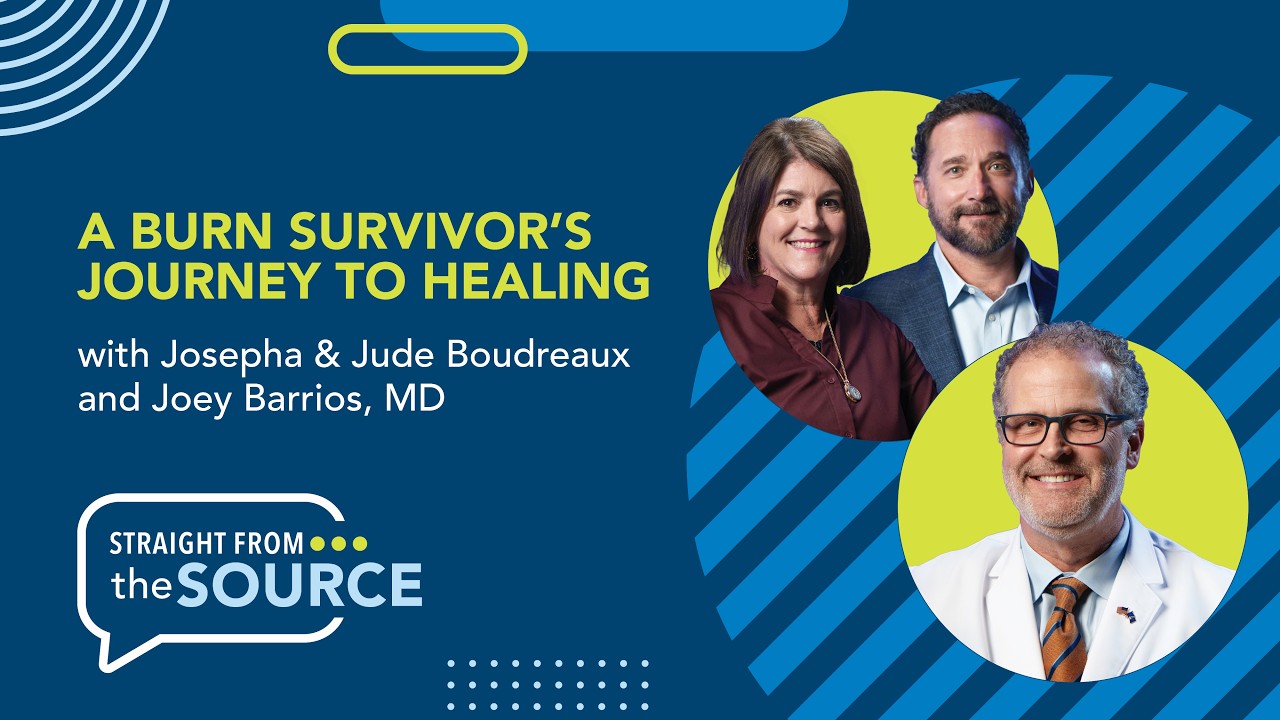
In this episode of Straight from the Source, Josepha, her husband, Jude, and Joey Barrios, MD, FMOL Health | Our Lady of Lourdes Burn Center medical director, reflect on a night that began like so many others then changed their lives in a matter of seconds.
Eleven Seconds That Changed Everything
What happened next unfolded faster than anyone could fully process.
As the photo was being taken, Josepha stood too close to a lit tea candle. Her costume — layered hula skirts made of raffia, a fiber from dried palm trees leaves that is very flammable — quickly caught fire and engulfed Josepha in flames.
“I felt some heat behind my legs,” Josepha says. “And once I felt it, I said, I think I’m on fire. And I just started running.”
The family watched from the porch, at first unable to comprehend what was going on, then sprinting into action. Jude and their children rushed toward her, pulling at the costume and trying to smother the flames with their hands.
“Seeing the person you want to spend the rest of your life with is literally on fire in front of you,” he says. “You don’t think. You just go.”
Eventually, their son grabbed a garden hose and extinguished the flames. Neighbors, believing the house was on fire, called for help. Emergency crews arrived within minutes.
The moment lasted just 11 seconds, but for Josepha and her family, it felt like an eternity.
“I thought I was burning for a very long time,” she says. “I know it was 11 seconds, but I thought it was 20 or 30 minutes.”
A Long Road Begins at the Burn Center
She was rushed to Our Lady of Lourdes Regional Medical Center, where the severity of her injuries quickly became clear. She had burns covering more than 60 percent of her body.
Burn injuries differ from many other forms of trauma because they affect the body’s largest organ. When that protective barrier is compromised across such a large area, the body must work to maintain basic functions while also healing.
“When the skin is injured, it affects everything from temperature control to preventing infection,” Dr. Barrios explains.
For patients like Josepha, treatment is not a single procedure but an ongoing process. Over the course of her 40-day hospital stay, she underwent multiple surgeries and skin grafts. Care teams worked to remove damaged tissue, protect healthy areas and gradually restore the skin’s ability to function.
That work happens through constant coordination between physicians, nurses, therapists and other specialists. The goal is not only to treat the injury, but to support the patient through every stage of recovery.
Josepha does not remember much from those first days.
“I woke up in the hospital, and I was pretty much mummified,” she says. “It was very painful.”
At the same time, the emotional toll was just as real. What stood out most for Josepha and Jude in the weeks that followed was the consistency of care. Each interaction, each procedure and each moment of support contributed to a sense of stability in an otherwise overwhelming situation.
Josepha describes the team as “burn whisperers.” Jude, who stayed by her side every night, saw that care up close. The most difficult moments often came during daily wound care and bandage changes, when even small movements could cause significant pain.
“They tried everything they could to be gentle and careful with her,” he says. “It takes a very, very special individual, and they had it in boatloads.”
Support extended far beyond the hospital room. Friends, family and even strangers rallied around them. Burn patients require blood transfusions to manage the losses from the procedures and replace fluids and damaged red blood cells. More than 180 units of blood were donated in Josepha’s name.
“I was just floored,” she says. “I felt that what happened to me helped a lot of people in town.”
The Day She Walked Out
After 40 days, Josepha reached an important milestone. Her care team determined she was ready to leave the hospital and continue healing at home.
It was a moment filled with both relief and uncertainty. The hospital had become a place of constant support, where every need was anticipated. Leaving meant stepping into a new phase of recovery, one that required independence and adaptation.
“When they asked me if I was ready, I said, ‘No,’” Josepha says.
Still, the day of discharge became a powerful reminder of how many people had been part of her journey. Staff members lined the halls alongside family and friends, creating a sendoff that reflected the depth of connection formed during her stay.
“The parade was a surprise,” she says. “I was just so happy to see people there for me.”
For Jude, the moment carried mixed emotions.
“It was bittersweet because it was really hard to hug all the nurses and tell them bye,” he says. “But I said, this is not going to be goodbye.”
Returning home brought its own challenges. Everyday routines required adjustment, and even small changes felt significant. Healing did not end at discharge. In many ways, it was just beginning.
Josepha’s recovery now includes regular occupational therapy, daily stretching and a strict regimen designed to support long-term healing. Burn recovery is measured in months and years, not days or weeks.
“I know the importance of the way to heal my body. It’s a job,” she says. “I have another job.”
Over time, progress has allowed her to return to the parts of life that matter most. Time with her grandchildren, daily routines and a sense of normalcy have slowly come back into reach.
Care That Goes Beyond the Hospital
The experience at the Our Lady of Lourdes Burn Center is defined by more than clinical treatment. It is shaped by the relationships built between patients, families and care teams.
Burn care requires a multidisciplinary approach, with specialists working together to address not only physical injuries but also emotional and psychological needs. That level of coordination is essential for patients facing long and complex recoveries.
Dr. Barrios describes it as a collaborative effort, where each member of the team contributes to the patient’s progress. Regular communication ensures that care is constantly adjusted based on what the patient needs in the moment.
For Josepha and her family, that approach left a lasting impact. The support they received extended beyond medical care, creating connections that continue even after discharge.
Today, Josepha has found a new purpose in returning to the burn unit to visit patients who are still in the early stages of recovery. Her presence offers something uniquely powerful: the perspective of someone who has been there and made it through.
“I want to come back. I want to help others,” she says. “Some patients don’t have anyone to visit. I feel I need to do something.”
At its core, Josepha’s story is about more than a traumatic moment. It is about what happens after — the people who step in, the care that surrounds patients and the resilience that carries them forward.
For Dr. Barrios, seeing patients return to their lives is what matters most.
“To see them get back to not only surviving but thriving — that brings me joy,” he says.