For most of her life, Karen Rhodes never thought much about the dangers of the sun.
Like many people who grew up in South Louisiana, her childhood was spent outdoors. Summers meant long days swimming at the neighborhood pool, playing outside with friends and soaking up the sunshine without much thought about sunscreen or skin damage.
“I spent a lot of time out in the sun,” she says. “We all did as kids, and we didn’t know to wear sunscreen and protect ourselves.”
Now 64, Karen looks back on those years differently after facing two melanoma diagnoses within less than a year. Both cancers were caught early thanks to regular skin checks with her dermatologist, a decision she believes made all the difference.
Summers in South Louisiana
That love of being outside has never changed.
“The sun does great things,” Karen says. “We need vitamin D. I love being outside. It feeds my soul and my spirit. It makes me happy when I’m out in the garden and working outside.”
But over time, years of sun exposure began to catch up with her.
Karen has fair skin and blue eyes, both factors that can increase the risk of skin cancer. Over the years, her dermatologist, Jill Fruge, MD, had treated precancerous spots and removed small squamous cell carcinomas during routine visits.
As Karen got older, those appointments became more frequent.
The Spot That Didn’t Look Right
In July 2025, Karen went in for a routine six-month skin check with Dr. Fruge.
During the appointment, Dr. Fruge asked if there was anything new Karen wanted her to examine. Karen mentioned a mole on her left calf that seemed unusual.
Dr. Fruge immediately decided to biopsy the spot.
A few days later, Karen received the results. What she assumed would be another routine removal turned out to be melanoma.
Karen remembers the moment she got the news. Test results from the biopsy popped up on MyChart, and her husband, Kent Rhodes, MD, an internal medicine and pediatrics physician at Our Lady of the Lake, read them and gave her the news.
“When he said, ‘It came back as melanoma,’ I think I screamed in the car,” Karen says. “I was like, ‘Are you kidding me?’ I just never fathomed that I would be dealing with that.”
The melanoma was deeper and wider than expected, requiring surgery with John Lyons, MD, at Our Lady of the Lake Cancer Institute.
In August 2025, Karen underwent surgery to remove the cancer. Soon after, she received welcome news. The margins were clear, meaning the melanoma had been completely removed before spreading.
“If it would have gone undetected, it could have gotten into my bloodstream system,” Karen says. “That’s why I was so relieved when we found out they got it all. I didn’t have to go through chemo or radiation.”
An Unexpected Recovery
Karen expected the surgery to be the end of her melanoma journey.
Instead, the weeks that followed became much more difficult than anticipated.
About a week after her stitches were removed, she developed a severe infection in the surgical wound. Her leg swelled dramatically, sending her back to the hospital for five days of treatment.
By October, she began wound care treatments that continued through December. Recovery kept her away from many of the activities she normally enjoyed, including LSU football season and family tailgates.
Still, Karen remembers feeling deeply supported throughout the process.
“Everybody was so attentive to me and so concerned,” she says.
Karen says her care team stayed closely connected throughout her recovery. Dr. Fruge followed her progress even while she was hospitalized, communicating directly with Dr. Lyons, infectious disease doctor Katie Taylor, MD, and other physicians involved in her treatment.
At one point, Karen found herself surrounded by physicians discussing the best next steps for her care.
“I just sat there staring at all of them, and I said to them, ‘Y’all are brilliant. I trust every one of you. Make it go away,’” she recalls.
During the hardest parts of recovery, Karen says her faith became one of her greatest sources of strength. Surrounded by prayers from friends, family and members of her church community, she found comfort and peace during the long months at home healing.
A Story She Now Shares With Others
Karen’s experience changed the way she talks about skin health with friends and family.
Since her diagnosis, she says many friends have scheduled skin checks after hearing her story.
“So many of my friends, I got to get checked or I’ve had some make appointments to go get their skin checked,” Karen says.
Her own story reinforced just how important consistent screenings can be. During a follow-up appointment earlier this year, Dr. Fruge discovered another melanoma on Karen’s opposite leg.
This time, it was caught extremely early.
“In fact, my second melanoma, I didn’t even know I had a spot back there,” Karen says. “She told me when she saw it, she goes, ‘I just don’t like the coloring of this one.’”
Because it was superficial, Dr. Fruge was able to remove it in the office with clear margins.
Karen now encourages everyone, especially older adults, to prioritize regular skin exams.
“Get checked consistently,” she says. “Don’t do it once in a blue moon. You just never know what’s there.”
A Geaux Hero With an Important Message
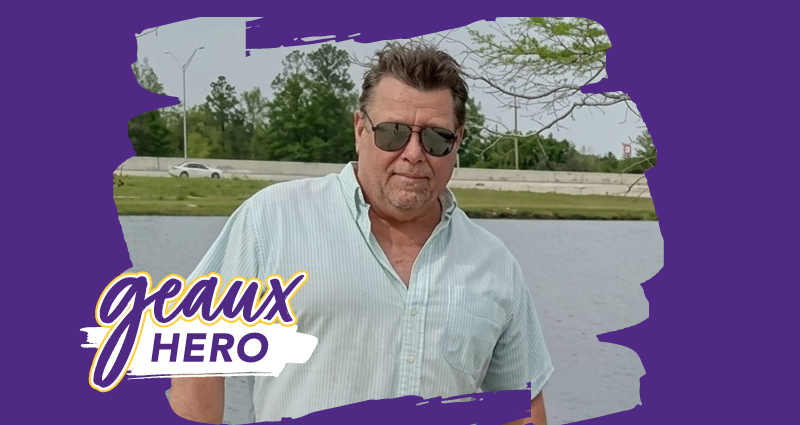
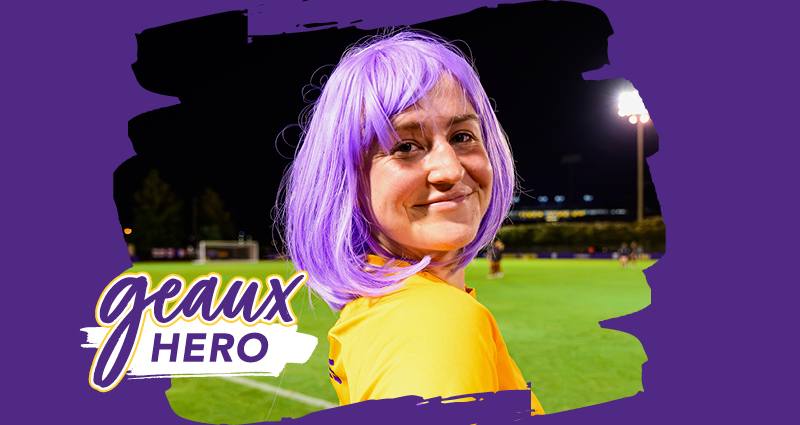
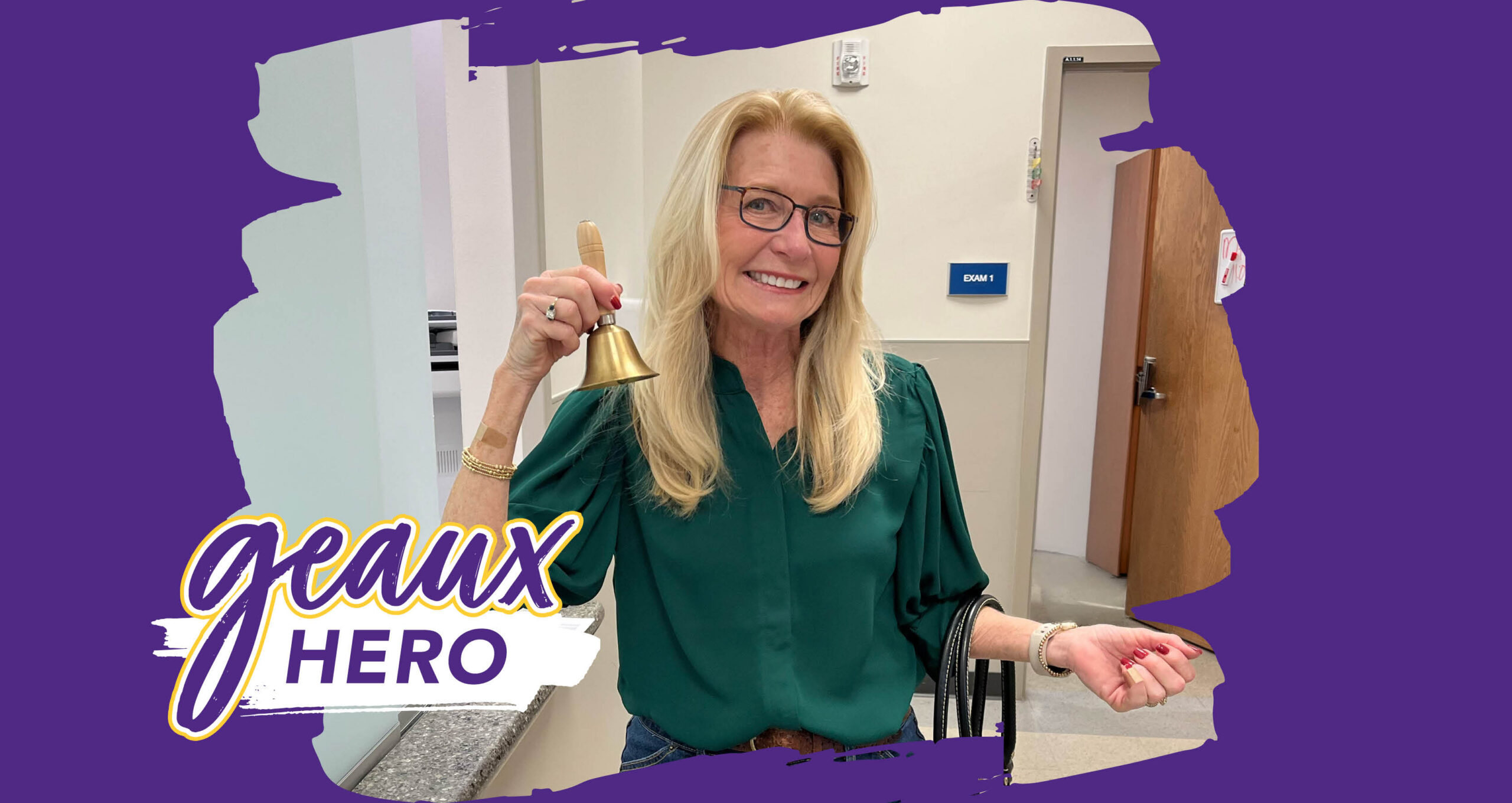
Karen will be recognized as a Geaux Hero during Saturday’s LSU Baseball game vs. Florida, an honor she hopes will encourage others to pay closer attention to their skin and schedule regular screenings.
“I hope my story and my example would encourage someone to get checked and it may help them to not ignore a possible problem,” she says.
For Karen, the recognition feels especially meaningful because of her family’s lifelong connection to LSU. She met her husband there, all four of their children graduated from LSU and weekends in Baton Rouge often revolve around Tigers sports.
“We bleed purple and gold,” Karen says.
As she prepares to step onto the field this weekend, Karen hopes people remember one simple message.
Enjoy the outdoors. Love the sunshine. Just do it safely.
“We have to be smart about it and protect ourselves and get it checked by the professionals,” Karen says. “We can’t diagnose ourselves. We need to be checked.”