For people living with opioid use disorder, the hardest step often isn’t treatment.
It’s asking for help.
That moment when someone is finally ready to admit they have a problem and reach out is often brief. It can be overshadowed by fear, shame and the worry that they’ll be judged instead of helped.
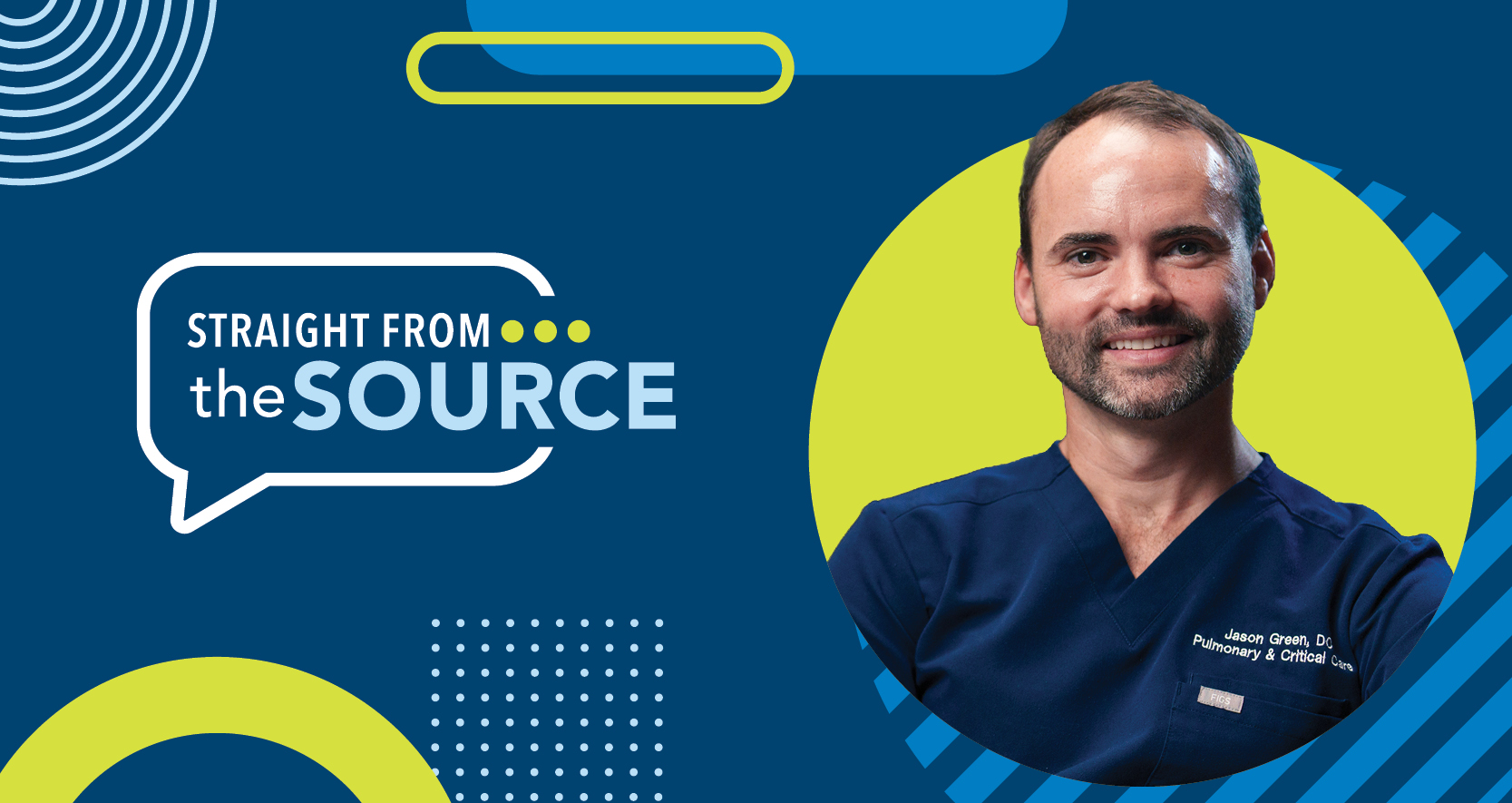
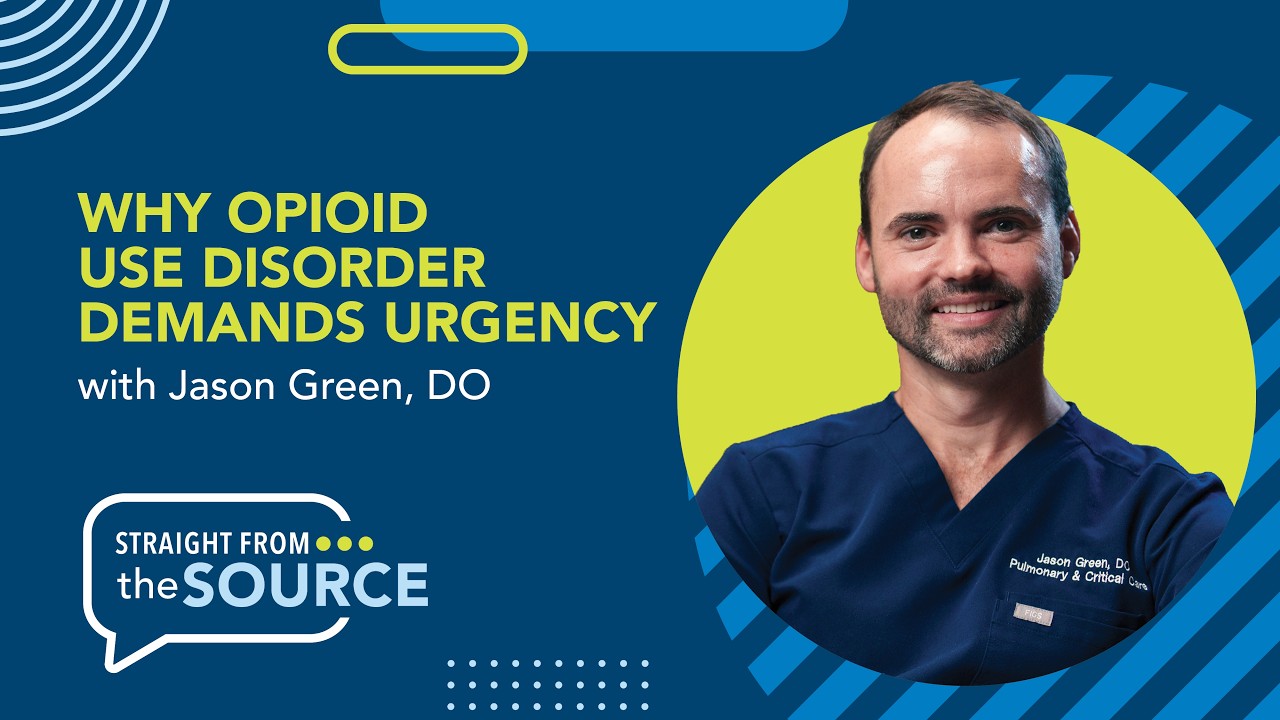
Dr. Jason Green has seen those moments firsthand.
As a pulmonary and critical care physician and assistant professor with LSU Health Sciences Center who teaches residents at FMOL Health | Our Lady of the Lake, Dr. Green cares for patients with substance use disorder in the intensive care unit. But his understanding of addiction extends far beyond his medical training.
He’s also a brother.
In the latest episode of Straight From the Source, Dr. Green shares the story of his older brother, Michael, whose struggle with opioid use disorder transformed the way Dr. Green thinks about medicine, compassion and the responsibility healthcare providers have when someone is ready to accept help.
A Window That Doesn’t Stay Open Forever
One idea surfaced throughout Dr. Green’s conversation more than any other: the “window of opportunity.”
Through conversations with people living in recovery, including fellow physicians, colleagues and friends, he came to understand that many people experience brief moments of clarity during addiction.
Those moments don’t last long.
“The common theme was that there would be moments of clarity,” Dr. Green says. “Almost universally, it was easier to go back to using drugs to hide and cover the shame associated with it rather than seek help.”
When someone does choose to ask for help, healthcare providers and families must recognize how significant that moment is.
“It’s a call to action,” Dr. Green says. “Those moments of opportunity are precious and few.”
Compassion Can Change the Conversation
When Michael reached that moment, Dr. Green and his family immediately brought him to Our Lady of the Lake Regional Medical Center’s emergency department.
What happened next left a lasting impression.
Rather than judgment, Michael found compassion.
“The physician presented himself as understanding and as a resource for help,” Dr. Green recalls. “He was compassionate, and he offered treatment.”
That interaction changed Michael’s perception of healthcare from something to fear into a place where help was possible.
For Dr. Green, it reinforced an important lesson: every patient deserves to be met with dignity, especially when they’re at their most vulnerable.
We Don’t Judge Other Chronic Diseases
One of the most memorable moments in the conversation comes when Dr. Green challenges the way society views addiction.
In his pulmonary clinic experience, Dr. Green encountered many patients who continued to smoke despite living with emphysema. Others struggle to avoid asthma triggers.
“My asthma patient might love their cat and not want to get rid of it,” he says. “I’m not angry with them for it. I’m going to understand and try my best to treat their disease. And it’s the same way with opioid use disorder.”
Like asthma, diabetes or heart disease, opioid use disorder is a chronic medical condition.
Recovery isn’t always linear. Relapse doesn’t mean treatment has failed. It means the person still needs care.
There Is No ‘Typical’ Person With Opioid Use Disorder
Dr. Green also challenges another common misconception.
“There is not a typical drug user.”
At Michael’s funeral, the people gathered represented every corner of the community.
There were physicians. Pharmacists. Business owners. Friends from high school. Family members. Parents. Children. People from every walk of life.
“Opioid use disorder is not isolated to a preconceived notion,” Dr. Green says. “It is people within our community, within our families.”
It’s a reminder that addiction doesn’t discriminate and neither should compassion.
More Than a Diagnosis
Perhaps the most powerful takeaway from Dr. Green’s story is one simple truth: People are more than the diseases they carry.
“They are not just their disease,” he says. “They are my brother.”
That perspective shapes every patient encounter.
It also reflects FMOL Health’s mission to extend the healing ministry of Jesus Christ by caring for every person with dignity, compassion and hope.
When someone reaches out for help, healthcare has an opportunity not simply to treat an illness, but to change the course of a life.
Sometimes that opportunity lasts only a moment. Recognizing it may make all the difference.
Listen to Straight from the Source wherever you get your podcasts, including YouTube.
If you or someone you love is struggling with opioid use disorder, know that help is available. Resources include:
https://www.samhsa.gov/find-help/helplines/national-helpline
https://opioidresponsenetwork.org/resources/
https://www.dea.gov/recovery-resources
https://www.fmolhs.org/locations/greater-baton-rouge/tau-center
https://www.fmolhs.org/services/mental-health/psychiatry
https://www.fmolhs.org/services/mental-health/adolescent-resources
https://www.fmolhs.org/services/mental-health/adult-resources
Hidden Curricula, Ethics, and Professionalism: Optimizing Clinical Learning Environments in Becoming and Being a Physician (ACP Position paper in Annals of Internal Medicine) https://pubmed.ncbi.nlm.nih.gov/29482210/
The Curbsiders is a popular medical podcast that covered hidden curriculum: https://thecurbsiders.com/curbsiders-podcast/medical-education/125-hidden-curriculum
The Louisiana and National Bridge Programs have resources for medical professionals.
National Clinician Consultation Center: Substance Use Warmline
Free, confidential, clinician-to-clinician phone consultation on evidence-based substance use evaluation and management.
Available Monday – Friday, 7 AM to 5 PM PT (excluding holidays) to any provider in need of specialty addiction medicine consultation. Voicemail is open 24 hours a day, 7 days a week. 1 (844) ASK-NCCC
Louisiana Provider-to-Provider Consultation Line (PPCL) for pediatric and perinatal mental health
Providers can call the PPCL at (833) 721-2881 during regular business hours (8 a.m. – 4:30 p.m.) and speak directly with a mental health consultant or submit a consultation request online.
Bridge’s Critical Access Toolkit includes materials explaining opioid use disorder, medication for opioid use disorder (MOUD), and overdose prevention tactics.
https://bridgetotreatment.org/addiction-treatment/national-bridge/critical-access-toolkit/
Quick-access protocols to treat a patient on-shift: Bridge to Treatment
Outpatient Evidence-Based Psychotherapy for Substance Use Disorders
The FMOL Health | Our Lady of the Lake Center for Psychiatric Services offers outpatient evidence-based psychotherapy services in the Baton Rouge market for individuals with substance use disorders (SUD), including opioid use disorder (OUD). Supported through funding from the U.S. Department of Health and Human Services and the Louisiana Department of Health, and in partnership with the LSU Department of Psychology, this initiative has expanded access to outpatient psychotherapy by increasing the number of supervised graduate student therapists-in-training available to provide evidence-based treatment. Services are led by Dr. Julia Buckner who provides clinical supervision. Referrals can be made by calling (225) 374-0423.