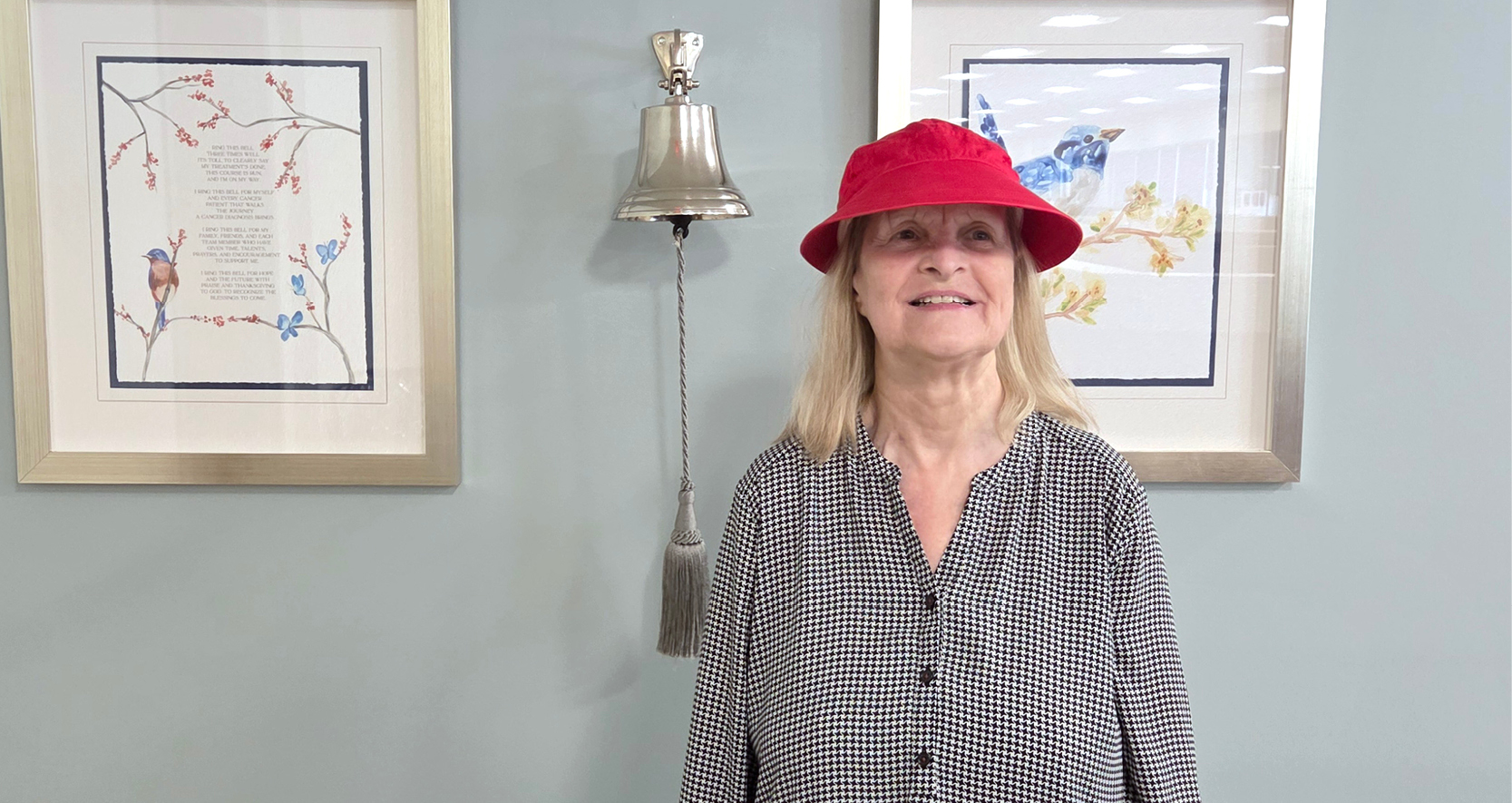
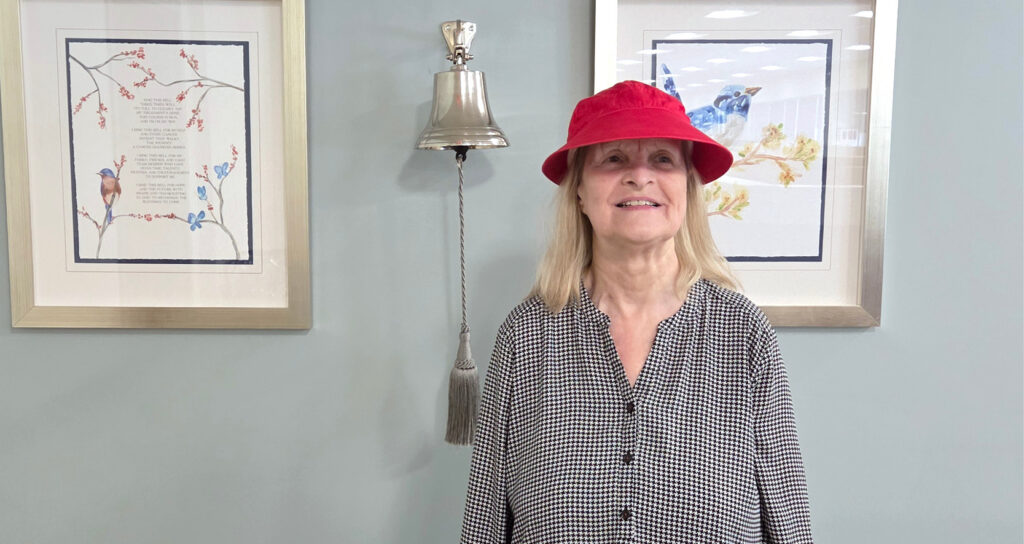
For years, Terry Brazell lived with a persistent cough that she initially thought was caused by allergies. She saw an ear, nose and throat specialist and tried to manage the symptoms, but the coughing continued. Eventually, her voice became raspy, and she grew increasingly convinced something more was wrong.
Despite having no family history of cancer, Brazell, asked to see a gastroenterologist to investigate whether her symptoms could be a sign of esophageal cancer. When that evaluation found nothing, she asked to see a pulmonologist.
That decision led to life-changing diagnoses and access to advanced lung cancer treatment at FMOL Health | Our Lady of Lourdes in Lafayette.
“The care I have received through Lourdes has been amazing. I don’t think I could have gotten this level of treatment anywhere else,” said Brazell, now 69. “I’m so thankful it’s all right here in my backyard.”
Brazell was initially diagnosed with pulmonary fibrosis, a condition that causes scarring in the lungs. Although the damage cannot be reversed, treatment can help slow its progression. During a subsequent evaluation after some of the inflammation had subsided, another CT scan revealed Brazell had an irregular lung nodule.
The nodule was identified through Eon Patient Management, artificial intelligence-based software that detects potentially concerning nodules on chest imaging. The technology helps physicians identify abnormalities that might otherwise go undetected.
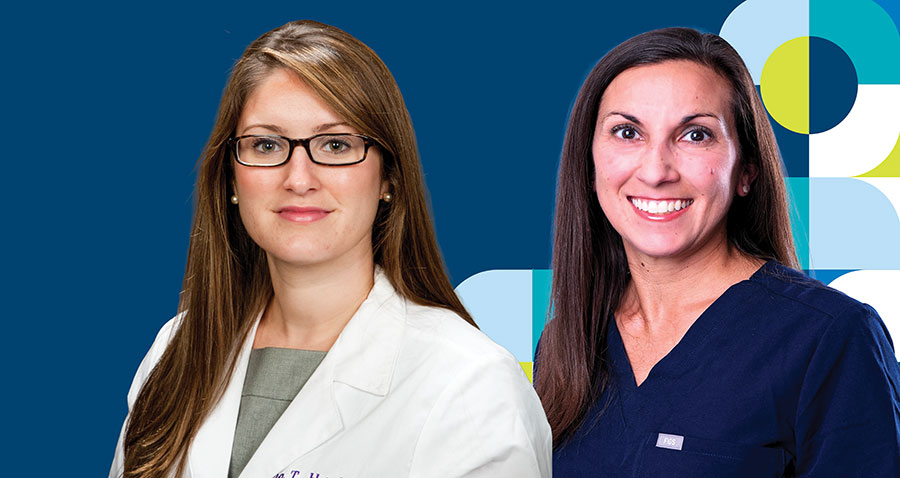
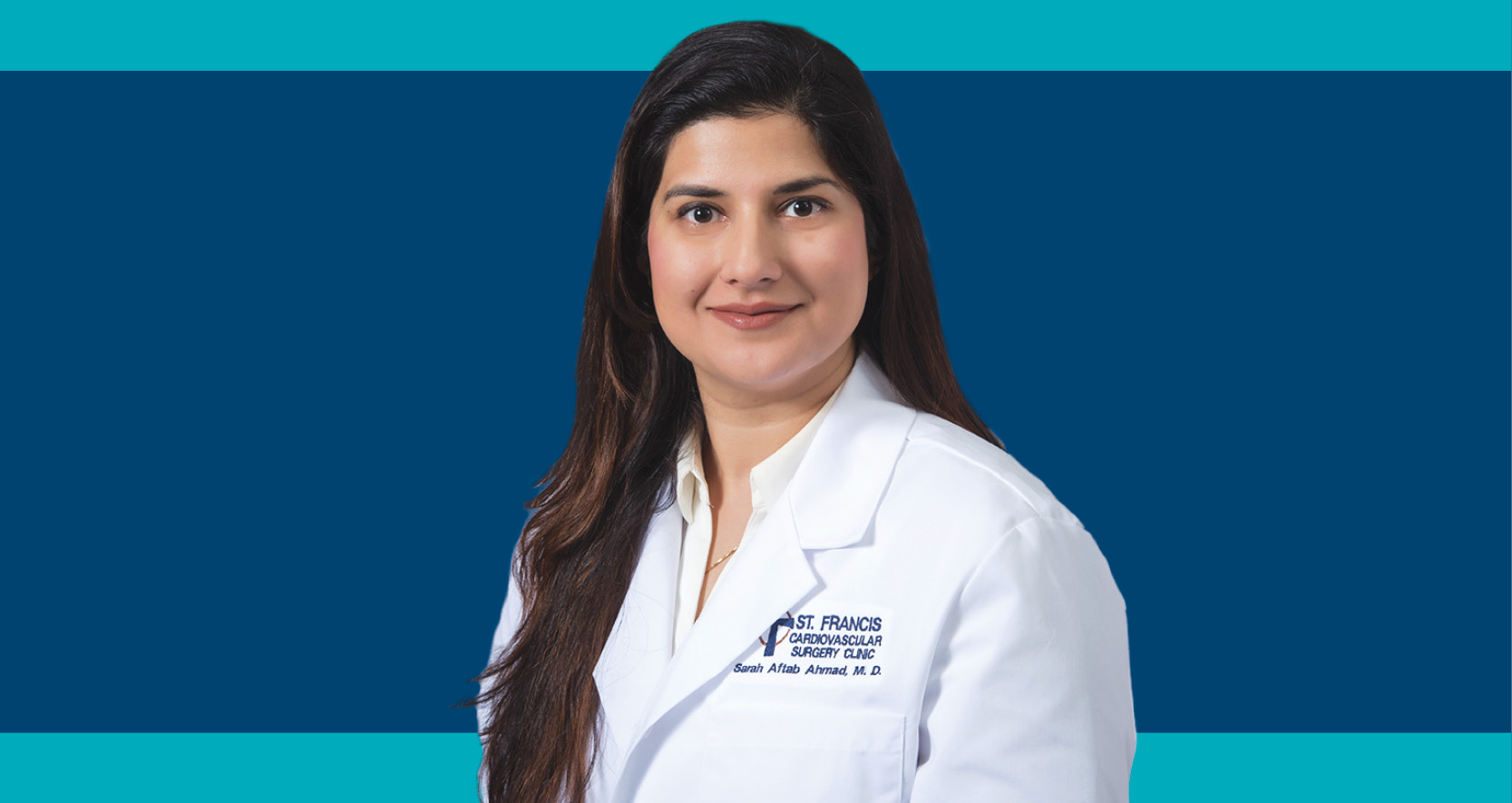
“Finding a nodule as early as possible is significant when it comes to treatment. All of the specialists become aware of the finding,” said Dr. Safi Haq, a cardiovascular and thoracic surgeon at Our Lady of Lourdes. “We all look at things differently. When we look at a finding together, it gives us important perspectives so we can guide the patient care in the best way possible.”
Brazell then underwent a biopsy using Intuitive Ion Robotic Bronchoscopy, a minimally invasive platform that allows doctors to examine nodules in every part of the lung with precision and stability. The biopsy confirmed she had Stage 2 lung cancer.
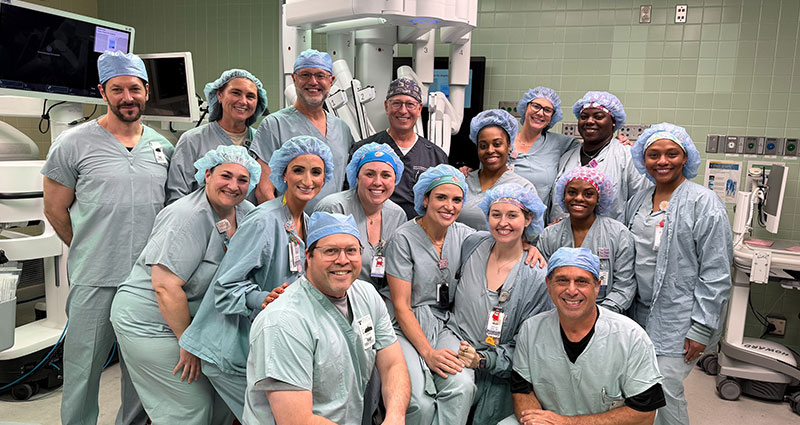
Just two months after her biopsy, the cancer had progressed to more lymph nodes and was reclassified as Stage 3. In March, Dr. Haq performed surgery on Brazell using the Intuitive da Vinci V robotic surgical platform to remove a portion of her right lung and cancerous tissue from several lymph nodes.
“The da Vinci allows us to use small cuts, long instruments and special cameras to work in tight spaces with more magnification,” Dr. Haq explained. She also received an infusion port for subsequent chemotherapy treatments.
Soon after her diagnosis, Brazell said, providers explained that her case was reviewed by a multidisciplinary team of physicians with Our Lady of Lourdes, including representatives from radiology, oncology, pulmonology and other disciplines. The team gathers regularly to review images initially flagged by Eon for revealing items in the lungs that might be a cancer concern.
Following surgery, Brazell completed four rounds of chemotherapy. Today, she has completed treatment and is cancer-free, although she continues to use supplemental oxygen because of her separate lung disease.
“It is a little scary to think about what might have happened, because the cancer was progressing very fast between January and March,” she said. “I’m not sure how things would have turned out had they not done the surgery when they did.”
Dr. Haq said those kinds of life-saving outcomes are what makes Eon and Ion so impactful.
“This technology helps us identify earlier stage lung cancer more frequently. We want to find lung cancer in stage 1 and stage 2 to give patients better treatment options and a better chance at survival,” he said. “Our patients are fortunate because they experience this cutting-edge technology from the beginning of their journey with us. Our whole team is proud to see this process come to fruition. Everyone is on the same page and everything is very patient-centric.”
Our specialists use AI-assisted software and robotic surgery to detect and safely remove the smallest, hard-to-reach lung nodules, giving patients quicker results and reduced recovery time, all close to home.