Northeast Louisiana patients have a new option for fully robotic thoracic surgery without leaving home.
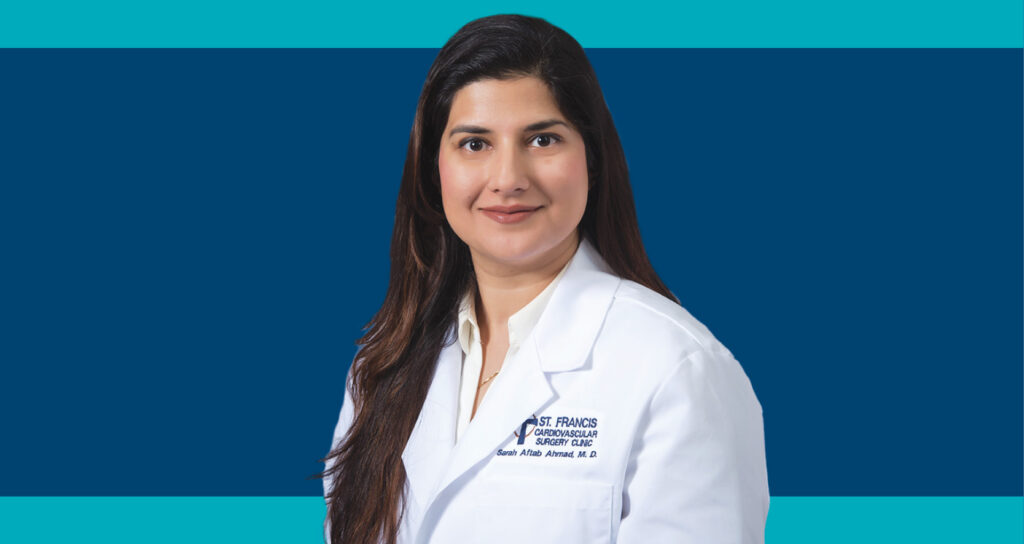
On January 19, FMOL Health | St. Francis reached a major milestone when cardiothoracic surgeon Sarah Ahmad, MD, and her team performed the region’s first fully robotic esophagectomy. The procedure marks a significant step forward in how complex thoracic care is delivered locally, expanding access to advanced surgical options for patients who previously had to leave the region for treatment.
Historically, fully robotic esophagectomy surgeries have only been available primarily at large academic medical centers. With this achievement, St. Francis brings that level of care closer to home for patients across northeast Louisiana.
Dr. Ahmad sees this moment as part of a broader commitment to providing high-level care within a community hospital setting.
“We are bringing to our community something that has not been offered here before,” she says.
Traditional vs. Robotic: How the Surgery Has Changed
Esophagectomy is one of the most complex procedures in thoracic surgery, requiring surgeons to operate in the neck, abdomen and the chest. The goal is to remove the diseased portion of the esophagus and rebuild the pathway for food using the patient’s stomach or, in rare cases, the colon.
Traditionally, this surgery required large incisions in the abdomen and chest, and sometimes the neck. While effective, these approaches placed significant physical stress on the body and often led to longer recovery times and higher risks of complications.
Over time, minimally invasive surgical techniques have evolved to reduce incision size, decrease perioperative morbidity, and enhance postoperative recovery.
In recent years cardiothoracic surgeons at St. Francis have incorporated minimally invasive technology for the thoracic component of esophageal mobilization, however the abdominal phase of the operation continued to require a conventional open incision.
This case represents the first instance at St. Francis in which both abdominal and thoracic components of an esophagectomy were performed robotically, thereby constituting a complete robotic, minimally invasive esophagectomy.
Keeping Care Close to Home
For patients diagnosed with esophageal cancer, treatment often includes chemotherapy or radiation before surgery, followed by a long recovery and sometimes additional therapy post operatively. Having to travel long distances for surgery adds stress at an already difficult time.
By offering fully robotic esophagectomy locally, St. Francis removes that barrier for many patients and families. Dr. Ahmad emphasizes that keeping patients close to home supports not only physical recovery, but also emotional well-being.
“Patients in our community do not have to travel to other states to get this kind of care,” she says. “We have strong oncology, general surgery and cardio-thoracic departments. We’re excited that we’re able to bring so much to this community and keep our patients in town.”
From a clinical standpoint, robotic-assisted esophagectomy has been associated with improved recovery in the early weeks after surgery. While the procedure itself remains extensive, studies and experience suggest patients may experience fewer postoperative complications and better functional recovery.
“We’ve seen lower rates of pulmonary, cardiac, and infectious complications,” Dr. Ahmad says. “We’ve also seen improved functional recovery at two weeks, less overall postoperative pain, and improved quality of life measures.”
These improvements are especially meaningful for patients who have already undergone chemotherapy or radiation, which can weaken the body before surgery.
“They’ve taken a big hit on their body,” she says. “So, whatever we can do to make it easier for them to recover from surgery, that will improve their quality of life.”
The Future of Robotic Surgery at St. Francis
The fully robotic esophagectomy represents a milestone, but it is also part of a larger trajectory for surgical care at St. Francis. Over the past several years, the hospital has steadily expanded its robotic surgery programs across multiple specialties, including general surgery and thoracic surgery.
Dr. Ahmad views this as a careful and deliberate progression that prioritizes patient safety, team training, and sustainable growth.
“We have successfully transitioned to an exclusively robotic approach for the management of lung cancers and mediastinal tumors. We are now expanding this advanced minimally invasive platform to the treatment of esophageal malignancies,” she says. “This initiative brings state-of-the-art surgical technology to our program.”
What This Means for Dr. Ahmad and Her Team
From surgeons and anesthesiologists to nurses, technicians, and support staff, Dr. Ahmad describes the success of the program as the result of a team working together toward a shared goal.
“I think this is a big moment for our team and for the surgery department,” she says. “We all collaborated together to start this program. It’s led by the thoracic service, but it was a team effort.”
For Dr. Ahmad, the most meaningful outcome is seeing patients recover more quickly and comfortably. In the early cases performed using the fully robotic approach, she notes improvements in recovery that reinforce the value of the program.
“In the last few patients that we’ve done, we’ve seen faster recovery,” she says. “If we can get better overall care for those patients and improved functional recovery, I think that is significant for us.”
She also reflects on what this milestone represents for the broader community, particularly for patients who previously felt they had no choice but to leave northeast Louisiana for complex cancer care.
“We’re excited that we’re able to bring this kind of care to our community hospitals so that our patients do not have to travel,” she says. “We have a very bright future here for Northeast Louisiana.”