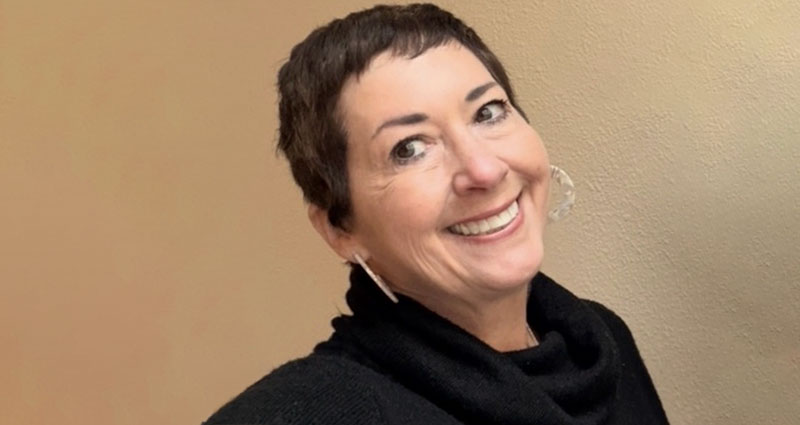
Anne Jordan has spent her life taking care of others.
A longtime educator in Lafourche Parish, she taught for nearly four decades before retiring in 2015. But retirement did not slow her down for long. She took on a part-time role at a hospital in Thibodaux and now works full time in the gift shop, all while caring for her husband at home.
“I retired and knew I couldn’t stay put,” she says with a laugh.
Not even cancer has slowed her down, though it has put up a lot of hurdles. Her cancer journey began in 2013 with a routine colonoscopy that quickly became something more serious.
“The doctor called me back to come to his office,” she says. “He wasn’t telling me I had the cleanest colon in town. He was telling me something’s wrong.”
Anne was diagnosed with follicular lymphoma, a type of blood cancer that would shape the next decade of her life. Her experience followed a familiar but difficult pattern: Treatment, remission, recurrence, then treatment again.
“I would go like maybe two years and then I’d go in remission. And then two years or so many years later, I’d have to have some more treatment,” she says. “My treatment has been up and down.”
After years of managing the disease, including treatment coordinated with MD Anderson in Houston, the cancer was back again. This time, her care team encouraged her to explore a new option closer to home in Baton Rouge.
A New Option Close to Home
Anne was referred to FMOL Health| Our Lady of the Lake Cancer Institute, where she would learn about a different kind of treatment: CAR-T therapy.
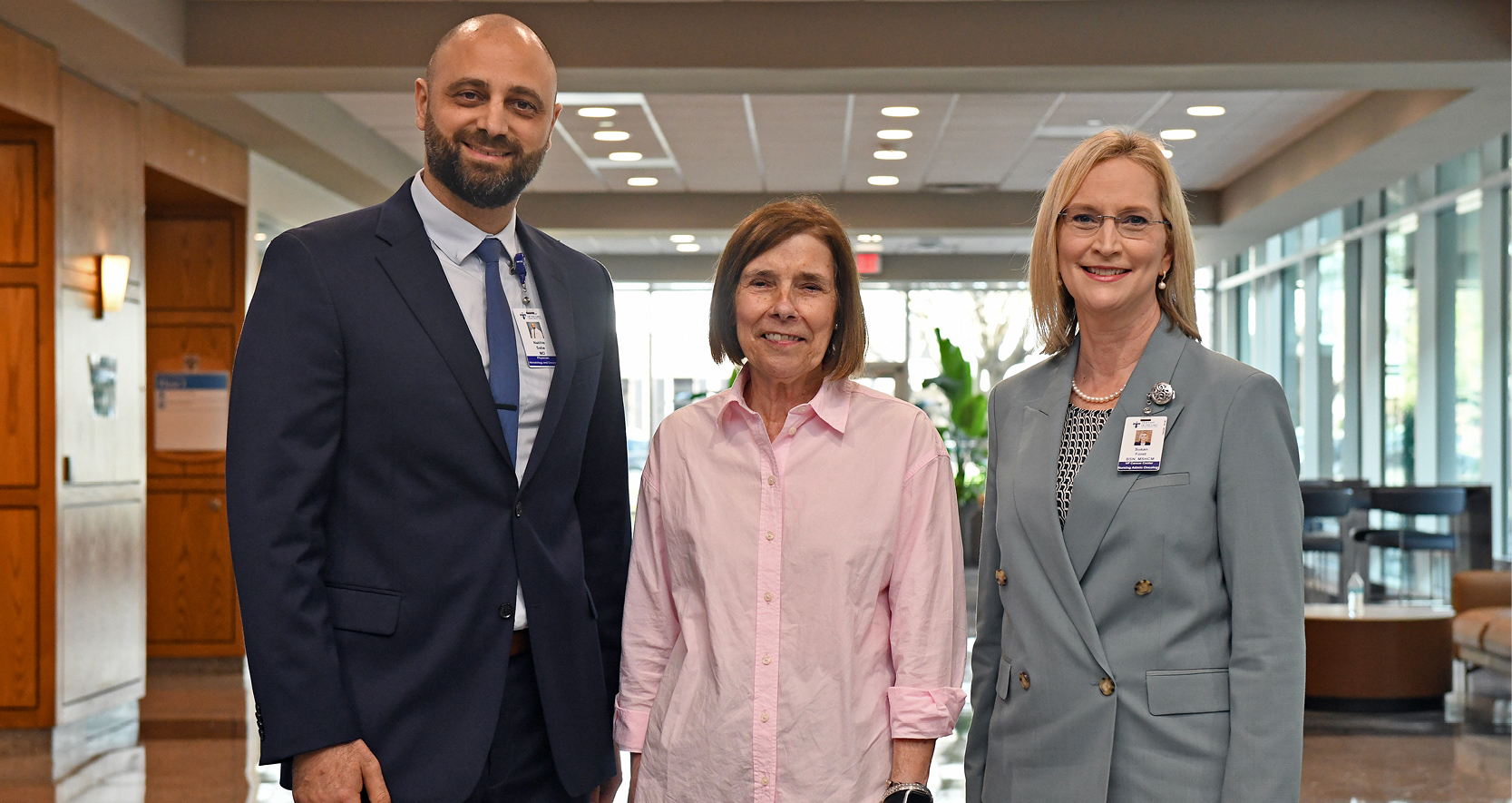
“My doctor told me a little bit about CAR-T, so I investigated that,” Anne says. “And then I met with Dr. Saba.”
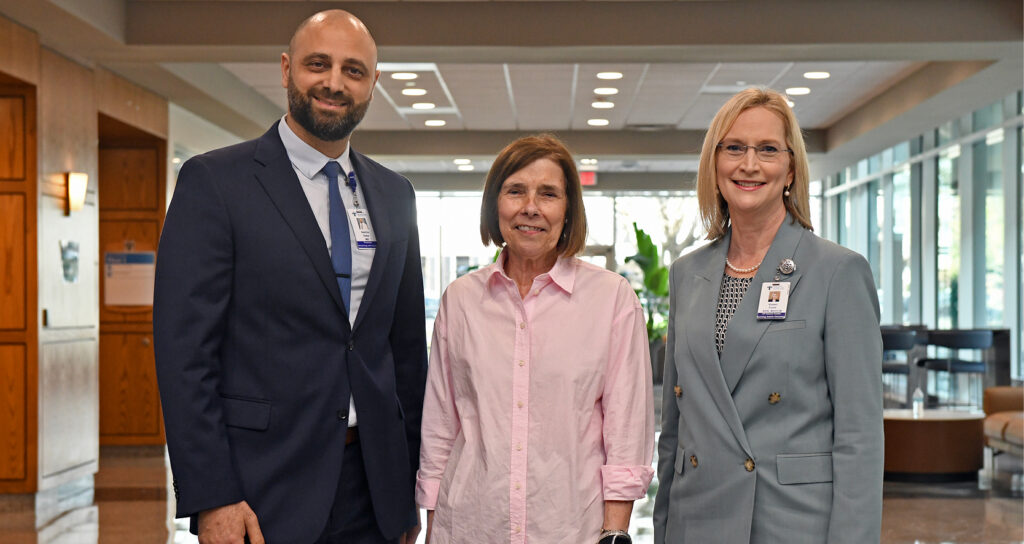
CAR-T therapy is different from traditional cancer treatments. Instead of relying solely on chemotherapy, it uses a patient’s own immune system to fight cancer. Nakhle Saba, MD, is the director of the Lymphoma and CAR-T program at Our Lady of the Lake Cancer Institute. Dr. Saba has spent years in research and clinical care helping bring therapies like this to patients. He has seen firsthand how quickly cancer treatment is evolving.
“What we used to do not too long ago, most of it does not even apply anymore,” Dr. Saba says. “The field is moving toward targeted therapy, chemo-free cell therapy or chemo-light regimens. We’re aiming for a cure for a lot of cancers.”
That progress is what made Anne’s treatment possible, not just as a therapy, but as an outpatient experience. On Feb. 9, 2026, Anne made history as the first person to receive CAR-T therapy in an outpatient setting in Louisiana.
Understanding CAR-T Therapy
CAR-T, or chimeric antigen receptor T-cell therapy, works by collecting a patient’s own T-cells, modifying them in a lab and then reintroducing them into the body to target and attack cancer cells.
Anne describes the process in simple terms.
“They took all my blood, took out the white blood cells and put the rest of the blood back in,” she says. “The white blood cells get sent to Texas, genetically engineered, and then it comes back and I get it in back my body.”
The infusion itself is quick. For Anne, it took only minutes. The complexity comes in the days that follow, when the immune system begins to respond.
Because of potential side effects, patients are closely monitored. Traditionally, that monitoring required a hospital stay. At Our Lady of the Lake, a specialized care model now allows certain patients to receive CAR-T therapy as outpatients, with structured monitoring and rapid response systems in place.
“We are so equipped and very confident that we can deal with any complications that might happen with the CAR-T therapy as an outpatient,” Dr. Saba says.
That approach reflects years of preparation, clinical experience and coordination across teams.
Care, Monitoring and a Team Approach
Anne’s experience highlights just how much coordination goes into outpatient CAR-T therapy. After receiving her infusion, she was monitored closely with daily check-ins, frequent vital tracking and nightly communication with her care team.
“Dr. Saba and I would talk every night at 8 o’clock, either through a Zoom meeting or a text,” she says. “It was very important that they know my blood pressure, my oxygen level and my temperature.”
She also completed regular cognitive checks to monitor for neurological side effects, a standard part of CAR-T care.
“They would do that every four hours,” she says. “And then I had a little memory test so they could see if these cells were affecting my neurological abilities.”
When a fever developed, the system worked exactly as designed.
“I called him at 8 o’clock and he said, go straight to the hospital. They’re going to be waiting for you,” Anne says. “And boom, boom, boom… it was fantastic.”
Behind that seamless experience is a large, coordinated team. From oncology nurses and nurse practitioners to emergency and inpatient teams, every step is planned and practiced.
“They told me that they had done many trial runs,” Anne says. “If this happens, this is what we’re going to do. They felt very confident, and so did I.”
For Dr. Saba, that level of coordination is essential to delivering advanced therapies safely.
“You have to have a big team in order to receive those patients should any complications happen at any time,” he says.
Anne felt that support at every stage, including one moment that stayed with her.
“I told him I was scared,” she says. “And that’s when he said, ‘Don’t worry. We’ve got this.’ That’s when I felt the best.”
Looking Ahead and Sharing Her Story
Just weeks after treatment, Anne began to feel like herself again. Her energy returned gradually, and she was able to go back to work and resume her routine.
“I’m feeling good,” she says. “I would say I’m pretty close to normal now.”
She has since returned to the gift shop and is easing back into her daily activities, including going back to the gym. For someone who spent years navigating cycles of treatment and remission, this moment feels different.
Now, Anne is focused on sharing her experience and helping others understand what is possible.
“If I need to talk to people to help them, because it helped me, I would be willing to do that,” she says. “That’s what I wanted to do, let everybody know.”
Access to CAR-T therapy in Louisiana means patients like Anne no longer have to travel far from home for highly specialized care. They can stay close to family, close to support systems and close to the communities that matter most.
“I think it’s like a 70 or 80 percent chance of total remission,” Anne says. “So, what more can you ask?”
At Our Lady of the Lake Cancer Institute, that question continues to drive progress. Through clinical research, multidisciplinary care and a commitment to innovation, the team is expanding what is possible for patients across the region.