

Michael Bonnette can still remember exactly where he was sitting when the call came.
It was February 28, and Michael was at his desk inside Tiger Stadium, where he has spent much of his career working with LSU Athletics. He had been waiting for the results of a prostate biopsy when a nurse called and asked him to hold for Jimmy Morris, MD, his longtime friend and urologist at FMOL Health | Our Lady of the Lake.
Michael immediately had a feeling the news would not be good.
“We talked for five minutes, but I cannot remember anything he told me after telling me that I did have prostate cancer,” Michael recalls. “Man, that was hard.”
His thoughts quickly turned to his wife, Robin, and their three sons. How was he going to tell them? What would the diagnosis mean for his future? Michael describes the moment as a “punch in the gut,” followed by the uncertainty that can come with hearing the word cancer.
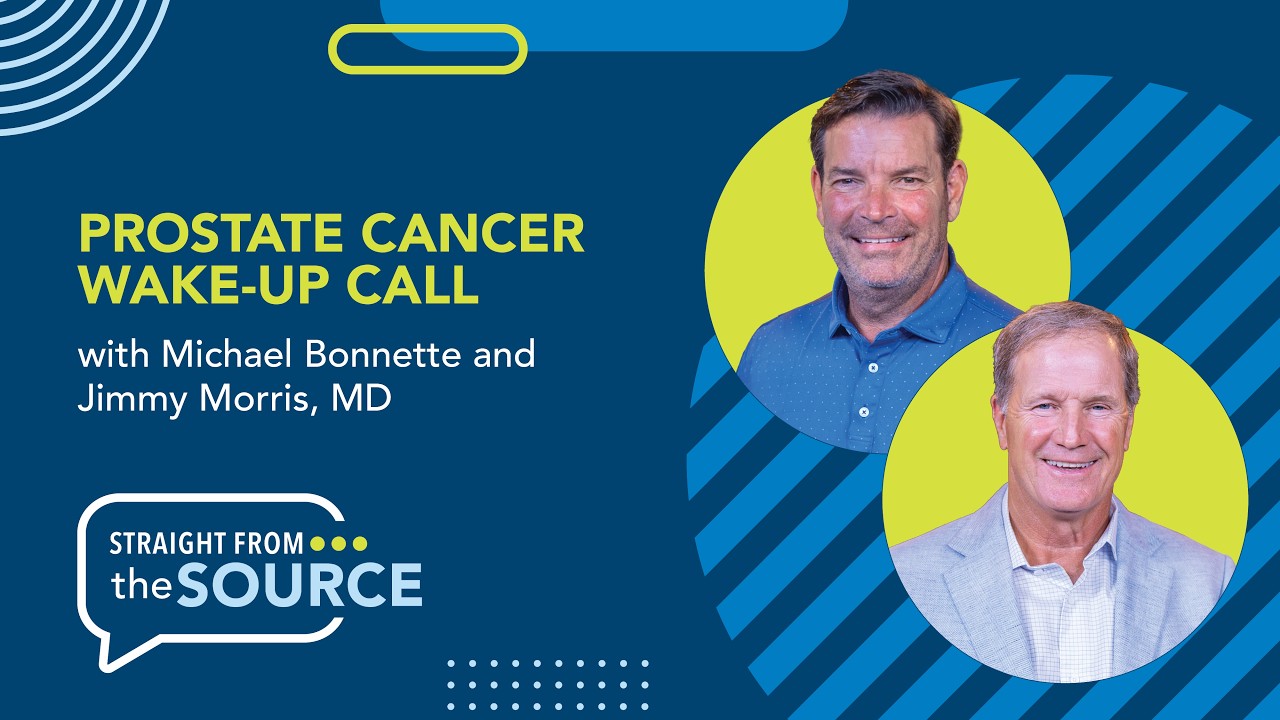
In this collaborative episode of Straight from the Source with Alligator Shoes Podcast with Michael Hackett, Michael shares the story of his diagnosis, robotic surgery and recovery alongside Dr. Morris. Their conversation also explores the importance of prostate cancer screening, knowing your individual risk and making preventive care a regular part of your health.
For Michael, sharing that message has become part of his own recovery. His story shows how early detection, trusted medical care and paying attention to changes in your body can help turn a frightening diagnosis into a story of hope.
A Renewed Focus on Health
Michael has spent decades around LSU Athletics. He began working as a student assistant in the Sports Information Office while he was in college at LSU and, now associate athletic director and communications director, he’s built a career that has put him alongside student-athletes, coaches and championship teams.
Years before his cancer diagnosis, an LSU football trip helped change his approach to his own health.
While attending the Fiesta Bowl in 2018, Michael went on a hike and struggled more than he expected. He returned home determined to make a change. He joined a gym, became a consistent runner and began lifting weights. By 2024, he says he was in the best shape of his adult life.
Around that same time, Michael began noticing blood where it should not have been. At first, he hoped the problem would resolve on its own. When it persisted despite medication, he and Dr. Morris decided to investigate further. An MRI and biopsy followed, the Michael got the call he dreaded.
Despite all the exercise and eating right, his experience is a powerful reminder that prostate cancer can affect men who feel healthy and are doing many of the right things for their health.
“I found this news out in 2024, when literally I was in the best shape of my adult life,” Michael says. “So, I guess the message is this can happen to anyone. No matter how healthy you are, no matter what you do, this can happen. So, I guess the lesson is listen to your body.”
From Friends to Patient and Physician
Michael and Dr. Morris knew each other long before prostate cancer entered the conversation.
Their sons became friends at school and played youth sports together. Through years of baseball, basketball and football, the parents developed a friendship of their own. Eventually, Dr. Morris also became Michael’s urologist.
That longstanding relationship took on new meaning after the diagnosis.
Dr. Morris helped Michael understand his options and develop a treatment plan. Because the cancer had been detected early, they moved forward with surgery. Michael chose robotic surgery and spent only one night in the hospital before returning home.
For Michael, recovery included learning not to push himself too quickly. Dr. Morris occasionally had to remind his active patient to give his body time to heal. Soon, however, Michael was moving toward the outcome both had hoped for: getting back to his normal life.
Why Prostate Cancer Screening Matters
Michael’s experience also provides an opportunity to talk about something many men may put off: preventive care.
Dr. Morris says regular checkups and prostate cancer screening can help physicians identify concerns earlier, when prostate cancer is easiest to be treated.
“The most important thing is an ounce of prevention,” he says. “It is important to get your yearly checkups and get your PSA blood levels.”
A PSA test measures prostate-specific antigen in the blood. While PSA is specific to the prostate, an elevated result does not automatically mean someone has cancer, which is why Dr. Morris emphasizes men make an annual visit to their doctors.
“That’s the most unpleasant part of my job is to tell someone that they have a new diagnosis of cancer, no matter what type it is. That is not fun,” he says. “But if we catch it early when the cancer hasn’t spread, especially in prostate cancer, you have an excellent chance for control and even cure.”
For Michael, there is another lesson worth sharing. When something does not seem right, pay attention.
He initially hoped his symptoms would disappear. His experience taught him the importance of following up when they did not.
A Reason to Speak Up
Today, Michael is looking at life differently.
His experience has made him more intentional about appreciating his family, his work and moments he might once have taken for granted. He describes walking barefoot across the field at Tiger Stadium after a run and encouraging LSU students around him to appreciate the experiences unfolding in front of them.
“I think this really gave me, as I said, a punch in the gut, but also an opportunity to really, truly experience life and appreciate life in a different way,” Michael says.
He has also decided to make his prostate cancer story public in hopes that it helps someone else.
In one conversation, Michael asked a friend whether he had been checked. The friend responded that he had recently undergone a colonoscopy, apparently believing that covered prostate cancer screening as well. Michael realized there was an opportunity to help men better understand what they should be asking their doctors.
“I try to educate and do the best I can and just use my experience and my platform to bring awareness,” Michael says. “It’s really not that hard to schedule an appointment and go get your blood work done and at least get some baseline levels to know where you are.”
For a man who has spent much of his career helping tell the stories of LSU athletes and coaches, Michael now has a personal story he hopes can make a difference.
His message starts with a simple idea: take your health seriously, know your risk, talk with your doctor about prostate cancer screening and listen when your body tells you something has changed.


