Some of the most meaningful moments in medicine come years after cancer treatment ends.
A patient who once faced a frightening diagnosis returns for a follow-up visit, this time cancer-free. Their family comes along, and the conversation turns to everyday life: the milestones they’ve celebrated and the memories they’ve made.
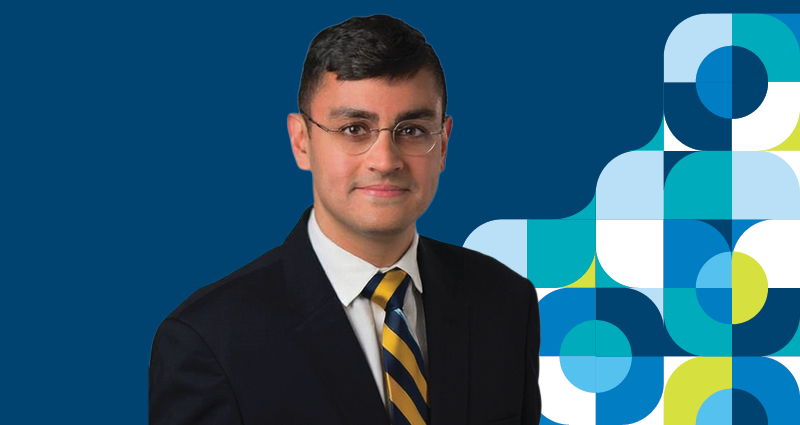
For Sagar Kansara, MD, FACS, a head and neck surgical oncologist at FMOL Health | Our Lady of the Lake Head and Neck Center, helping more patients reach those moments is the heart of his work, both in the operating room and in clinical research.
“You build these long-term relationships, and then four or five years down the line, you meet that same patient in clinic and they’re cancer-free and their family comes with them,” Dr. Kansara says. “The conversation is about something other than cancer.”
Through surgery and nationally supported clinical trials, Dr. Kansara is bringing the next generation of head and neck cancer care to Baton Rouge. His research looks for ways to fight cancer more effectively, ease the physical toll of treatment and help patients get back to the lives they love.
Bringing the Future of Cancer Care to Baton Rouge
Head and neck cancers are among the most complex cancers to treat. They can affect the mouth, throat, face and surrounding structures, often threatening a person’s ability to eat, speak, swallow and breathe.
For patients, the diagnosis can be overwhelming. Treatment may involve extensive surgery, radiation and long recoveries, with lasting effects on daily life.
Dr. Kansara specializes in removing these cancers and reconstructing the affected areas so patients can regain function. He also leads clinical research aimed at changing how these cancers are treated.
At Our Lady of the Lake, he serves as principal investigator for several clinical trials, including nationally coordinated studies supported by the National Cancer Institute. These studies compare established treatments with promising new approaches to learn whether they improve outcomes.
“The goal is to provide avenues of cancer care that are likely to be the new standard of care, earlier than they become the standard,” Dr. Kansara says.
That means eligible patients in Baton Rouge can join national, multi-institutional studies of new treatments that have shown promise in smaller, single-institution studies, all while receiving care close to their families and support systems.
Exploring New Ways to Treat Cancer
Two trials now underway are especially promising to Dr. Kansara, because each looks for ways to improve treatment while potentially reducing its physical toll.
The first focuses on patients with advanced skin cancers of the head and neck. These patients have traditionally needed extensive surgery followed by radiation. Researchers are studying whether giving immunotherapy, a medication that helps the body’s immune system fight cancer, before surgery can shrink tumors. If it works, surgeons may be able to remove less tissue, making surgery and recovery easier while still treating the cancer effectively.
The second focuses on patients whose head and neck cancer has returned after earlier treatment, a group that often faces especially difficult decisions. Researchers are studying whether immunotherapy given before surgery, alone or with chemotherapy, can improve survival and potentially make operations less extensive.
Both trials ask the same question: Can doctors help patients live longer while preserving more of the abilities that make everyday life possible?
Dr. Kansara is also developing new studies. One will examine whether exercise can help the immune system respond better to cancer treatment. Another will explore an immunotherapy medication that researchers hope may cause fewer side effects than some current options. Together, these projects are building toward a lasting head and neck cancer research program in Baton Rouge.
Making a Difference Close to Home
Expanding clinical research at Our Lady of the Lake means more patients across Louisiana can get emerging treatments without traveling to distant medical centers. It also lets local physicians contribute to national studies that could shape cancer care for years to come.
“We have the drive, we have the physicians, and we have the patients,” Dr. Kansara says. “We have the will, which is really the big X factor. There is no reason Our Lady of the Lake Head and Neck Center can’t be among the nation’s leaders in head and neck cancer care.”
That commitment goes beyond clinical trials. Dr. Kansara and his colleagues regularly review their own outcomes to find ways to improve care. One key measure is how often patients start radiation on time after surgery, since delays can affect survival.
According to Dr. Kansara, about 71% of eligible patients at Our Lady of the Lake begin postoperative radiation within the recommended six-week window, compared with a national benchmark of about 30%. Reaching that mark takes close coordination among surgeons, radiation oncologists, dentists and other specialists, a reflection of the collaborative program the team has built.
For patients considering a clinical trial, Dr. Kansara stresses that every decision starts with the individual. He recommends a trial only when he believes it may be a good option for that patient’s care, and patients receive clear information about the potential benefits and risks.
Building a Future Beyond Cancer
Looking ahead, Dr. Kansara plans to keep growing research at Our Lady of the Lake through new clinical trials, partnerships with LSU researchers and studies of how the immune system responds to cancer. His vision is a program that steadily brings promising treatments to Louisiana while contributing discoveries that help patients everywhere.
His motivation, though, is deeply personal. Dr. Kansara’s father, also a physician, encouraged him to approach medicine with humility.
“Practice with love and compassion, keep the patient first,” his father told him, “and you will never go wrong.”
That philosophy guides his surgery, his research and the relationships he builds with patients and families. Every advance in treatment is another chance to help someone recover, regain their quality of life and look toward the future.
And for Dr. Kansara, the greatest reward will always be those follow-up visits years later, when a patient returns cancer-free and the conversation is finally about everything life has to offer beyond cancer.