Sepsis is one of the most urgent and complex challenges in modern healthcare.
It can develop quickly, present like many other conditions and become life-threatening before patients or providers fully recognize what is happening. For years, clinicians relied on experience, observation and evolving criteria to guide decisions in those critical early moments.
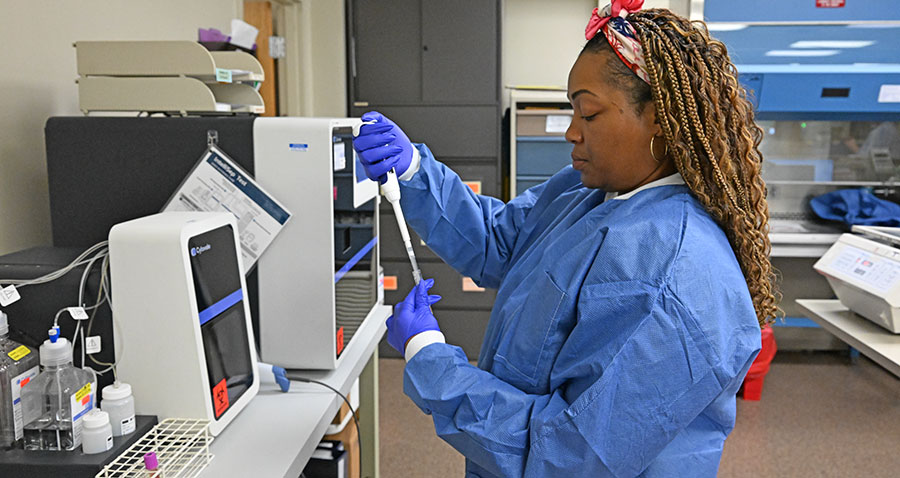
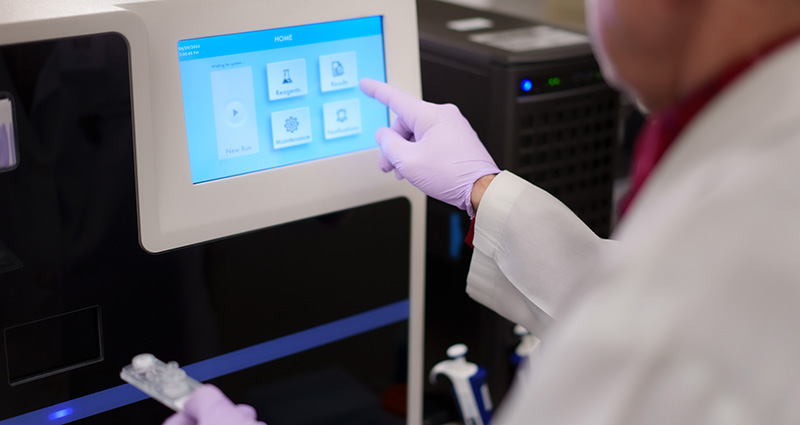
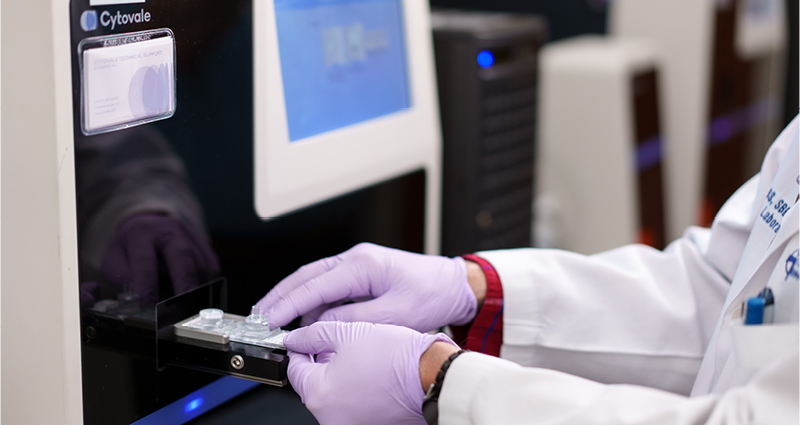
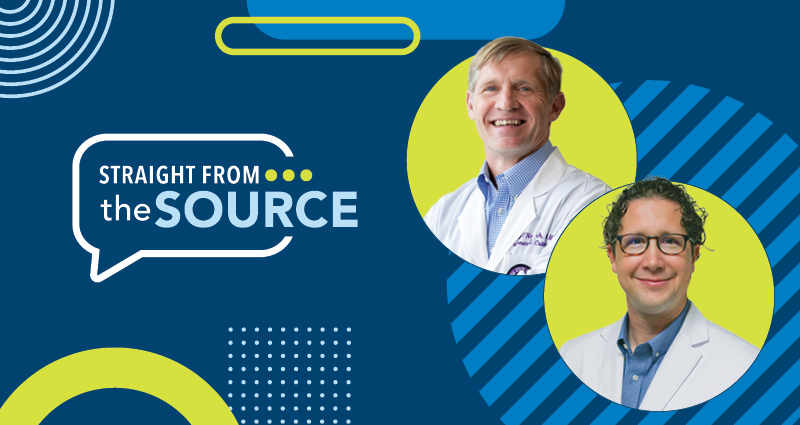
In this episode of Straight from the Source, Christopher Thomas, MD, FMOL Health vice president and chief quality officer, and Hollis “Bud” O’Neal, MD, FMOL Health | Our Lady of the Lake medical director of research, share the story behind IntelliSep, a diagnostic innovation designed to detect sepsis earlier by analyzing how the immune system is responding in real time. What began as a question at the bedside has become a system-wide transformation in how sepsis is identified and treated across FMOL Health.
Their conversation traces the journey from concept to clinical reality and the impact now being seen after more than two years of real-world use.

The Right People, the Right Moment, the Right Idea
The origins of IntelliSep are rooted in both personal experience and professional curiosity. For Dr. Thomas, the moment that shaped his thinking about sepsis care came while navigating his own father’s experience with septic shock.
“I remember directly saying, it’d be unbelievable if there was a test and I knew he does or does not, because I’m just now relying on the intellect and the energy of the physicians that are there,” he recalls.
It highlighted a gap that clinicians across the country understood well. Sepsis is common, dangerous and difficult to identify early with certainty.
At the same time, Dr. O’Neal was thinking about similar challenges from a broader systems perspective.
“Everywhere you went, there was a little bit of a void in sepsis and sepsis care,” he says.
The two physicians first met during fellowship training and later reunited in Baton Rouge, bringing together clinical expertise, research curiosity and a shared drive to improve outcomes.
Then came a moment of unexpected connection: A chance airplane conversation linked Cytovale — at the time a small startup company with emerging technology — to Dr. Thomas’ work in sepsis.
What followed was nearly a decade of research, iteration and persistence. From early feasibility work to large-scale clinical trials and eventual FDA clearance in late 2022, IntelliSep’s development required sustained effort and collaboration.
Along the way, the science became clearer. By measuring how white blood cells change when the immune system is activated, IntelliSep provides a rapid, biologically grounded assessment of a patient’s risk for sepsis.
From Innovation to Impact: What the Data Shows
A breakthrough test alone does not change outcomes. What matters is how it is used.
That is where implementation across FMOL Health became critical. Teams across disciplines came together to integrate IntelliSep into emergency department workflows, align clinical decision-making and continuously evaluate results.
“We sat and looked at every single case from a performance improvement perspective,” Dr. Thomas says. “What are the things that we need to do better?”
Rather than focusing only on patients diagnosed with sepsis, the team examined all patients at risk. This allowed them to improve care for those with sepsis and avoid unnecessary treatments for those without it.
The results over two years have been significant:
- A 20% reduction in mortality among patients with sepsis
- A 19% reduction in mortality among patients without sepsis
- A full day reduction in hospital length of stay for high-risk patients
- An 18% decrease in antibiotic exposure
- A substantial increase in safe discharges from the emergency department
Dr. Thomas frames these outcomes in human terms: “If you’re someone who shows up to one of our facilities after two years, we’re saving someone’s life every three days.”
He also highlights the broader impact on capacity and access.
“That’s 30,0000 days where people aren’t in a hospital because of the teams and the structure,” he says.
Those gains translate into more available beds, faster care for incoming patients and a more efficient healthcare system overall.
A National Leader in Sepsis Innovation
What began in Baton Rouge is now gaining attention well beyond Louisiana.
FMOL Health has emerged as a national leader in applying IntelliSep at scale, demonstrating that high-quality, research-driven care can be implemented across diverse settings, from large hospitals to smaller community facilities.
The combination of a large, diverse patient population and a strong culture of curiosity has made the system an ideal environment for innovation.
“When you participate in research, you are now a servant to everybody that’s going to come after you,” Dr. O’Neal says.
That mindset extends beyond internal success. FMOL Health is actively collaborating with other institutions and sharing insights to improve care more broadly.
“We’ve been pushed to try to do more of that — go out and have a conversation. How did you fix that? And then share that kind of win for all those patients too,” Dr. Thomas says.
As IntelliSep expands to other hospitals across the country, the collective data continues to grow, reinforcing its value in different populations and care environments.
A System-Wide Effort, Driven by People
Behind every data point is a coordinated effort from teams across the health system.
IntelliSep’s success depends on collaboration at every level — from research coordinators at the early stages who worked to enroll patients in the study, to the frontline medical team members who implemented the testing, to system leadership and performance improvement teams who worked to refine and optimize the testing.
“When you connect the dots and see the roles that are directly linked to saving thousands of lives, that’s where I get excited,” Dr. Thomas says.
A commitment to curiosity, collaboration and service has allowed IntelliSep to move from concept to reality and from a single hospital to an entire health system.
For Dr. O’Neal, the ultimate measure of success is simple. “If anything I do contributes to somebody else being able to see their family, that’s the true joy.”
A Patient’s Story: From Uncertainty to Recovery
For one patient, this work made all the difference at exactly the right moment. Kristen Degelman, a nurse practitioner at FMOL Health | St. Dominic and mother of two, knows firsthand how quickly sepsis can escalate and how critical early intervention can be.
After being diagnosed with the flu, Kristen expected to recover within a few days. Instead, her symptoms worsened.
“I feel like I should be feeling better,” she recalls thinking before deciding to visit the emergency department.
During triage, her vitals triggered an IntelliSep test. When the result came back elevated, it immediately changed the course of her care.
“It made everyone stop and say, she’s septic,” she says. “She needs IV fluids, she needs antibiotics, she needs all of these things now.”
Because the test was run right in triage, treatment began quickly.
“I feel like it helped shorten my hospital stay and got me better a lot faster,” Kristen says. “It’s a great test. It’s useful. It could save a patient’s life.”
Looking Ahead
The work is far from over. Future efforts will focus on expanding IntelliSep into additional care settings, including rural hospitals and inpatient units, and continuing to refine how the technology is used.
As Dr. Thomas explains, the goal is clear: “Make sure that at the point of care, they get those same results.”
For Dr. O’Neal, the impact extends far beyond any single patient.
“When you do research, you can take care of hundreds or thousands of patients that you’ll never see and never know,” he says. “That’s special.”
From a question at the bedside to a system-wide transformation, IntelliSep represents what is possible when innovation, collaboration and mission come together.