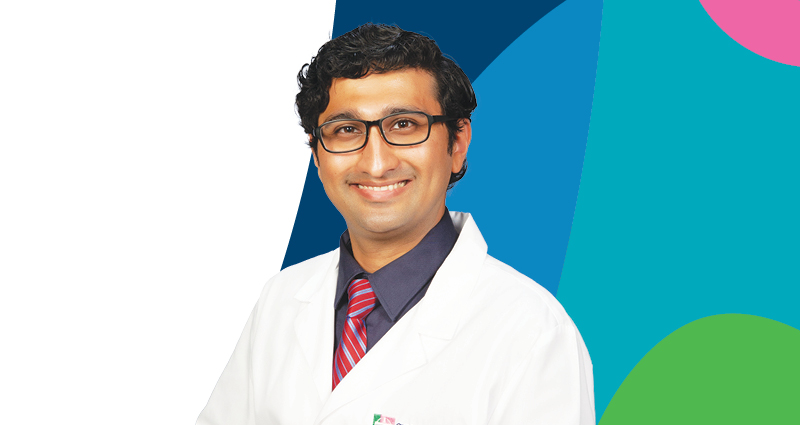
Yash Shah, MD, still remembers what first drew him toward research.
Growing up in India, he saw children with complex neurological disorders who had few treatment options and little hope for long-term survival. Many families faced devastating diagnoses without clear answers or effective therapies.
Those experiences shaped the direction of his career.
Today, Dr. Shah serves as division chief of pediatric neurology and medical director of the neurosciences division at FMOL Health | Our Lady of the Lake Children’s Hospital. Alongside caring for patients, he leads clinical trials and research efforts focused on pediatric neurology and epilepsy, work he sees as essential to improving care for children across Louisiana and beyond.
Research, he says, has always been more than an academic pursuit.
“The research was a driving force for me to step into the world of pediatric neurology,” Dr. Shah says. “There are a lot of things in the brain which are still not discovered. It’s really a puzzle sometimes because we still don’t know a lot of answers for so many different conditions.”
That curiosity led him to the United States, where he completed a master’s degree in public health focused on statistics and epidemiology before beginning his neurology training. He later completed epilepsy fellowship training and continued research throughout his medical education.
Today, that same drive continues to shape his work at our Children’s Hospital.
Bringing Research Closer to Home
At FMOL Health, research is becoming an increasingly important part of how care is delivered across the health system. At Our Lady of the Lake Children’s Hospital, that work helps connect patients and families with advanced treatments and clinical trials without leaving the region.
Dr. Shah believes that access matters, especially for families in Louisiana and Mississippi who may not live near large academic medical centers.
That foundation helps physicians bring promising therapies and clinical studies directly to patients who may otherwise have limited options.
For Dr. Shah, the impact of research reaches far beyond the patients he sees each day in clinic.
“I think this is the biggest advantage that we are able to get our patients into our research studies to get them the best treatment available,” he says. “I see 14 to 15 patients every single day. But if I can reach out to a lot more people and a lot more lives to make their life a little better, then nothing like that.”
Why Pediatric Research Matters
Research involving children carries unique challenges and responsibilities, but Dr. Shah says it is critical because children’s conditions, treatments and responses can differ significantly from adults.
“A lot of medicines that are approved by FDA — they are all focused on adults,” Dr. Shah says. “There are not a lot of treatments available for pediatric patients.”
Even when therapies eventually become available for children, the process often takes years.
“Kids are not young adults,” Dr. Shah says. “They have completely different physiologies. Their neurological disorders are completely different than those of adults.”
That reality is one reason pediatric clinical trials are so important. At our Children’s Hospital, Dr. Shah and his team carefully evaluate every study before offering it to patients and families.
“We take utmost attention to make sure that we only do these clinical trials if those drugs have been proven safe in their initial phases of clinical trials,” he says. “We are extremely selective in choosing the clinical studies in our hospital.”
Along with advancing treatments, Dr. Shah is also focused on building the next generation of physician researchers. He serves as co-director of the pediatric residency research program, helping residents and medical students learn how to conduct and evaluate research that can improve patient care.
“That’s the future of medicine,” Dr. Shah says. “Artificial intelligence and research.”
Advancing Epilepsy Care in Baton Rouge
One of the clearest examples of research translating into patient care can be seen in the hospital’s growing epilepsy program.
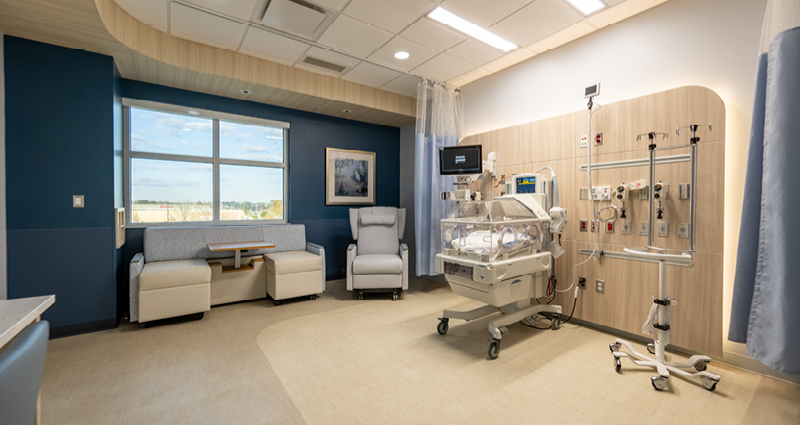
Last year, Our Lady of the Lake Children’s Hospital opened the only epilepsy monitoring unit in Baton Rouge, expanding access to specialized neurological care for children with complex seizure disorders.
Research has played a key role in that growth.
Dr. Shah’s work focuses heavily on children with drug-resistant epilepsy, a condition where seizures continue despite multiple FDA-approved medications.
“Thirty percent of the patients who have epilepsy will have drug-resistant epilepsy,” Dr. Shah says. “These are the patients who need something more than just the standard medicines that we have.”
Through clinical studies and observational research, Dr. Shah and his team are helping connect those patients with emerging therapies while also contributing to broader advancements in epilepsy treatment.
“We have seen a lot of impact on our population,” he says.
The future of pediatric neurology research, Dr. Shah believes, is especially promising because of recent breakthroughs in genetic medicine and targeted therapies.
He points to spinal muscular atrophy as one example of how quickly the field is changing.
“A few years back, those kids didn’t live beyond one or two years of their life,” Dr. Shah says. “Now, thanks to research, we have this medication, genetic treatment which is actually life changing.”
For Dr. Shah, those advances represent only the beginning.
“This is just the tip of the iceberg,” he says. “There are so many clinical research studies that are going on to help other conditions such as epilepsy, migraines, autoimmune encephalitis, insomnia and muscular dystrophies, and a lot more.”
And for a physician who entered medicine searching for answers, the opportunity to keep learning remains one of the most exciting parts of the journey.
“I think this is the best time if someone is working in neurology,” Dr. Shah says. “In the next few years, we’ll have so many newer treatments available for some of the devastating neurological disorders.”