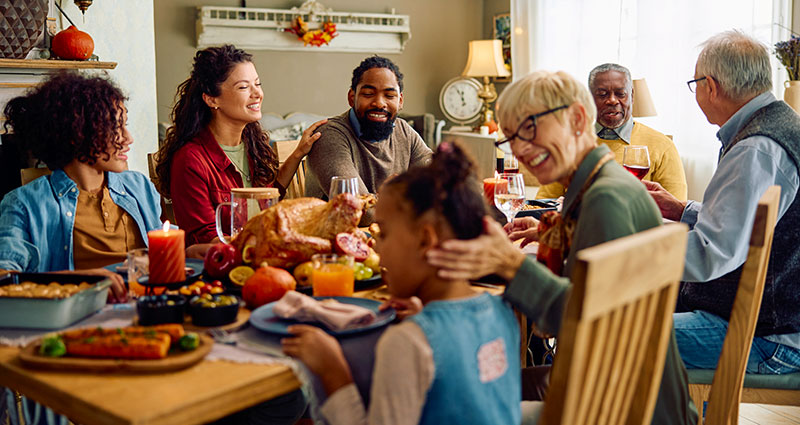
Thanksgiving brings families together for good food, favorite traditions and time with loved ones. But between busy kitchens, crowded homes and holiday travel, the festivities can also bring unexpected injuries, especially for young children.
From cooking burns and foodborne illnesses to choking hazards and fireworks, a few simple precautions can help families celebrate safely.
Kristen Pontiff, MD, a pediatric emergency medicine physician at FMOL Health | Our Lady of the Lake Children’s Hospital, recently joined Medical Monday on Talk 107.3 to share practical holiday safety tips and explain when an injury warrants a trip to the emergency room.
Keeping the Kitchen Safe
The kitchen is often the busiest place on Thanksgiving, and it’s also where many holiday injuries happen.
Hot stovetops, boiling liquids, sharp knives and crowded cooking spaces can lead to burns and cuts. Dr. Pontiff recommends using sharp knives, turning pot handles inward and keeping loose clothing away from open flames.
For families with young children, supervision is especially important.
“The big kind of takeaway is making sure that someone is watching your children while you’re able to cook and focus on that 100%,” Dr. Pontiff says.
Designating an adult to supervise children and setting up activities away from the kitchen can help prevent accidents.
Turkey Fryers Require Extra Caution
Deep-frying a turkey is a popular Thanksgiving tradition, but improper use can cause serious burns and fires.
Dr. Pontiff recommends several precautions:
- Completely thaw the turkey before frying.
- Measure the oil level to prevent overflow.
- Set up the fryer outdoors, at least 10 feet from buildings.
- Wear protective gloves and turn off the burner before lowering the turkey into the oil.
- Never leave a fryer unattended or allow children nearby.
Adding a frozen turkey to hot oil can cause dangerous splattering and overflow, creating a serious fire hazard.
Preventing Foodborne Illness
Thanksgiving favorites like turkey, seafood dressing and other dishes require careful preparation to prevent foodborne illness.
Make sure poultry and seafood are thoroughly cooked, and be mindful of food allergies when preparing meals for guests.
Vomiting and diarrhea can be particularly concerning for young children, who may become dehydrated quickly.
“Once you start to see those signs to be in touch with your pediatrician, or we have a nurse helpline — (225) 374-HEAL — that you’re able to call if you’re not sure about whether or not you need to come in,” Dr. Pontiff explains.
Protecting Little Ones From Hidden Hazards
With guests coming and going, everyday household items can become unexpected dangers.
Dr. Pontiff encourages families to keep medications, gummies and other potentially harmful items stored safely away from children, including those brought in guests’ purses or bags.
Choking hazards are another concern. Small toys, decorations and button batteries should remain out of reach, while foods like grapes and cherry tomatoes should be cut into age-appropriate pieces.
Children should also remain seated while eating to reduce choking risks.
When Should You Visit the ER?
Minor cuts and small, superficial burns can often be treated at home. However, certain injuries require immediate medical attention.
Dr. Pontiff recommends emergency evaluation for burns involving large blisters, extensive areas of skin, the face or hands, or skin that appears white or charred. Deep cuts, gaping wounds and significant bleeding also warrant evaluation.
For choking emergencies involving an inability to breathe or speak, loss of consciousness or persistent color changes, call 911 immediately.
When uncertain about less serious symptoms, parents can contact their pediatrician or a nurse helpline for guidance.
Remember Fireworks Safety, Too
As Thanksgiving gives way to Christmas and New Year’s celebrations, fireworks introduce additional risks.
Keep water nearby, light only one firework at a time and never attempt to relight a malfunctioning firework. Children should remain at a safe distance.
Sparklers deserve particular attention because they can reach temperatures around 2,000 degrees Fahrenheit, causing severe burns.
Making Safety Part of the Celebration
For Dr. Pontiff, one of the most important holiday safety measures is also one of the simplest: Make sure someone is watching the children while others cook and prepare for the festivities.
A little planning, close supervision and awareness of common hazards can help families enjoy their favorite traditions with fewer worries.