Patients’ healthcare isn’t confined to a doctor’s office. Most of a person’s health and well-being is determined by factors other than illness or medical conditions.
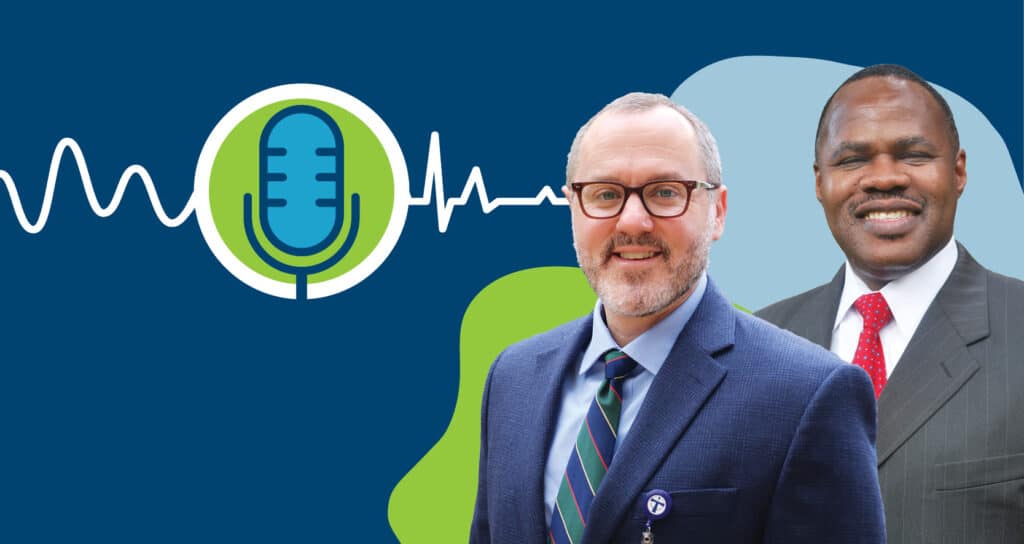
These social determinants of health (SDOH) are the focus of the latest episode of our podcast, The Doctor Will Hear You Now. Our guests are both from Our Lady of Lourdes Health; Rob Tasman, vice president of mission integration, and Bently Senegal, director of community services, share about how our health system is addressing health disparities and inequities.
Understanding SDOH
Things that determine someone’s health include access to food, transportation, social connections, economic stability, mental health supports and physical environments such as housing.
“I would define it as a non-medical diagnosis that affects health outcomes,” Senegal says. “On the medical side we run tests, try to figure out what’s going on and come up with a treatment plan. That’s what happens for social determinants of health – figure out what it is, dig into it and come up with a treatment plan and follow up with that.”
Tasman views SDOH as things that stand in the way of a person’s ability to thrive.
“I believe in a God who creates us to thrive not merely to survive,” he says. “Anything that stands in the way of being able to reach your capacity and fulfillment, that’s something to be addressed.”
Tasman explains nutrition as an example of SDOH: “If someone doesn’t have access to good, nutritious foods and is plagued by diabetes, if they don’t eat well, they’ll never get out of that cycle.”
Transportation is another clear example, and access is a major issue that plays into a person’s health and well-being. “It’s fine to set up a clinic, but if people can’t get there, what good is it?” Tasman says.
Our Legacy of Care
Our health system has been working on identifying and addressing SDOH before the term was clearly defined. Within our ministry, we are called to care for the whole person, and the more we know about our patients the better we care for them.
“What we do in our ministry is we see a need and we try to meet that need holistically from start to finish,” Senegal says.
Senegal has been working with Our Lady of Lourdes Health for more than two decades, starting in finance and moving to mission and community outreach services. His work has always included the people behind the numbers, and community services is where his heart is. Daily he asks himself: “How can I make somebody better today than they were before?”
Tasman recognizes the history of the Franciscan Missionaries of Our Lady, the Sisters who sponsor our health system in this approach. “It sums up what they’re about: identify a need and propose a solution.”
Sister Betty Lyons (1936-2020) was instrumental in this work supporting those most in need. Senegal remembers she would say, “We meet them where they are, but we love them too much to leave them there.”
Using Technology to Identify SDOH
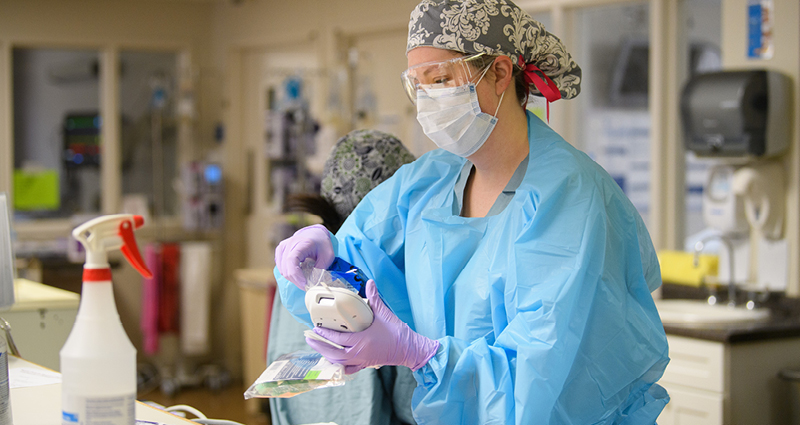
Our health system uses our medical record system to help determine patients’ social determinants of health, both with a MyChart questionnaire before visits and follow-up conversations with providers.
“Clinicians are able to ask the questions and identify those needs,” Tasman says. “Here at Lourdes, we have our own case managers to assist with those needs.
Once a need is identified, we can help connect a patient directly to resources available through one of our community partners , part of our approach to honor the dignity of everyone we serve. “We want to make sure we see them through,” Tasman says. “It’s a human relationship we’re fostering and seeing success come from that.”
We’re also able to connect patients to community resources with Pathways, an online tool listing local partners offering financial assistance, food pantries, medical care and other free or reduced-cost help.
Specific Acadiana Examples to Address SDOH
St. Bernadette Community Clinic was established in 1995 in collaboration with the Diocese of Lafayette to provide free non-emergency medical care to the poor and those experiencing homelessness. More than 3,500 people receive healthcare each year, including both medical and dental visits.
Congregational Health Services is a unique outreach partnership with about 25 churches of varying denominations in Acadiana. The congregations can get connected to health resources to address needs specific to their members, working together toward common healthcare goals.
“You can’t say enough about it,” Tasman says. “That’s boots on the ground. Once you identify that, you can accomplish phenomenal things.”
Northside High School Clinic, the only high school-based health center in Lafayette, is a collaboration with the Lafayette Parish School System to provide free healthcare services to students and staff. More than 400 students receive treatment every year. Caring for more than medical needs, the clinic also provides students with support, hope and knowing someone believes in them.
Senegal shares an example of a student experiencing homelessness who was valedictorian of her class. “Her next place to stay was going to be her dorm on campus. These students aren’t looking for a handout but for a hand up. That’s why we’re on that campus and why we believe in what we do.”
Tasman recalls a recent career day when students from Northside High were able to visit Our Lady of Lourdes Health. The experience allowed the young people to see possibilities for their own future careers, and it helped connect the hospital to the care they receive in their school clinic.
Our Catholic Health Identity
As a nonprofit, mission-focused Catholic healthcare ministry, we give special attention to our citizens most in need. We recognize the image of God in each person as we provide care.
“There’s something very basic — As people we just want to be acknowledged, and we should be,” Tasman says. “We have this inherent dignity God bestowed upon us.”
Active listening is a form of acknowledgement and honoring that dignity. Being in service to people in need, walking with them on their journey and acknowledging them is a gift to us, not only to them.
“We extend the mission beyond the walls of our facilities and into the community,” Tasman says.
Our system’s approach to addressing SDOH includes removing judgment.
“With social determinants of health there can be a lot of shame associated with it by the individuals who face some of these challenges,” Tasman says. “We don’t know their lives, everything they’ve had to deal with that has brought them to here right now. We open our hearts and extend mercy, empathy and resources.”
Looking Forward
“What excites me about the future is the footprint and the path rolled out for us,” Senegal says. “We didn’t just start doing this yesterday. We’ve been doing it for a long time.”
When reflecting on the future, Tasman says, “We’re really trying to address health disparities and inequities in a different way than before. We’re extending our footprint to touch people in different ways. There’s room for everyone here in a Catholic health system. Go back to St. Francis: Preach the gospel always, and use words only when necessary.”