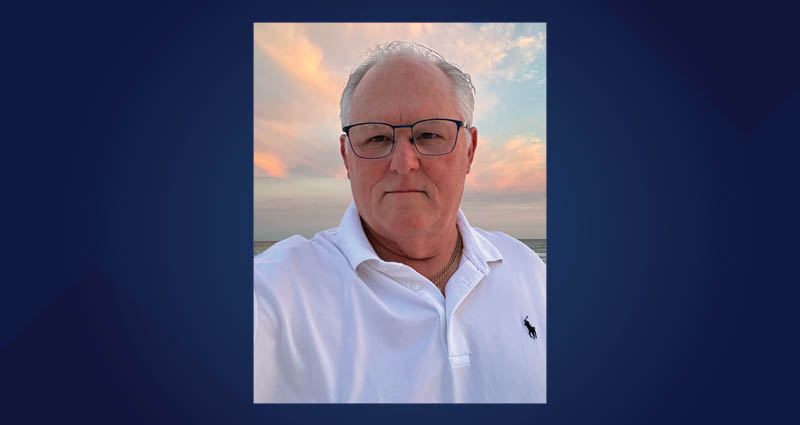
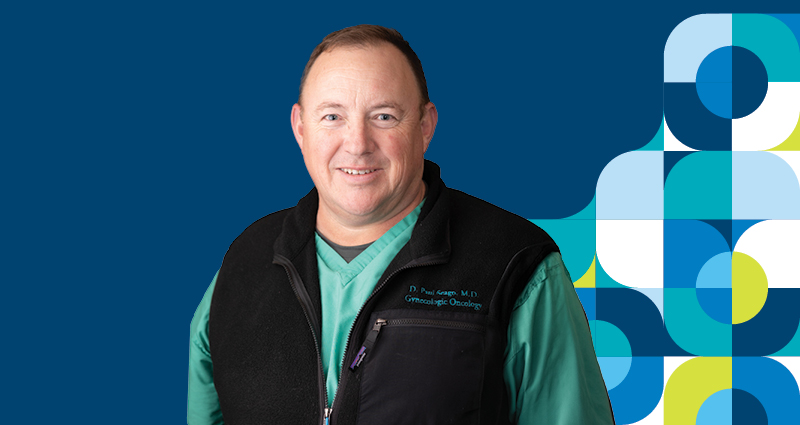
For more than two decades, Paul Seago, MD, has worked toward a goal that has shaped his career as a gynecologic oncologist: giving women in Mississippi access to the same advanced cancer treatments available at major research institutions across the country.
A Mississippi native, Dr. Seago returned to his home state in 2002 with a passion for improving cancer care and bringing clinical research opportunities to the communities he serves. Today, that vision is helping advance medicine at FMOL Health | St. Dominic and across the health system.
“I never wanted somebody to say, ‘Well, I’ve got to go somewhere else to get therapy because I can’t get that in Jackson, Mississippi,’” Dr. Seago says.
Through a growing clinical research program, St. Dominic is helping patients access promising new therapies, contributing to medical discoveries and bringing new hope to families facing cancer.
Bringing Advanced Cancer Research to Mississippi
Clinical trials play an essential role in advancing medicine. They allow researchers to evaluate new medications, treatments and approaches that could improve outcomes for patients today and in the future.
For women facing gynecologic cancers, access to these studies can be especially meaningful. Mississippi and Louisiana currently have no National Cancer Institute-designated cancer centers, making local research opportunities an important resource for patients who might otherwise need to travel out of state.
“The only way we make progress is to have at least our standard therapies, plus other newer therapies as an option for patients,” Dr. Seago says. “Oftentimes, the only way that these are available is through research trials.”
At St. Dominic and its Comprehensive Cancer Program, Dr. Seago and his colleagues offer clinical trials across several types of gynecologic cancer, including studies exploring new therapies for platinum-resistant ovarian cancer, a particularly difficult form of the disease to treat. The team also participates in research investigating blood-based biomarkers and screening methods that could help detect cancers earlier.
Building these opportunities in a community setting has been a longtime priority for Dr. Seago. Shortly after arriving in Jackson in 2002, he began working to establish a clinical research program at St. Dominic. Within several years, the hospital had developed the infrastructure needed to conduct its own studies.
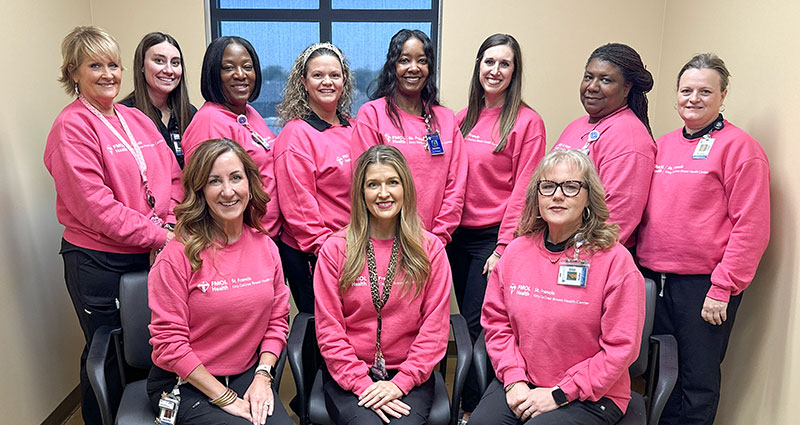
Today, a dedicated team of physicians, research nurses, data managers and other specialists supports a robust research program. During the last fiscal year, the St. Dominic team enrolled 140 patients in clinical research studies, a significant achievement for a community-based program.
“It is a huge source of pride for us and for our office to be able to do that,” Dr. Seago says. “You can’t do this individually. It is a huge team that makes this possible.”
Giving Patients and Families Hope Close to Home
For patients facing a cancer diagnosis, the possibility of participating in a clinical trial often comes during an already overwhelming time. Dr. Seago understands that patients may have questions about the safety of clinical research, what participation involves and whether an investigational treatment is right for them.
“We spend some time making sure that people know that this is regulated,” Dr. Seago explains. “We treat all patients the same, and we’re giving patients an excellent opportunity for a novel therapeutic.”
The research team takes time to explain the process, including the safeguards that govern clinical trials and the additional monitoring patients may receive. Participation is voluntary, and patients can withdraw from a study at any time.
Beyond the medical considerations, having access to clinical trials close to home can make a meaningful difference for patients and their families. Traveling hundreds of miles for treatment can create financial, emotional and logistical challenges, especially when patients must spend extended periods away from their support systems.
“It’s never a single individual who gets a cancer diagnosis. It’s a family, and that affects every one of them,” Dr. Seago says.
By offering advanced therapies in Jackson, St. Dominic helps more women remain close to their loved ones while receiving highly specialized cancer care. It also gives patients confidence that their physicians are actively involved in the latest advances in cancer treatment.
Advancing the Future of Medicine at FMOL Health
The future of clinical research at St. Dominic is built on the same commitment that inspired Dr. Seago more than 20 years ago: expanding access to promising treatments and improving outcomes for generations to come.
With support from the broader FMOL Health research network, the team continues to pursue new studies, strengthen research partnerships and explore opportunities to bring innovative therapies to patients throughout the region.
Each clinical trial represents an opportunity to learn more about cancer, evaluate new approaches and contribute to discoveries that may eventually benefit patients far beyond Mississippi.
“We want people to have the opportunity to feel like their care is not only going to help benefit them, but is going to potentially help benefit generations beyond,” Dr. Seago says.
For Dr. Seago, that progress always comes back to the people behind the research and the hope that new medical discoveries can bring to patients and families.
“We want to give people compassion and hope,” he says. “We want to make sure that people know that they have confidence that there’s a team of people committed to their care, for today, for tomorrow, and as well for our patients in the future.”