
A great trip starts long before you reach the airport gate or merge onto the interstate.
You plan your route, book the hotel and maybe even map out where you’ll grab the best meal. Your health deserves a spot on that list, too.
A little prep goes a long way toward feeling your best while you’re away. These seven tips will help you travel smart, stay well and spend less time worrying about your health and more time enjoying the trip.
1. Pack Your Medications First
Few things derail a trip faster than running out of a prescription far from home. Before you leave, refill your medications and make sure you have enough to cover the whole trip, plus a few extra days in case of delays. Give your pharmacy plenty of lead time, especially if you need an early refill.
A few habits make a big difference:
- Keep a written list of your medications and doses somewhere safe. If you ever need a refill on the road, you’ll be glad you have it.
- Stash meds in your carry-on when flying. That way they’re with you during the flight and safe if a checked bag goes missing.
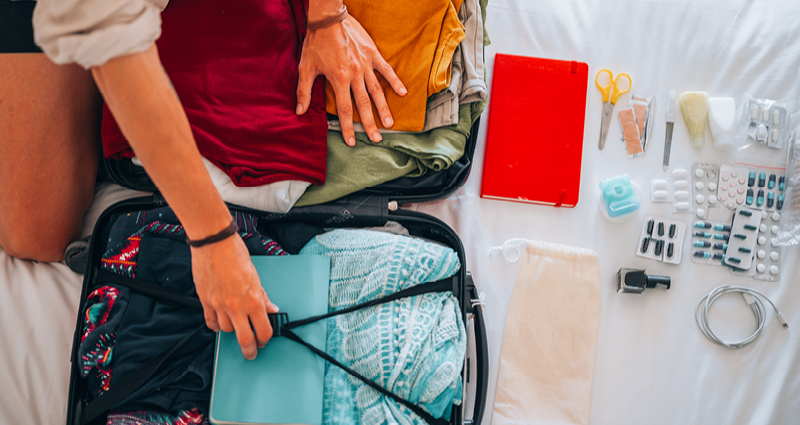
- Build a simple OTC kit. Toss in a pain reliever, antacids, an antihistamine and any go-to remedies you reach for at home. These can be tricky to track down on the road, particularly abroad.
Keep medications in their original containers when you can, and if you’re heading out of the country, check the destination’s embassy website to confirm your prescriptions are allowed.
2. Drink More Water Than You Think You Need
Travel quietly drains your body of fluids. Airplane cabins are notoriously dry, and a long drive with the AC humming can leave you parched before you notice. Dehydration sneaks up as fatigue, headaches and that foggy, sluggish feeling, and in serious cases it can become a real health concern.
Pack a refillable water bottle and keep it within reach. Sip steadily rather than chugging once you’re already thirsty, and pay attention to the signs your body sends. Dark urine, dry mouth and dizziness are clues you need to drink up.
Traveling internationally? Tap water isn’t safe to drink everywhere. Stick to sealed bottled or canned water, and skip the ice unless you know it was made with safe water.
3. Keep Moving on Long Flights and Drives
Sitting still for hours does your body no favors. Staying in one position for a long stretch can slow your circulation and, in some cases, raise the risk of blood clots in your legs.
The fix is simple: move regularly. On a flight, stand up and walk the aisle every couple of hours, and flex your ankles and calves while seated. On a road trip, plan stops to stretch your legs, roll your shoulders and take a quick walk. If you’re prone to swelling or have circulation concerns, ask your doctor whether compression socks make sense for you.
Small movements add up, and they’ll help you arrive feeling far less stiff.
4. Respect Your Need for Rest
It’s tempting to cram every minute full of sightseeing, but pushing too hard can leave you worn down or even sick. Travel takes a toll, especially when you’re crossing time zones and battling jet lag.
To ease the adjustment, try shifting your sleep schedule a little before you leave, get sunlight during the day at your destination and go easy on caffeine close to bedtime. Once you arrive, listen to your body. If you’re dragging, take a break or a short nap. A good night’s sleep is one of the best ways to wake up ready for whatever the next day holds.
5. Eat Well Without Missing Out
Delicious food is half the fun of going somewhere new, and staying healthy doesn’t mean skipping the good stuff. It comes down to balance. If you’ve got a big dinner planned, keep your daytime meals lighter and always lean on fruits and vegetables when you can.
Pack portable snacks like nuts, protein bars or whole-grain crackers to keep your energy steady between meals and curb the urge to grab whatever’s nearest. When you’re traveling somewhere with a higher risk of foodborne illness, lean toward foods served hot and drinks that come sealed, bottled or canned.
6. Don’t Skip the Sunscreen
Time outdoors is part of nearly every trip, so bring your sun-safety habits along. Apply a broad-spectrum sunscreen with an SPF of 30 or higher, and reapply throughout the day, especially after swimming or sweating.
A brimmed hat and sunglasses add extra protection for your skin and eyes. And remember, you can get burned even on a cloudy or cool day, so don’t let the forecast fool you.
7. Check In With Your Doctor Before a Big Trip
Planning a long or international adventure? Schedule a visit with your doctor about four to six weeks before you go. That window gives you time to:
- Get any recommended vaccines or medications for your destination
- Make sure your routine immunizations are current, including your annual flu shot
- Talk through any health conditions you’re managing while away
- Request a travel letter explaining why you need certain medications
It’s also worth browsing the CDC’s travel survival guide for destination-specific health and safety information. It’s a trusted, easy-to-use resource for checking what to expect before you go.
Pack a Little Peace of Mind
A simple travel health kit can save you a lot of stress. Consider tucking in hand sanitizer, disinfecting wipes, sunscreen, a small first aid kit, insect repellent and copies of important documents like your health insurance card.
As always, wash your hands often. Keep emergency contacts handy as you travel, and share your itinerary with someone you trust.
A bit of planning helps you feel your best on the road and eases the worry that can come with being far from home.