The first weeks at home with a newborn come with a lot of advice.
Some of it comes from friends, some from family and some from the internet at 3 a.m. When it comes to how and where your baby sleeps, the guidance that matters most is simpler than you might think.
A few habits, practiced every sleep and every nap, can lower your baby’s risk of sudden infant death syndrome, or SIDS, and other sleep-related dangers. Dr. Caroline Oldenburg, pediatrician with FMOL Health | Our Lady of Lourdes Children’s Health, shares what every parent and caregiver should know.
Safe Sleep Space
A safe sleep environment starts with two things: how your baby is placed and what surrounds them.
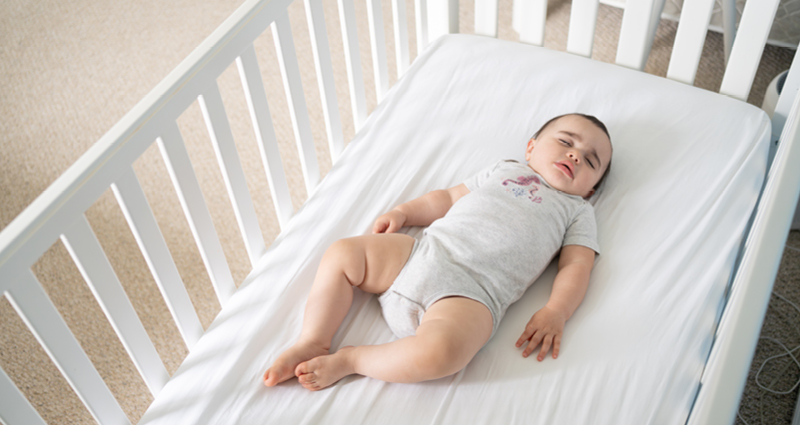
Your baby should always sleep on their back, on a firm, flat, level surface such as a crib, bassinet or portable play yard. That surface should be covered with only a tightly fitted sheet.
“Think of it as a ‘bare is best’ crib,” Dr. Oldenburg says.
What belongs in the crib:
- Your baby, on their back
- A tightly fitted sheet
- That’s it
If your baby needs extra warmth, choose a wearable blanket or sleep sack instead of a loose blanket. Swaddles are OK only if your baby is younger than 4 months and not yet rolling.
What stays out:
- Pillows, blankets, quilts and comforters
- Stuffed animals
- Crib bumpers
- Sleep positioners, including wedges advertised for reflux
- Nursing pillows
- Mattress toppers
- Weighted blankets
Location matters too. Dr. Oldenburg recommends your baby sleep in their own space in your room, right next to your bed, for at least the first 6 months.
One tip many families don’t know: Most insurance plans can provide a portable play yard for safe sleep at no charge. A quick call to your insurance provider can tell you what’s covered.
Why Back Sleeping Matters Most
Parents make countless decisions for their babies. When it comes to SIDS, one decision outweighs the rest.
“Back-sleeping is the single strongest thing a parent can control to lower the risk of SIDS,” Dr. Oldenburg says.
Babies who sleep on their stomachs or sides are more likely to rebreathe their own exhaled air. That raises carbon dioxide levels and lowers oxygen. These babies are also more likely to overheat and less likely to wake easily from sleep. Each of these factors raises the risk of death.
Stomach sleeping increases SIDS risk several times over. Side sleeping isn’t a safe middle ground, either. Babies can easily roll from their side onto their stomach.
If your baby wakes more often on their back, you’re not imagining it. And you’re not doing anything wrong.
“That frequent waking is normal and even protective against SIDS,” Dr. Oldenburg says. “It’s not a sign of a ‘bad sleeper.’”
The Choking Myth, Put to Rest
The concern Dr. Oldenburg hears most often from families is that a baby will choke or aspirate if placed on their back.
“This is actually the opposite of true,” Dr. Oldenburg says.
A healthy baby’s airway and gag reflex protect them better on their back. Studies across several countries have found no rise in choking or aspiration since back-sleeping became the standard. A baby’s anatomy and natural reflexes clear fluids safely.
That’s true even for babies with reflux. No sleep position other than the back is recommended. Tilting or elevating the crib doesn’t help reflux, and it isn’t recommended either.
Safe Habits for Tired Parents
Newborn exhaustion is its own category of tired. Dr. Oldenburg said that’s exactly when risky shortcuts happen, like dozing off with your baby on a couch, in a rocking chair or in bed.
The answer isn’t willpower. It’s a plan made before the long nights arrive.
- Set up early. Keep a bare crib or bassinet right beside your bed, so feeding and comforting your baby doesn’t mean leaving the room.
- Pick the safer spot for feeding. If you feed in bed, use an adult bed cleared of pillows and blankets, not a sofa or rocking chair, and stay alert. Falling asleep with a baby on a couch or in a rocking chair is one of the most dangerous situations. If you think you might doze off, an adult bed is less dangerous than a sofa, but neither is recommended.
- Return your baby to their own space. As soon as you finish feeding or comforting, place your baby back on their own sleep surface.
- Offer a pacifier. Giving your baby a pacifier at naps and bedtime has been found to lower SIDS risk.
- Get every caregiver on board. Grandparents, babysitters and child care providers should all follow the same rules. Babies who aren’t used to sleeping on their stomachs face especially high risk if someone places them that way.
When the Rules Start to Change
Back-sleeping and a bare sleep surface remain the rule until your baby turns 1 year old. Along the way, one milestone shifts things a bit: rolling.
Once your baby can roll both ways on their own, from back to stomach and stomach to back, you can leave them in whatever position they roll into during sleep. But Dr. Oldenburg says every sleep should still start on the back, and the sleep area should stay completely bare.
Swaddling ends sooner. Stop swaddling as soon as your baby shows signs of rolling. A swaddled baby who rolls onto their stomach can’t use their arms to push up or reposition. That’s the time to switch to a sleep sack.
One Thing to Remember
Dr. Oldenburg’s advice is short enough to remember on the sleepiest night: “Back to sleep, in a bare crib, in your room.”
That means every sleep, every nap and every caregiver. Baby goes on their back, on a firm, flat surface with nothing but a fitted sheet, ideally right beside your bed.
What Parents Often Overlook
Even the most careful parents can miss a few details. Dr. Oldenburg notes these:
- Dress your baby in no more than one layer more than you’d wear yourself. Skip heavy bundling and indoor hats. Newborns shouldn’t need a hat to sleep after the first 24 hours of life.
- A label that says “sleep” doesn’t make a product safe. Inclined sleepers and baby nests or pods, such as the DockATot, aren’t recommended. Weighted swaddles and weighted blankets should never be used.
- Cardiorespiratory monitors, such as the Owlet, don’t prevent SIDS and shouldn’t be relied on for that purpose. They are no substitute for a safe sleep setup.
- Breastfeeding and vaccines both lower SIDS risk. Dr. Oldenburg says many families don’t realize these steps are part of safe sleep, too.
Rest Easier, Together
Bringing a baby home is one of life’s greatest gifts, and it’s natural to feel the weight of keeping them safe. You don’t have to figure it out alone. Simple habits, repeated night after night, give your little one a safer start as they grow.