In South Louisiana, food is a big part of the culture.
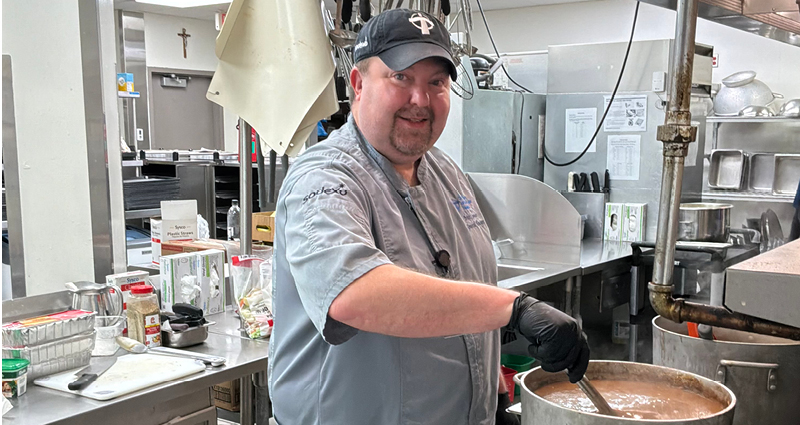
It brings people together, marks celebrations and offers comfort in difficult moments. For Britt Sonnier, food services manager at FMOL Health | Our Lady of the Lake St. Elizabeth, that connection has always been personal, shaping how he views every meal he serves.
“You learn how to put a smile on people’s faces, to make them happy, to make sure they’re walking out that door telling their friends about you,” Britt says.
He developed that perspective while working in restaurants, where success depended on more than just good food. It required understanding people, anticipating their needs and creating an experience they would remember. As he moved into management and kitchen roles, that mindset stayed with him.
When he transitioned into healthcare, the importance of that approach only grew stronger.
“With food, you have to treat people well. And you bring that to the healthcare industry because it’s even more vital here,” Britt says.
At St. Elizabeth, that philosophy has helped shape a food services program that stands out. By focusing on the experience behind each meal, not just the meal itself, Britt and his team have helped elevate patient satisfaction scores and redefine what hospital dining can feel like.
Why Food Matters in the Hospital
In a hospital setting, food is more than nourishment. It is comfort, familiarity and sometimes the highlight of a patient’s day. Britt understands that reality better than most.
Patients are not choosing to be in the hospital. They are often facing some of the most difficult moments of their lives. As Britt sees it, a well-prepared, thoughtfully presented meal can provide a sense of normalcy in an unfamiliar environment. It can offer reassurance that someone is paying attention to the details that matter.
That mindset shapes how Britt and his team approach their work. He encourages his team to think personally about every plate they prepare.
“If that was your husband, wife, grandchild, grandmother — you would want to be able to serve it to that family member,” Britt says.
It is a simple idea, but one that carries significant weight. When food is treated as an essential part of care, it becomes a meaningful contributor to healing and overall well-being.
How Food Drives Patient Satisfaction
At St. Elizabeth, that commitment is reflected in the numbers. Food services consistently earns some of the highest patient satisfaction scores in the system, and the team has been ranked in the top 10 nationally for patient satisfaction scores by the food services company Sodexo.
For Britt, those results are both a point of pride and a reflection of his team’s dedication.
“It makes me feel like we’re achieving something,” he says. “We also have the best results here that we have in the FMOL Health system, which I’m very proud of because I am very competitive.”
But Britt is quick to shift the focus away from himself.
“I contribute it all to my staff,” he says. “There’s only so much I can do. They know that I expect the best out of them.”
That culture of accountability and recognition plays a major role in maintaining high performance. Team members are encouraged to engage with patients, ask for feedback and take pride in their work. Positive survey responses are celebrated, and strong performance is rewarded with team events and incentives.
The result is a cycle of continuous improvement where feedback is not just collected but actively used to refine the patient experience.
Redefining the Reputation of Hospital Food
Hospital food often carries a reputation that can be difficult to overcome. Britt and his team approach that challenge with creativity, flexibility and a deep understanding of local tastes.
With access to a vast database of recipes, the team carefully selects dishes that align with both dietary guidelines and the flavors of South Louisiana.
“It’s a matter of digging through it and finding the ones that you think will fit best,” Britt says.
Menus evolve based on patient feedback and performance data. They’re regularly updated with a refreshed rotation of meals, with half of the entrees replaced to keep offerings fresh and appealing.
At the same time, the team looks for opportunities to elevate the experience. Popular cafeteria items have been introduced to patient menus, including desserts and specialty dishes that add an element of enjoyment to the dining experience.
Local favorites remain a cornerstone.
“Red beans on Mondays is always a hit,” Britt says. “On Fridays, we do seafood gumbo for lunch and fried catfish at night.”
Dishes like shrimp and grits also make regular appearances, reflecting the culinary identity of the region.
Balancing flavor with nutrition is especially important for patients on restricted diets. While limitations exist, the team works closely with dietitians and clinical team members to ensure patients understand their options and receive meals that support their recovery.
Why St. Elizabeth Stands Out
Part of what makes the food services program at St. Elizabeth so successful is the environment itself. As a smaller hospital, it offers a level of connection and responsiveness that is difficult to replicate in larger facilities.
“It’s a place where you could pretty much make time to visit every single patient in this hospital every single day,” Britt says.
That accessibility allows for real-time problem solving and personalized service. If a patient has a concern or a special request, the team can respond quickly. Small gestures, like celebrating a birthday or adjusting a meal based on preference, become part of the everyday experience.
The team structure also plays a role. Team members are cross-trained and work collaboratively, stepping in wherever needed to ensure patients receive timely, high-quality service.
“If the phone rings here, everybody knows to pick it up,” Britt says. “Everybody communicates.”
For Britt, the opportunity to build something meaningful in this environment is what keeps him motivated.
“I realized that I can do things here that nobody else has done,” he says.
That sense of ownership, combined with a shared commitment to excellence, has helped create a food services program that stands out not just within the system, but on a national level.