Graduate medical education shapes far more than medical knowledge. It shapes how future physicians communicate, lead, serve communities and care for patients during some of the most important moments of their lives.
Across FMOL Health, graduate medical education programs are helping train the next generation of physicians in Baton Rouge, Monroe and Bogalusa, while strengthening healthcare access and improving patient care throughout Louisiana.
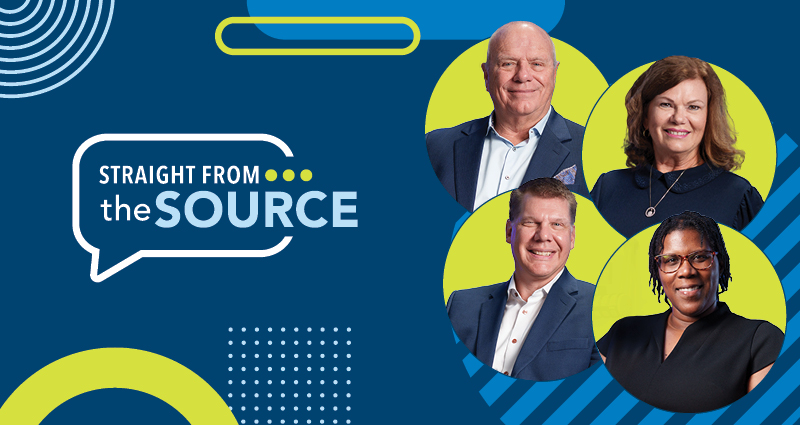
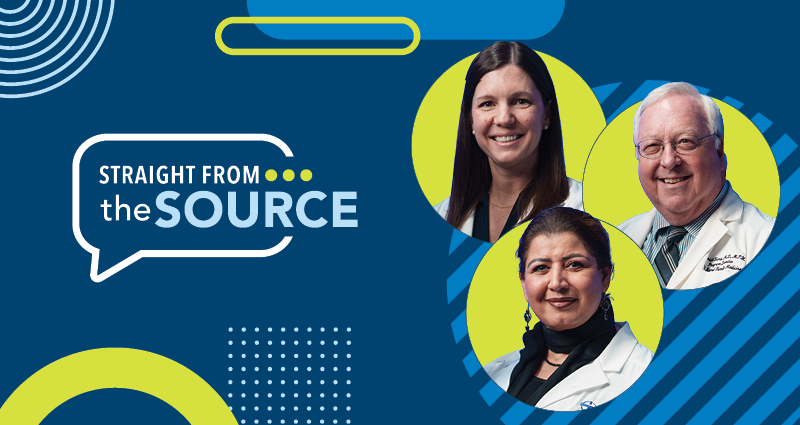
In this episode of Straight from the Source, Melissa Roy, MD, pediatric hospital medicine provider and designated institutional official for FMOL Health | Our Lady of the Lake Pediatric Residency Program; Shaista Qureshi, MD, family medicine provider and program director of the Family Medicine Residency Program at FMOL Health | St. Francis; and Rick Stone, MD, family medicine provider and program director of the LSU Rural Family Medicine Residency Program at FMOL Health | Our Lady of the Angels Hospital, discuss the role academic medicine plays across the health system and why training physicians inside communities matters so deeply.
For each of them, the work goes beyond clinical education. It is about mentorship, relationships and preparing physicians to care for people in a more human way.
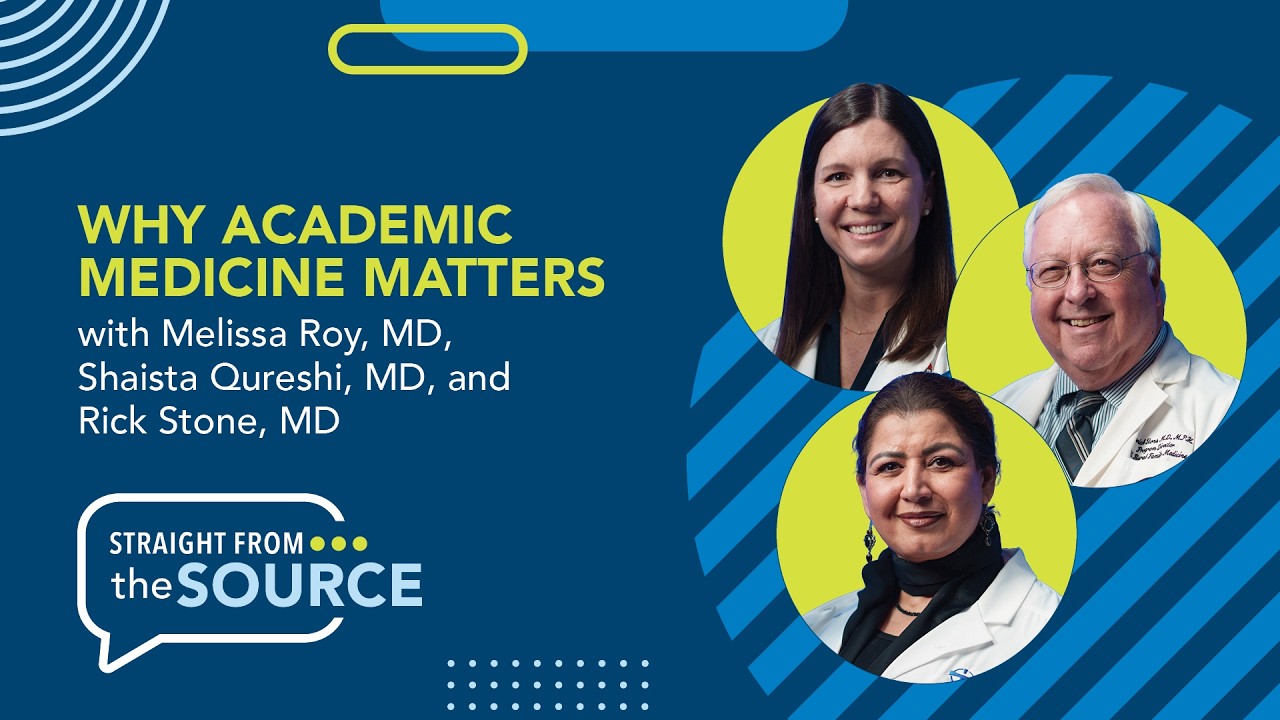
GME at FMOL Health
Dr. Roy says that calling to teach grew from her own experience learning from mentors throughout her career.
“I think it’s a great way to serve,” she says. “It’s a way to give back and pay it forward.”
That mindset is woven throughout FMOL Health’s approach to graduate medical education. Across Baton Rouge, Monroe and Bogalusa, residents are trained not only how to diagnose and treat illness, but also how to communicate, collaborate and build trust with the communities they serve.
FMOL Health’s graduate medical education programs span three distinct markets, each designed to meet different healthcare needs across Louisiana. At Our Lady of the Lake in Baton Rouge, the health system partners closely with LSU Health New Orleans School of Medicine for many of its residency programs, creating one of the state’s largest academic training environments. Alongside those LSU-affiliated programs, Our Lady of the Lake Children’s Hospital operates its own pediatric residency program focused specifically on training future pediatricians.
In Bogalusa, Our Lady of the Angels Hospital partners with LSU Health on one of the only rural family medicine residency programs in Louisiana. The program gives residents hands-on experience caring for underserved populations across rural communities while training in full-spectrum family medicine.
At St. Francis in Monroe, the health system operates its own independent residency programs, including an internal medicine residency program that started in 2023 and a family medicine residency program that launched in 2025. Those programs are deeply rooted in northeast Louisiana and focused on developing physicians who understand the needs of the communities they serve.
As medicine continues to evolve, those programs are also helping shape the future of healthcare itself. Residents challenge faculty to stay current, ask questions about how care can improve and bring new perspectives into the clinical environment every day.
“I see them asking the important questions that are pushing us to change the way that we practice,” Dr. Roy says. “How can we better serve our community and be more cognizant of all of the social determinants of health?”
Rooted in the Communities They Serve
Graduate medical education looks different in Baton Rouge, Monroe and Bogalusa because each community has different healthcare needs. What remains consistent is the role residents play in strengthening access to care and building relationships with patients.
In Monroe and Bogalusa, family medicine programs focus heavily on community-based care. Residents are trained to provide full-spectrum medicine, often caring for entire families across multiple generations.
Dr. Qureshi says that relationship-building is one of the most important parts of training.
“The trust to gain from the community is huge,” she says. “Once the trust is developed, they will come, they will bring their families, they’ll bring their kids to you.”
That continuity of care creates deeper connections between physicians and patients while also helping communities feel more connected to their local healthcare systems.
Dr. Stone says those relationships often become foundational to patient care itself.
“As that trust develops, you become comfortable with sharing some of those details,” he says. “That becomes foundational to further knowing the patient and getting acquainted with the family.”
In Baton Rouge, residents are integrated into larger multidisciplinary teams caring for patients across highly specialized settings, including pediatrics at Our Lady of the Lake Children’s Hospital. Residents spend significant time at the bedside, helping families understand treatment plans and coordinating care across specialties.
Dr. Roy says that approach benefits both learners and patients.
“You’re not just getting one physician,” she says. “You’re getting a whole team of physicians and we’re all double checking each other and talking about other potential diagnoses or plans of management.”
Across all three markets, residents become part of the fabric of the communities where they train. Many ultimately stay and practice in Louisiana, helping address physician shortages and improve long-term access to care.
At St. Francis, that impact is already visible. Dr. Qureshi notes that nine of the program’s ten graduating internal medicine residents are staying in Louisiana, with six remaining at St. Francis as hospitalists.
“It’s like a pipeline,” she says. “We’re showing them, teaching them and role modeling for them to continue the tradition of FMOL Health.”
Teaching Through Mission and Ministry
The mission of FMOL Health is deeply connected to how residents are trained across the system. Academic medicine within FMOL Health emphasizes compassion, spirituality, teamwork and service alongside clinical excellence.
For Dr. Qureshi, that alignment with mission was one of the things that first drew her to FMOL Health.
“For me, it was always serving God and serving His people,” she says.
That perspective shapes the educational environment residents experience every day. Teamwork, collaboration and humility are treated as essential parts of becoming a physician.
Dr. Roy says those values become visible throughout the hospital environment.
“You see teams,” she says. “You see that commitment to work together to put the patient and their families first.”
Residents are also encouraged to see healthcare through a broader lens that includes outreach, advocacy and community involvement. Programs across FMOL Health regularly engage with underserved populations and emphasize caring for patients beyond the walls of the clinic or hospital.
For many residents, that mission-driven focus becomes one of the defining aspects of their training experience.
“We want to make sure that we produce not only well-rounded physicians, but really mentally, spiritually, emotionally and psychologically healthy physicians,” Dr. Qureshi says.
That support system helps residents develop resilience while also reinforcing the importance of caring for themselves as they care for others.
Why Residents Choose FMOL Health
Residents across the country have countless options when choosing where to train. What sets FMOL Health apart is the combination of mission, community and personal connection.
Many physicians are drawn to the closeness they experience between residents and team leaders during the interview process and throughout training.
“They sense the feeling of family,” Dr. Roy says. “They see how integrated the programs are with the community.”
At St. Francis, Dr. Qureshi says incoming residents often talk about feeling immediately welcomed.
“When they came in for interviews, they felt at home,” she says. “The mission statement says it all. It aligns with their goals.”
Programs across FMOL Health also provide experiences that many residents specifically seek out, including rural medicine, community outreach, leadership development and full-spectrum family medicine training.
Dr. Stone says family medicine residents are often motivated by the opportunity to serve underserved communities.
“People talk,” he says. “We have a strong track record of creating physicians for rural practice.”
The collaborative nature of the programs also creates opportunities for residents to work across specialties and across markets. Residents at St. Francis, for example, rotate through Our Lady of the Lake Children’s Hospital for pediatric experiences, while family medicine programs collaborate on advanced obstetrics training opportunities.
That sense of shared purpose helps create a learning environment where residents feel supported both professionally and personally.
The Reward of Watching Residents Grow
For faculty physicians, some of the most meaningful moments come when residents fully step into their roles as physicians and leaders.
Sometimes those moments happen during difficult conversations with families. Other times they happen quietly, during patient interactions that reflect growth, compassion and confidence.
Dr. Stone recalls watching residents guide a critically ill patient’s family through difficult decisions in the ICU.
“They had very good, thorough discussions… frank but sympathetic with the patient and the family,” he says.
Dr. Roy says she often sees those moments during family meetings at our Children’s Hospital, where residents lead conversations involving multiple specialists and worried parents.
“You really see so many different aspects of what we’re trying to teach our residents come together,” she says.
For Dr. Qureshi, one of the most emotional moments came after a former resident completed a global health fellowship and delivered a baby in Nepal during a power outage using skills she learned during residency training.
“She said, ‘Dr. Q, I felt you were sitting on my right shoulder telling me exactly what to do,’” Dr. Qureshi says. “That was a huge moment in my life.”
Those experiences reinforce why graduate medical education matters so much to the future of healthcare. Residents leave FMOL Health not only with clinical training, but with a deeper understanding of service, leadership and community. Faculty leaders say that gives them confidence in the future of medicine across Louisiana and beyond.
“They’re ready to fly the nest,” Dr. Roy says. “We know they’re going to continue to learn, continue to grow and continue to lead.”