What if a coach or athletic trainer could know an athlete was getting dangerously hot before the player ever showed signs of heat illness?
For high school football players across Louisiana, some of the most demanding practices of the year happen during the hottest months. High temperatures, heavy humidity and protective equipment can place significant stress on an athlete’s body.
Players may feel tired or sluggish after a long practice, but heat illness can become dangerous quickly. For the physicians and athletic trainers responsible for keeping athletes safe, recognizing that risk early can make a critical difference.
Travis Currie, MD, a sports medicine physician at FMOL Health | Our Lady of the Lake and head team physician for Ascension Parish Public Schools, has seen how seriously schools prepare for that possibility. Emergency action plans, weather monitoring and cold-water immersion are among the measures used to respond when an athlete experiences heat illness.
The challenge is knowing when an athlete is approaching that point.
“The timing is a split second between heat exhaustion, which is not an emergency, into heat stroke, which is an absolute emergency,” Dr. Currie says.
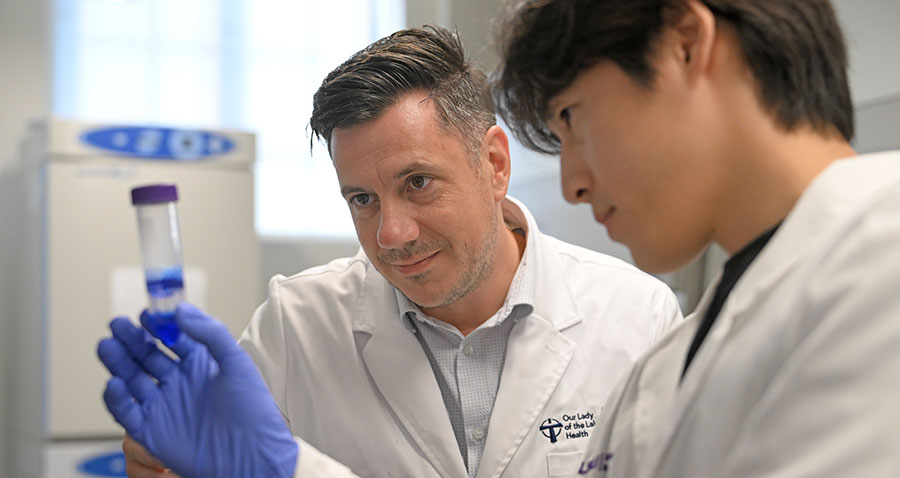
Now, researchers from Our Lady of the Lake and LSU are studying whether technology could provide an earlier warning, helping coaches and athletic trainers intervene before an athlete reaches a dangerous core body temperature.
Turning Real-Time Data into Earlier Warnings
The study is supported by a $210,022 Collaboration in Action Program, or CAP, grant and led by Cory Coehoorn, PhD, director of the Rehabilitation Science Program and associate professor of rehabilitation science and family medicine at LSU Health Shreveport.
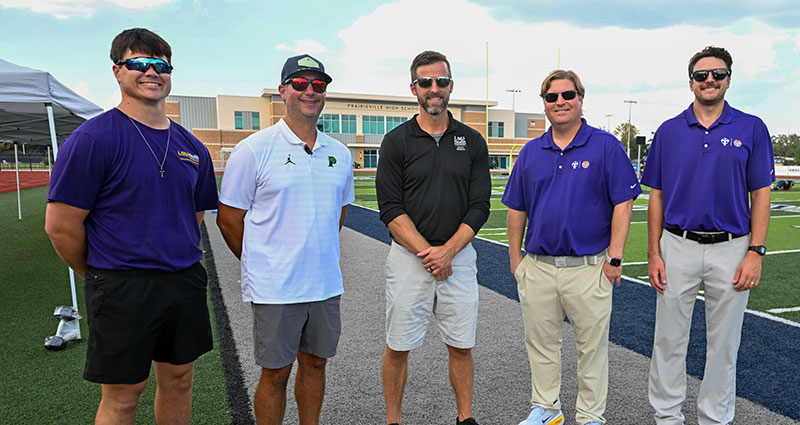
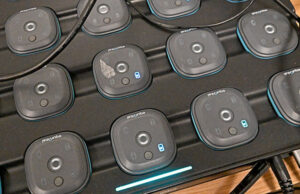 Researchers aim to collect data from 100 high school football players across Louisiana. The Ascension Parish school system agreed to participate, bringing the research team to Prairieville High School, where 19 football players volunteered for a day of monitoring.
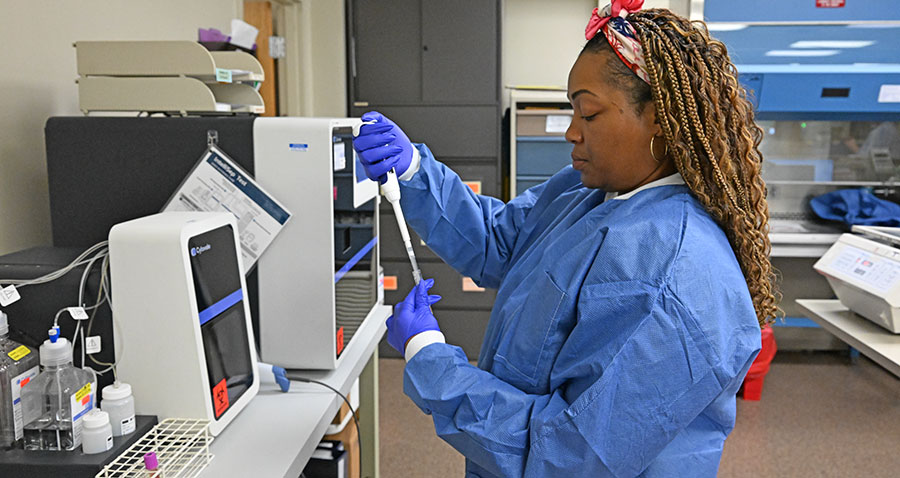
Each athlete swallows an ingestible temperature capsule that measures core body temperature throughout the day. During practice, athletes wear monitoring equipment that collects physiological information such as heart rate, skin temperature and respiratory rate. Researchers also track environmental conditions including wet bulb temperature and wind.
After practice, the team downloads the data and compares the information collected by the wearable monitor with the core temperatures recorded by the capsule.
Researchers will use all of this information to better understand how changes in an athlete’s body and the environment can signal rising heat risk. The goal is to use those patterns to develop wearable technology that could alert coaches and athletic trainers when an athlete is getting too hot, giving them an opportunity to step in before heat illness develops.
The research builds on Dr. Coehoorn’s previous work studying heat stress in firefighters. The team is now working to determine whether similar predictive technology can be validated for high school football players.
For Dr. Currie, the potential was immediately clear.
“This will save lives. This would revolutionize sports,” he recalls thinking when Dr. Coehoorn first approached him about the research.
If the technology can accurately predict rising core temperature, the long-term goal is to develop a practical wearable device that could alert coaches and athletic trainers when a player needs to come off the field.
Collaboration Moves Research Forward
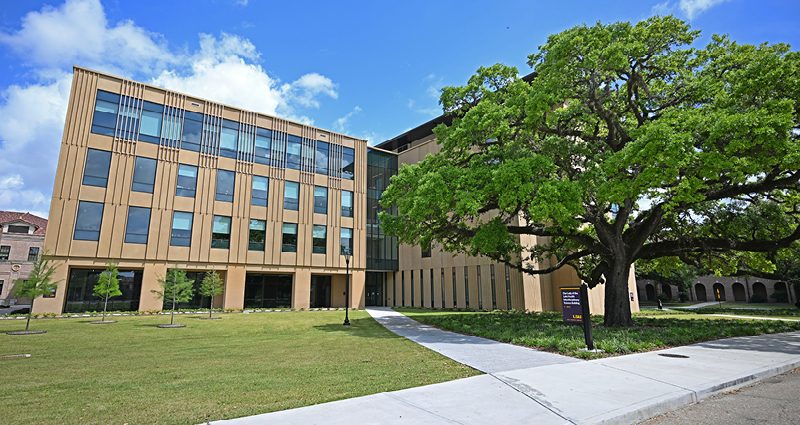
The project is part of a broader research partnership between LSU and Our Lady of the Lake. Through CAP and the Championship Health Partnership, researchers and healthcare professionals are combining their expertise to address health challenges that directly affect people throughout Louisiana.
That collaboration is particularly valuable in sports medicine. Physicians like Dr. Currie bring firsthand experience caring for athletes, while LSU researchers bring the infrastructure and scientific expertise needed to study new ideas and gather evidence about whether they work.
“Having access now to LSU with PhDs and PhD candidates that can help with the research combined with us, it’s just a great combination of people and understanding and collaboration,” Dr. Currie says.
That partnership also extends into the communities where the research takes place. Dr. Currie worked with Ascension Parish Public Schools to bring the study to Prairieville High School, while researchers continue working with schools and public school systems around the state to recruit participants.
The statewide approach will help researchers gather information from athletes practicing in real-world conditions and build a dataset that reflects the population the technology is ultimately intended to protect.
Research Rooted in the Community
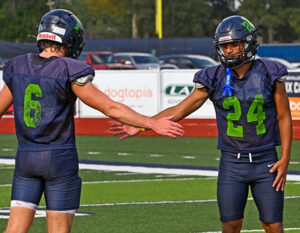 For the players participating, the study requires little disruption to a normal practice. The potential impact, however, could extend well beyond one team or one football season.
Prairieville High School senior Stantyn Delapasse volunteered for the study after learning that the research could help make heat illness prevention more proactive.
“You get to help others, especially others that need the help,” Delapasse says. “So it’s definitely something to be proud about.”
That community impact is central to the project. If researchers can validate the technology in high school athletes, the information could eventually help schools identify heat risk earlier and give coaches, athletic trainers and sports medicine professionals another resource for protecting players.
The research may also have applications far beyond athletics. Dr. Coehoorn’s work has already focused on firefighters, and similar technology could potentially benefit other people who routinely face extreme heat.
For Our Lady of the Lake, the project reflects a larger commitment to using research to improve health and safety in the communities it serves. It also represents a shift toward finding ways to prevent emergencies before they happen.
“We’ve always been on the back end trying to resolve a problem that’s already happened,” Dr. Currie says. “In medicine, if we can stop it from happening in the first place, preventative medicine is worth so much more than trying to keep up with a bad situation.”
Moving Athlete Safety Forward
Each athlete who participates adds valuable information that can help researchers better understand how the body responds to heat during real-world practices. Together, that data can help the team refine the technology and determine whether it can reliably identify when an athlete is approaching a dangerous level of heat strain.
There is still work ahead before that technology could become an everyday tool on Louisiana football fields. The research happening now is an important step toward understanding what is possible.
It also reflects the drive behind sports medicine research at Our Lady of the Lake: continuing to look for better ways to care for athletes, prevent injuries and improve the experience of the people and communities the health system serves.
“When it comes to sports medicine, the best is never good enough for any of us,” Dr. Currie says. “We’re always trying to push the envelope to get to the next level.”