When someone arrives at the emergency department seriously ill, every minute can matter.
That is especially true with sepsis, a life-threatening response to infection that can be difficult to identify in its earliest stages.
For the past two years, FMOL Health | St. Dominic has been using IntelliSep to help physicians identify patients at risk for sepsis faster and make more informed decisions about their care. As the only hospital in Mississippi to implement this innovative technology, St. Dominic brings a unique approach to sepsis care to Jackson and the surrounding region.
Now, two years of data are continuing to show what that advancement can mean for patients.
Helping Physicians Get Answers Faster
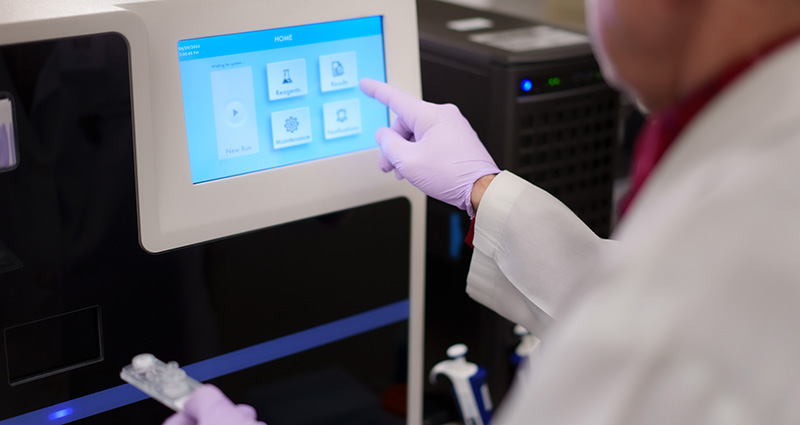
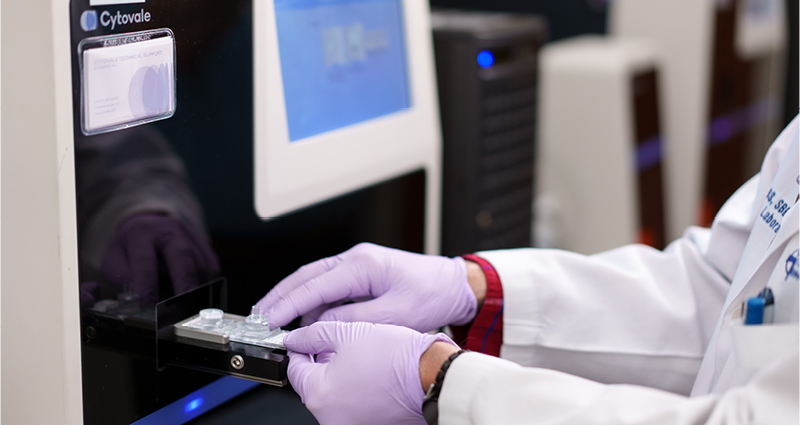
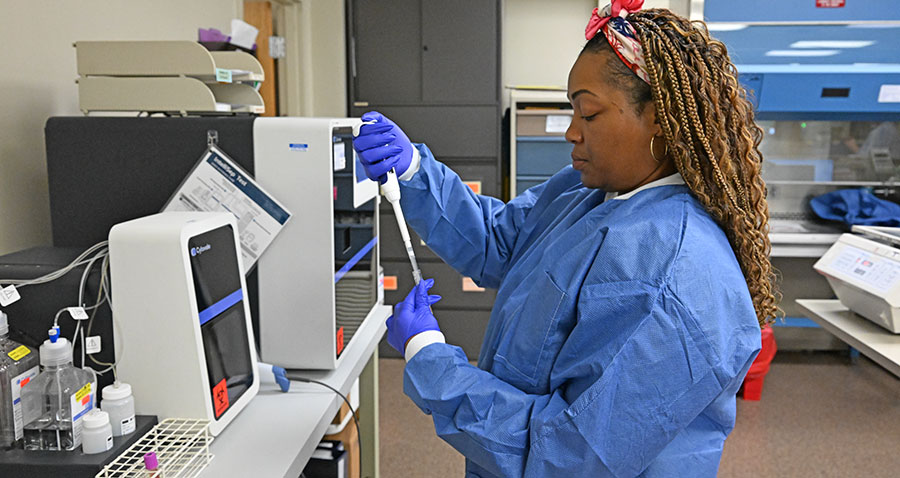
IntelliSep is a blood test used in the emergency department that looks at how a patient’s immune system is responding to a possible infection. Results are available in about eight minutes, giving physicians another important piece of information as they determine whether a patient may have sepsis and what care is needed.
That speed matters because sepsis can progress rapidly. Symptoms can also resemble those of other illnesses, making it challenging to determine which patients need immediate sepsis treatment and which may safely avoid unnecessary testing or hospitalization.
“The outcomes we are seeing as a result of implementing the IntelliSep test are nothing short of revolutionary,” says Christopher Thomas, MD, vice president and chief quality officer at FMOL Health. “We’re transforming sepsis care, as healthcare knows it.”
Two Years of Measurable Results
Since IntelliSep was implemented at St. Dominic, outcomes have improved for patients with and without sepsis.
Among patients diagnosed with sepsis, the mortality rate has decreased by more than 20%. Patients with sepsis are also spending more time outside the hospital, with average days in the hospital decreasing by nearly a whole day.
Improvements extend beyond patients ultimately diagnosed with sepsis. Mortality among non-septic patients decreased by more than 18%, while average hospital stays decreased by nearly a day and a half.
The data also point to more targeted use of testing. Overall blood culture ordering decreased by over 26%. Importantly, blood culture ordering among patients ultimately diagnosed with sepsis remained unchanged. The reduction came among patients who did not have sepsis, suggesting physicians are better able to focus additional testing on the patients most likely to need it.
For patients, that can mean fewer unnecessary tests, lower healthcare costs and a clearer path to the right care.
Raising the Bar for Sepsis Care in Mississippi
The impact extends beyond St. Dominic. Across FMOL Health hospitals using IntelliSep, mortality among patients with sepsis has seen a 22.1% relative decrease, while mortality among non-septic patients has seen an 18.7% relative decrease.
As Dr. Thomas puts it, IntelliSep throughout FMOL Health is saving one life every three days, and that translates to more dinner table conversations and moments that matter.
For Mississippi patients and families, having this technology available in Jackson means access to an advanced diagnostic tool close to home and a hospital investing in new ways to improve how quickly and accurately serious conditions are identified.
It also demonstrates how innovation can translate into meaningful improvements in everyday patient care.
“After two years, we’re saving someone’s life every three days,” Dr. Thomas says. “Every three days, someone’s family member in those communities we’re privileged to serve survives and they get to go back home to the dinner table. … That’s really what healthcare is about.”